
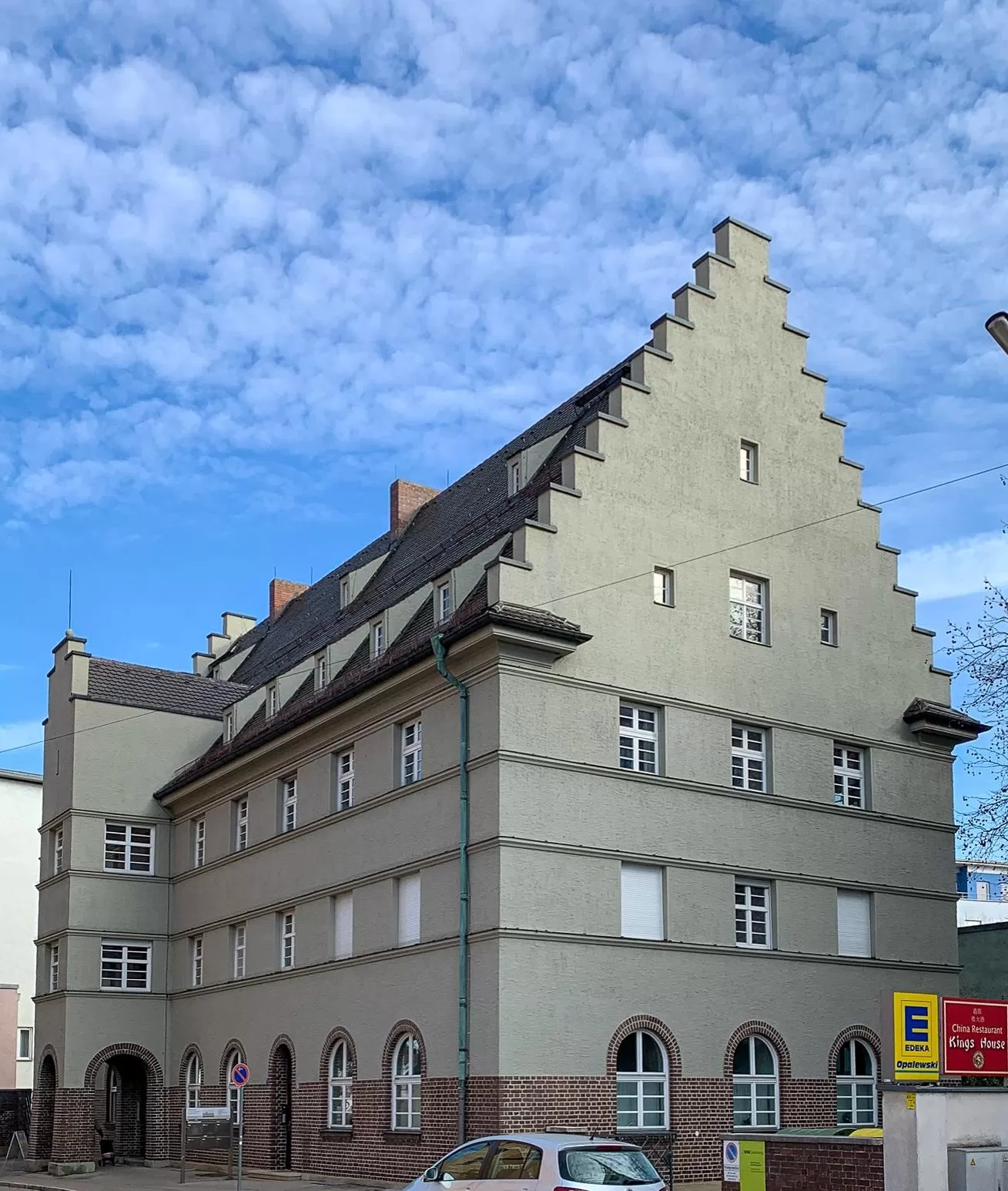
Post Office, 1925-1926. Architect: Thomas Wechs. Photo: Daniela Christmann
1925 – 1926
Architect: Thomas Wechs
Franz-Kobinger-Straße 3, Augsburg
The former post office building on Franz-Kobinger-Straße in Augsburg-Pfersee was built between 1925 and 1926 according to plans by architect Thomas Wechs. The client was the Oberpostdirektion Munich.
Pfersee‘s development into an independent district of Augsburg and an industrial location necessitated the establishment of a separate post office.
Bavarian Postal Building School
From 1920 to 1934, the Bavarian Postal Building School was the defining example of the “New Building” movement in Bavaria. Robert Poeverlein and, more notably, Robert Vorhoelzer are considered the founders of the school. The school was named after the Munich postal buildings on Tegernseer Platz and Goetheplatz. Key representatives included Walther Schmidt, Hanna Löv, and Sep Ruf.
Despite the transition from the Bavarian State Postal Service to the German Reichspost in Berlin, the Postal State Treaty of 1920 established a separate department of the Reich Postal Ministry in Munich as a symbol of independence: Department VI.
Within this division, an independent postal architecture department was established. Numerous forward-thinking architects, including Poeverlein and Vorhoelzer, took advantage of the creative freedom this department offered to design buildings in the “Neues Bauen” style.
Until the National Socialists seized power in 1933, the School of Postal Building shaped the entire field of postal architecture in Bavaria. This was driven primarily by the increased demand for postal service buildings. Between 1920 and 1935, approximately 350 buildings were constructed in villages and small towns.
Construction
Negotiations on the construction of a new post office in Pfersee took place with the Oberpostdirektion Munich at the beginning of March 1925.
After the decision was made to construct a new building, Wechs planned Post Office 8 from spring to fall of 1925.
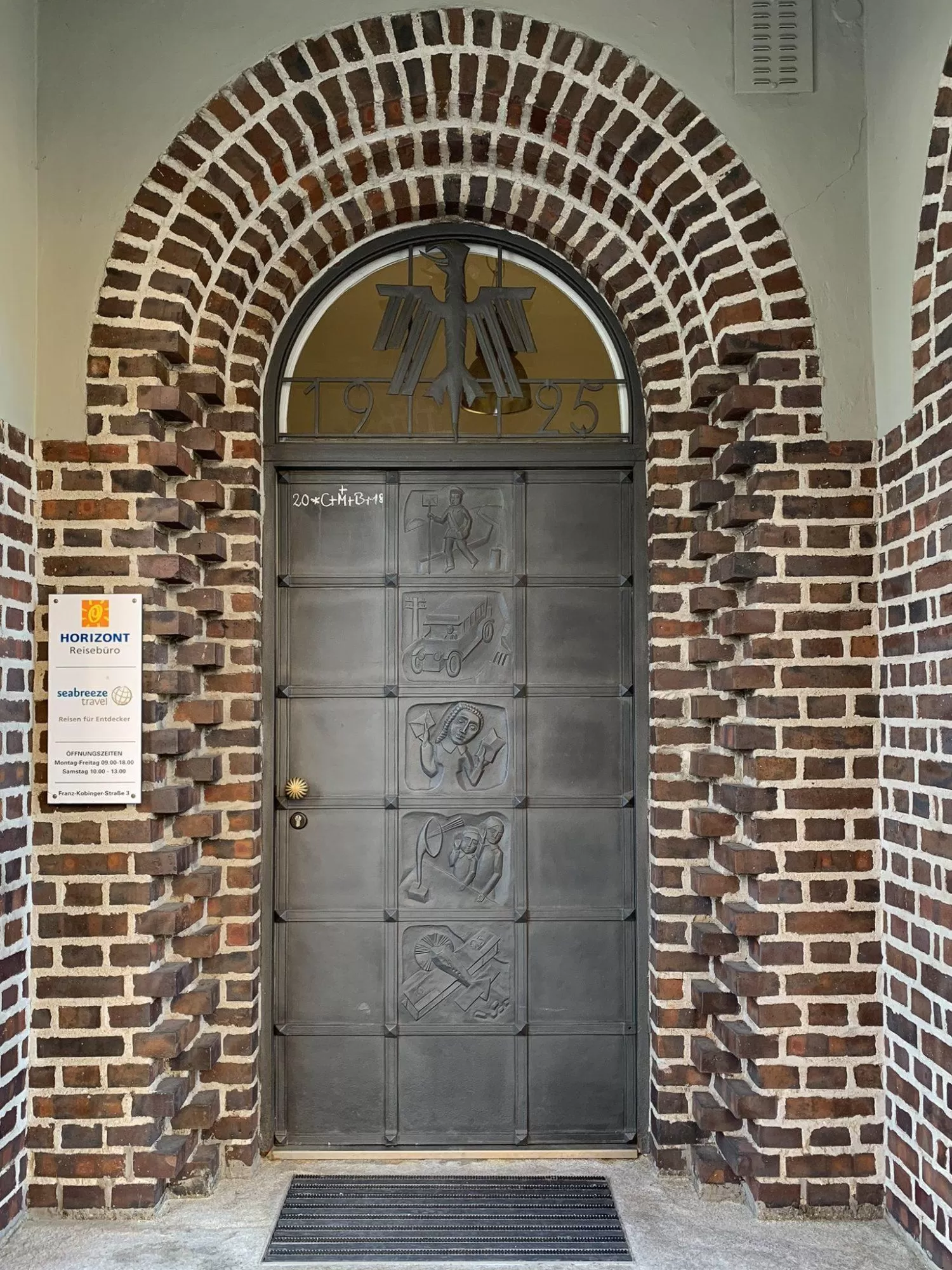
The three-story, rendered, gable-roofed building with a clinker base is defined by an entrance porch on the side of the eaves and side facades that are terminated by stepped gables.
The building’s facade surfaces are vertically structured by circumferential cornice bands with belt profiles.
Supporting pillars, made of clinkers, divide the former counter room.
Bronze Reliefs
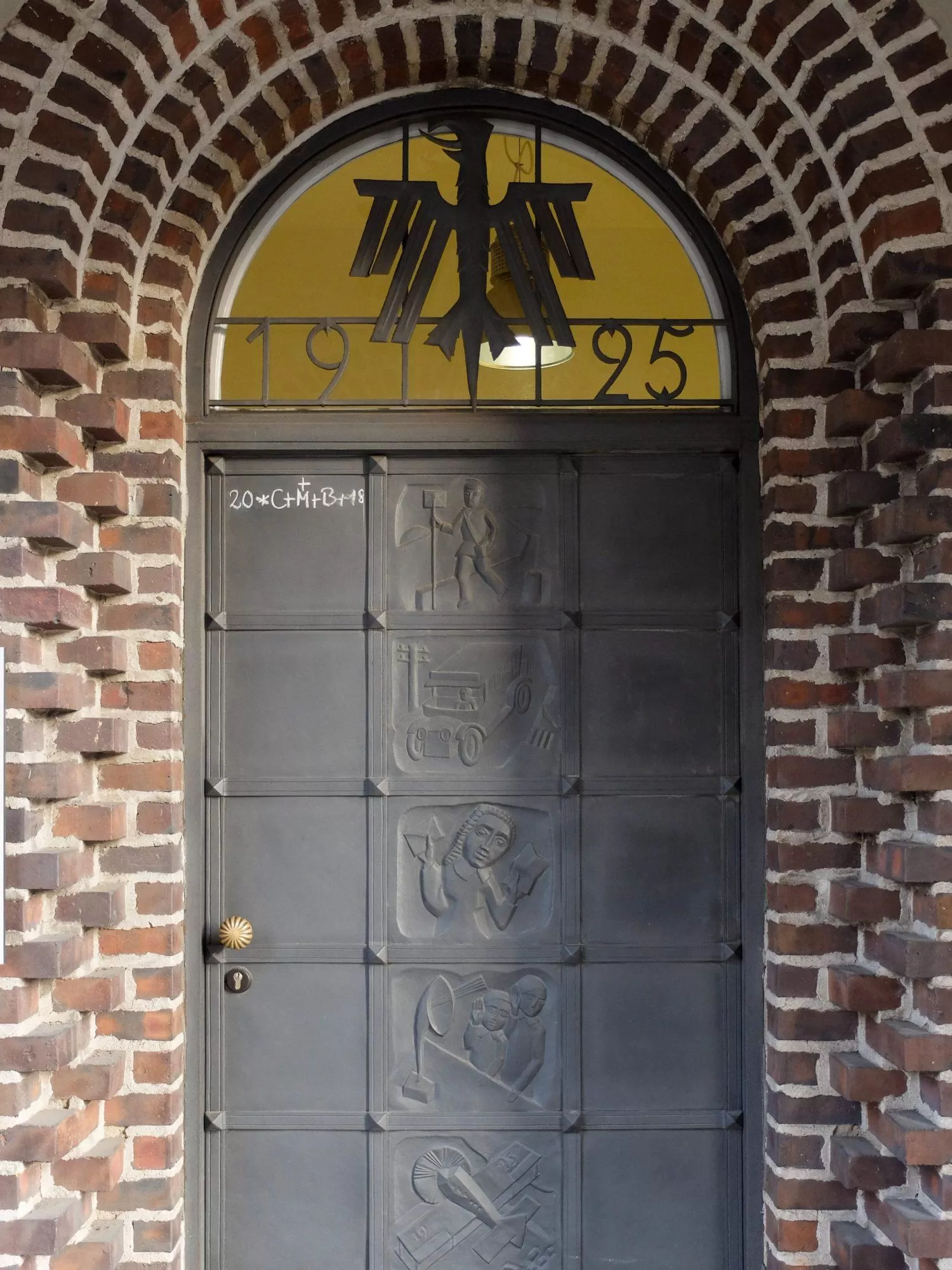
The bronze entrance door with a skylight features embossed images designed by sculptor Michael Böck.
The chased reliefs depict the work of the post office at that time: Letter and passenger transport, the post bus, children listening to a radio, and airmail transport with a biplane.
The year of construction is visible next to the Reichspost eagle in the skylight and on the airplane’s wings.
Current Use
The building served as Pfersee’s post office until 2000 and now serves mixed-use purposes, including offices and residences.
The Sacred Heart Church, considered the largest Art Nouveau church in southern Germany, was built in 1910 according to plans by architect Michael Kurz. It is located in the immediate vicinity of the post office.
Post Office, 1925-1926. Architect: Thomas Wechs. Photo: Daniela Christmann
Post Office, 1925-1926. Architect: Thomas Wechs. Photo: Daniela Christmann
Post Office, 1925-1926. Architect: Thomas Wechs. Photo: Daniela Christmann
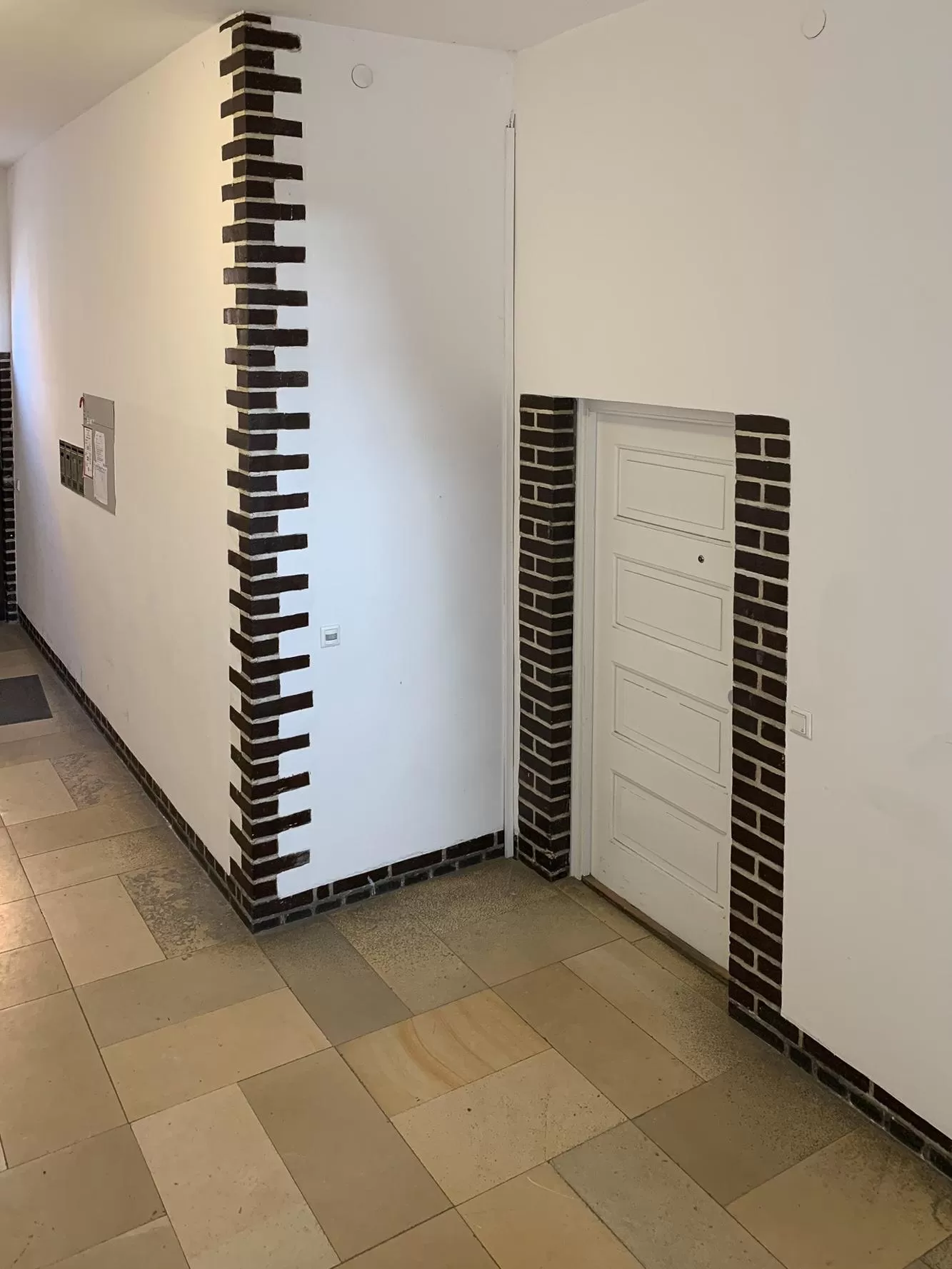
Post Office, 1925-1926. Architect: Thomas Wechs. Photo: Daniela Christmann
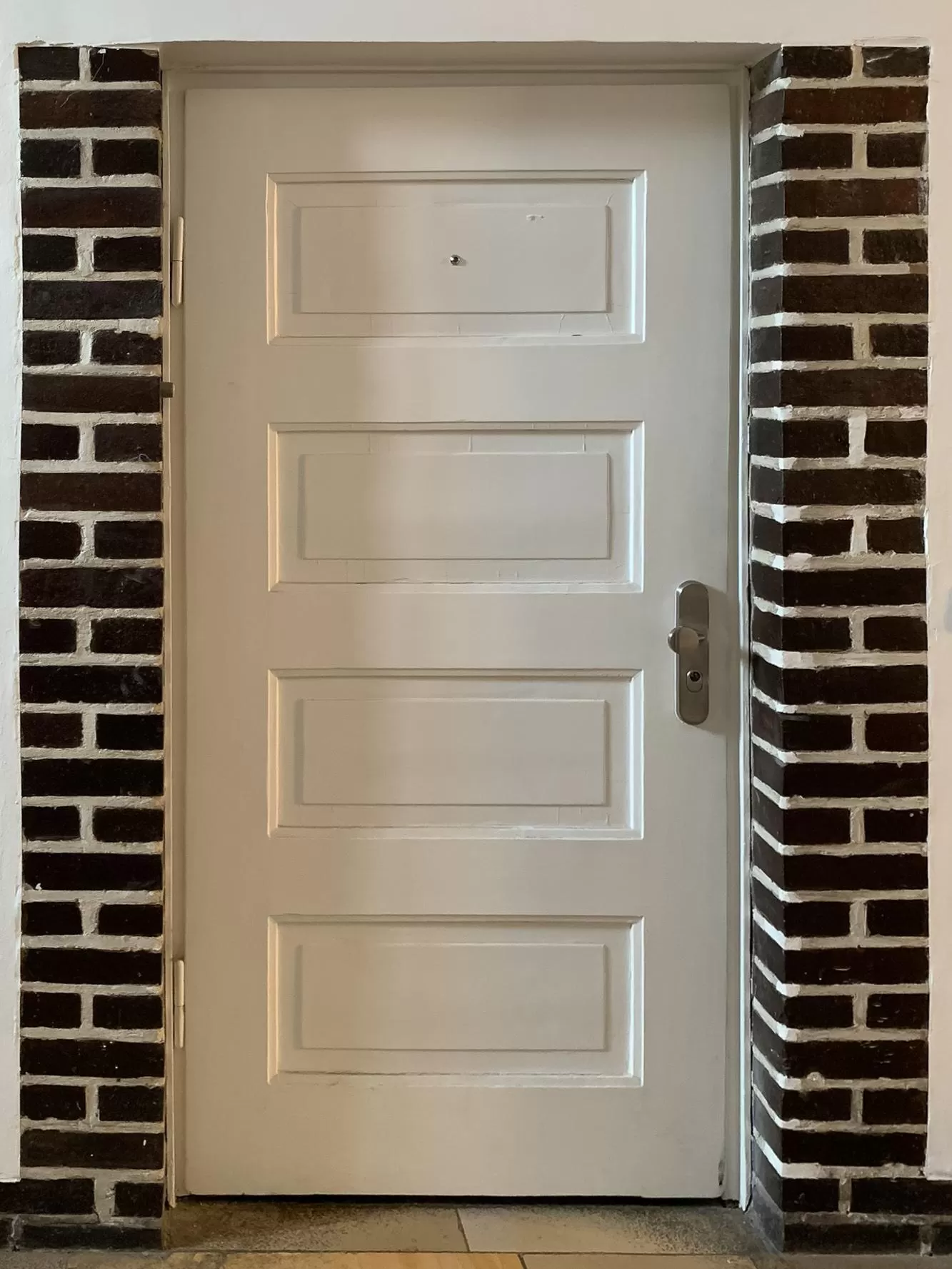
Post Office, 1925-1926. Architect: Thomas Wechs. Photo: Daniela Christmann