
1926 – 1927
Architect: Carl Fieger
Südstraße 6, Dessau-Roßlau, Germany
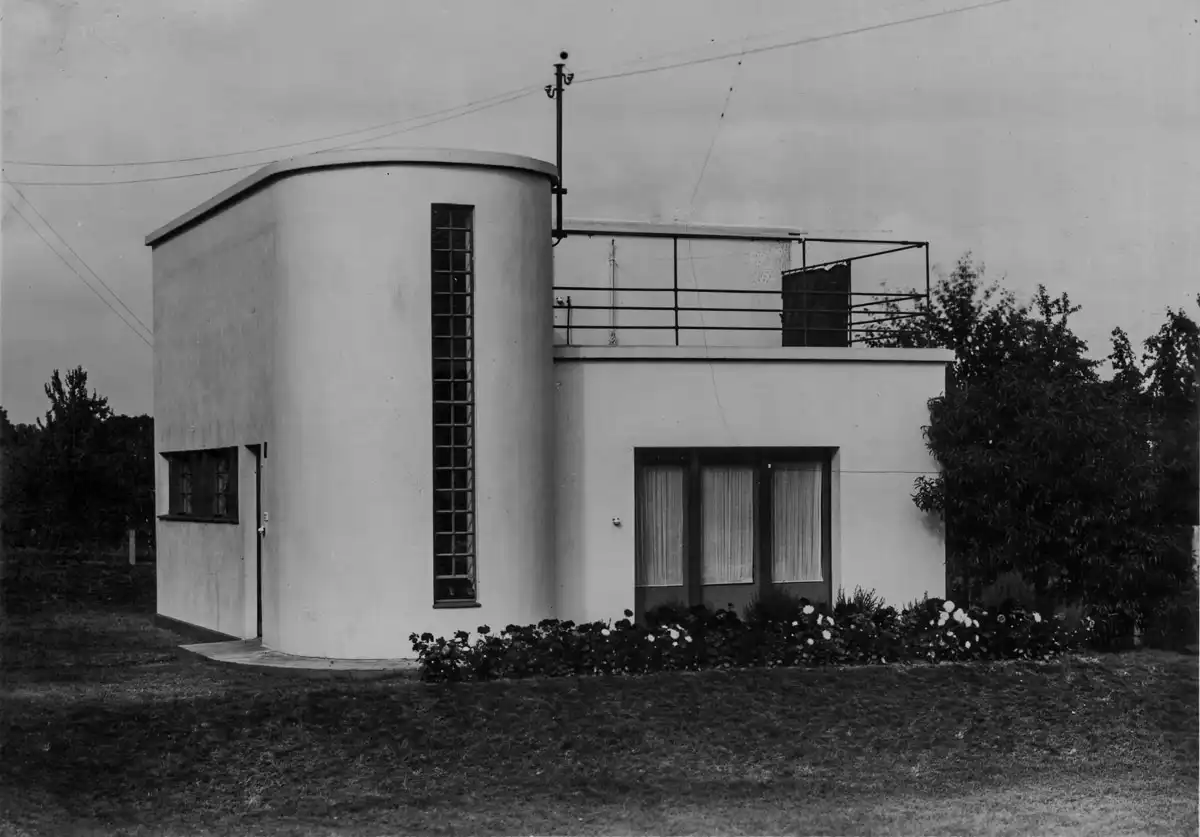
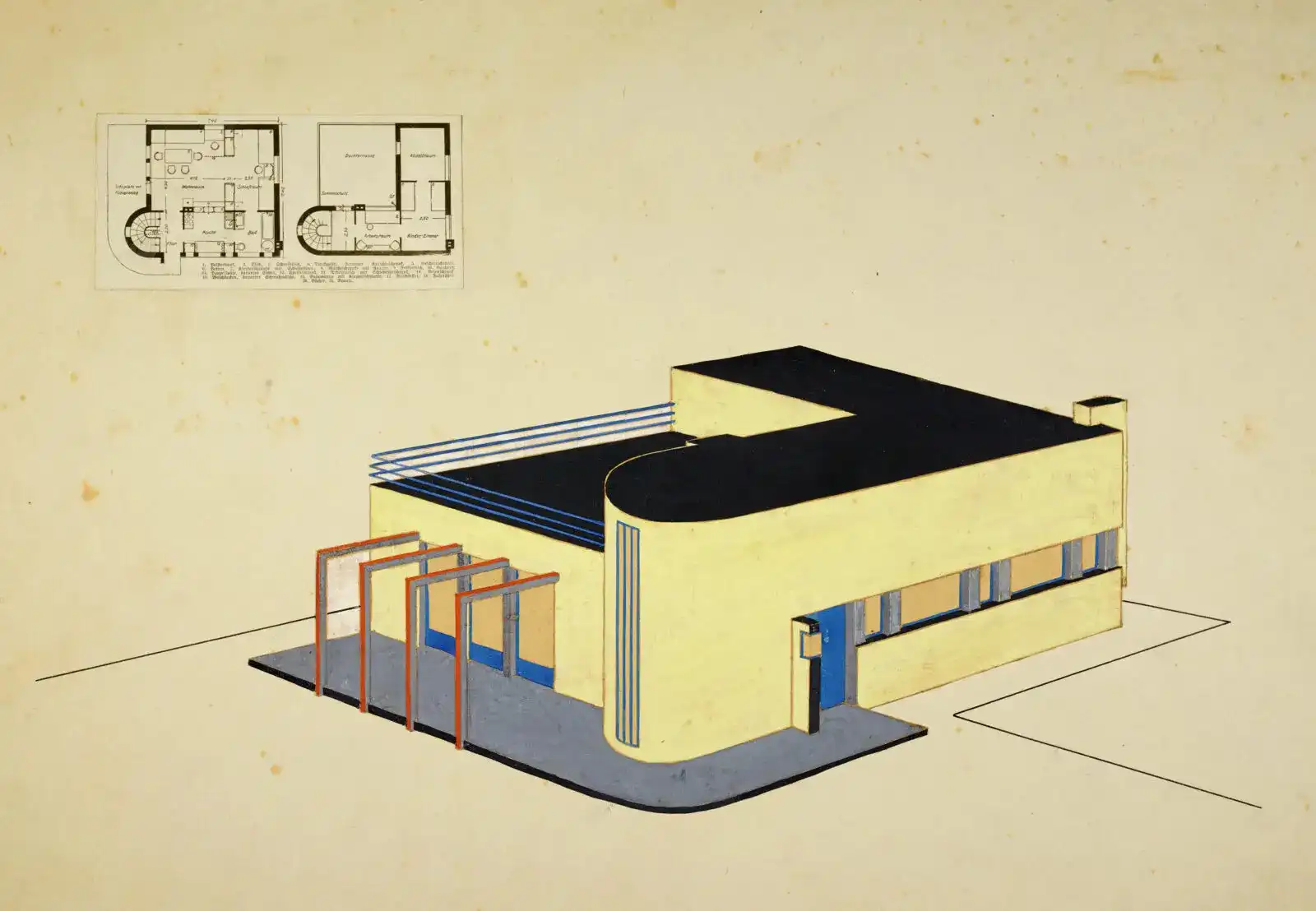
Fieger House, 1926-1927. Architect: Carl Fieger. Contemporary photo
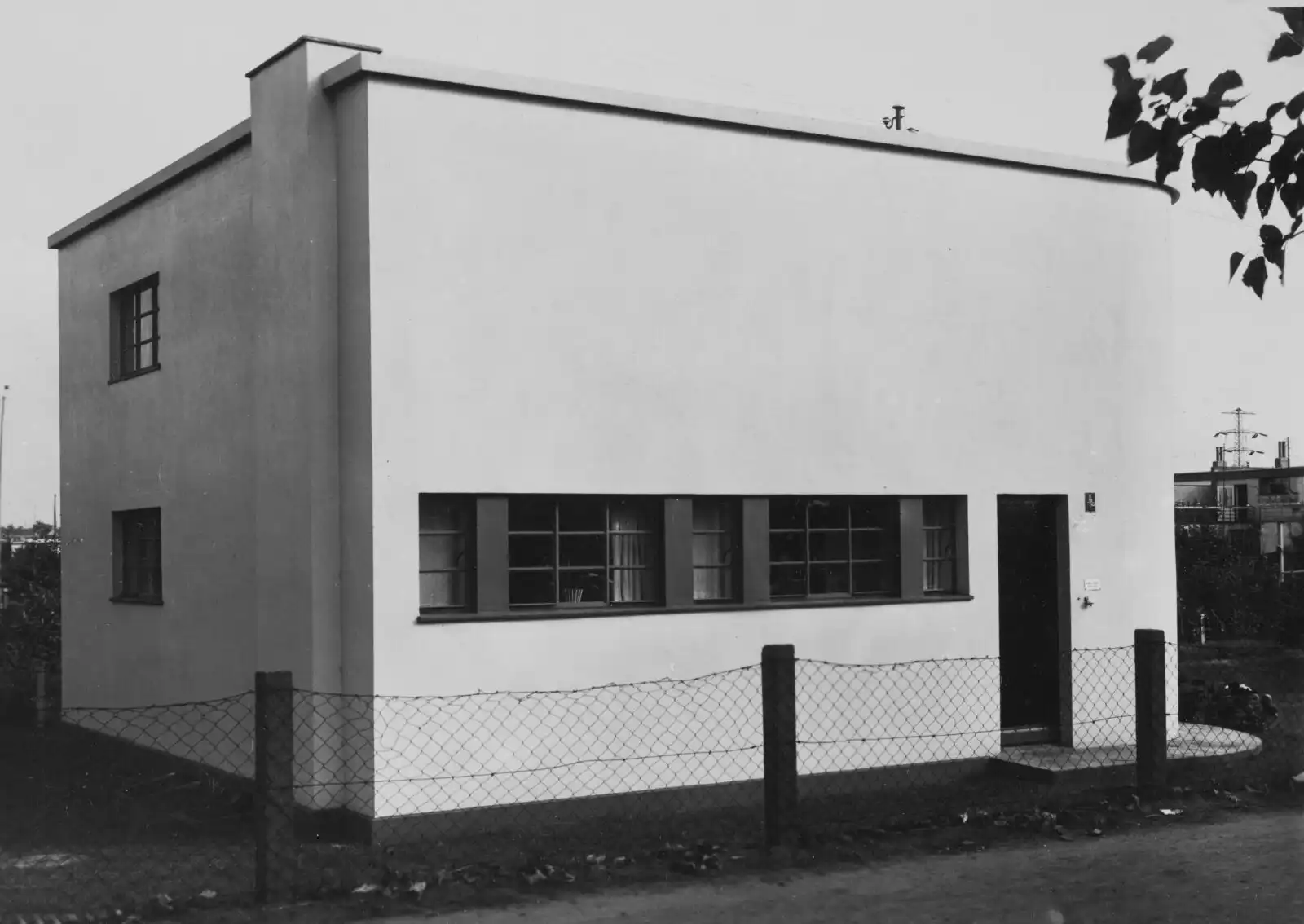
Fieger House, 1926-1927. Architect: Carl Fieger. Contemporary photo
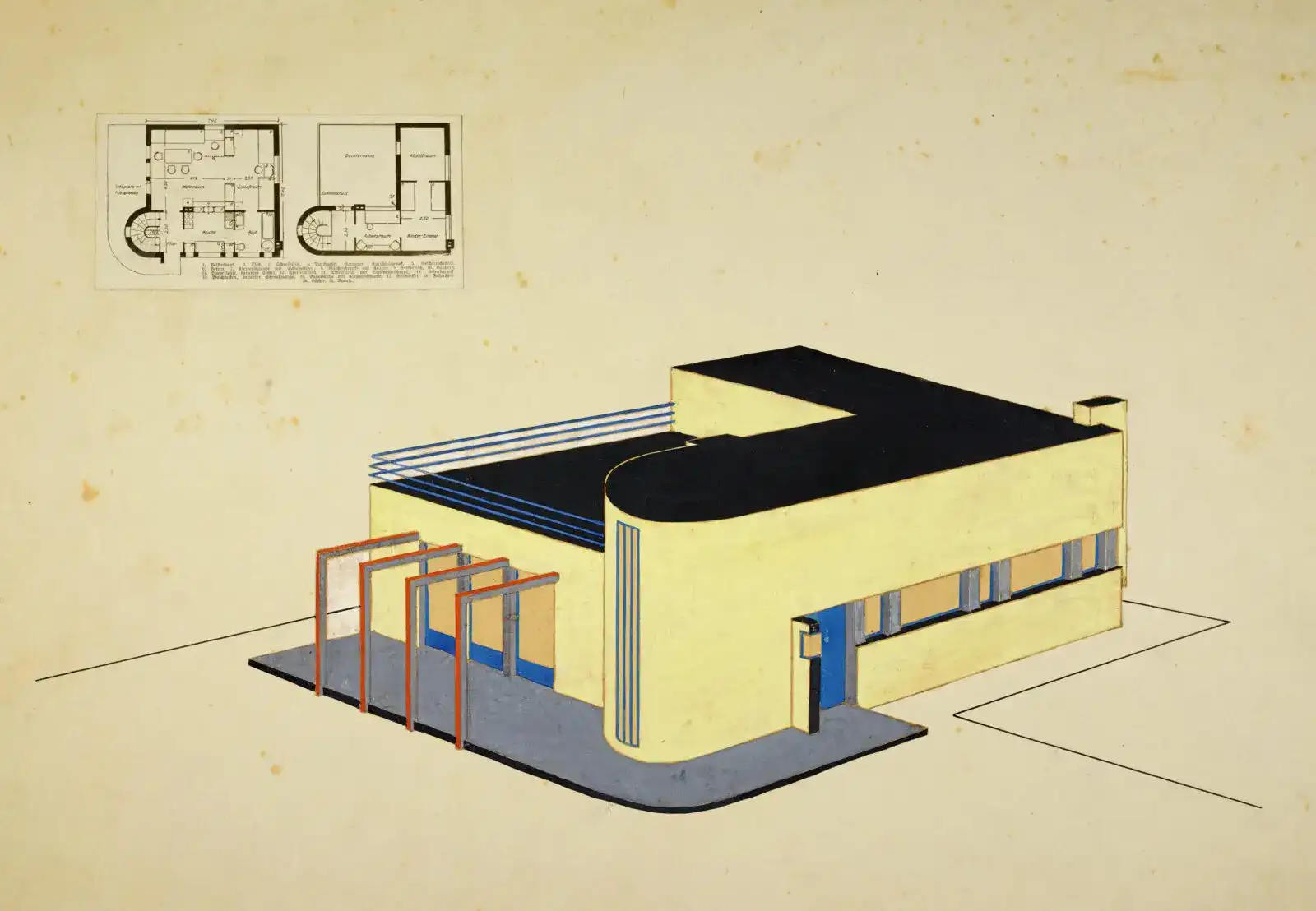
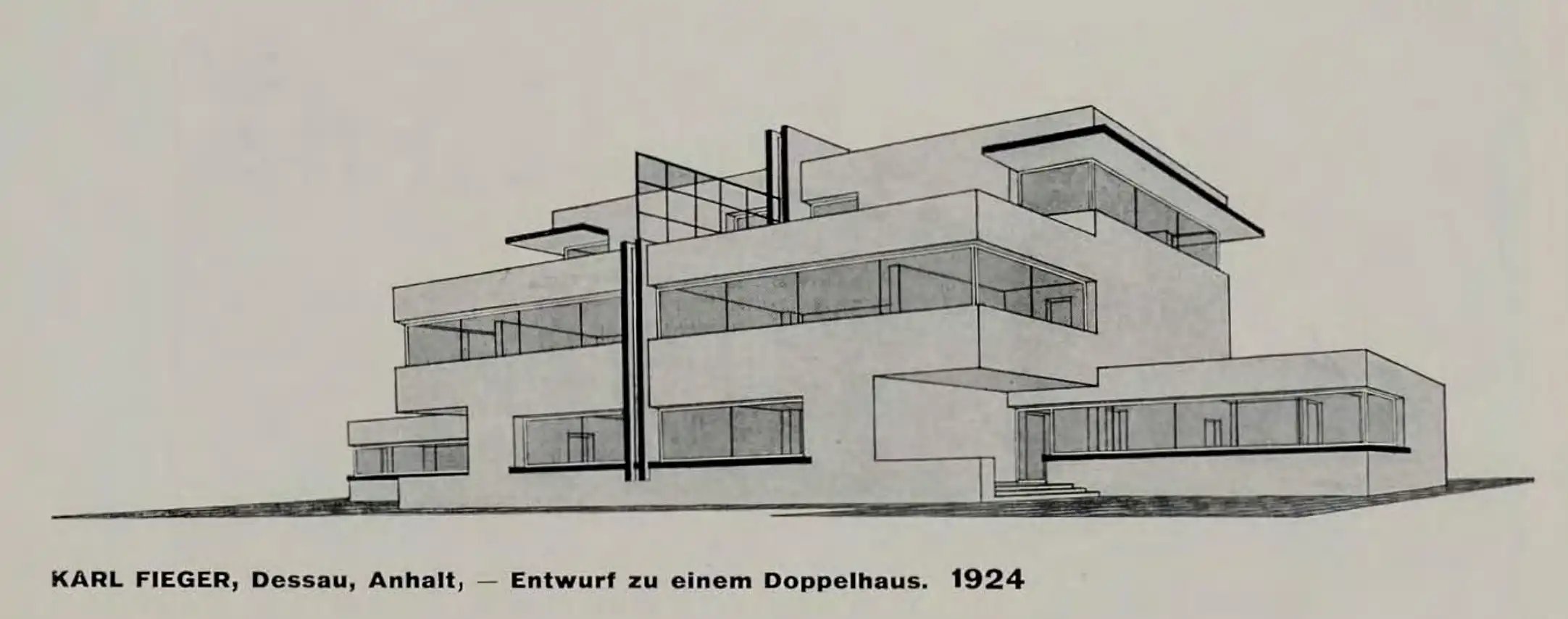
Built between 1926 and 1927 using a rational construction method, this two-story house is the only one of Carl Fieger’s designs to be realized out of a series of small houses. Fieger built the house for himself and his wife, Dora.
Construction of the house took place in conjunction with the development of the nearby Törten housing estate. Walter Gropius’s architectural firm planned the Törten housing estate in the southern part of Dessau. The house stands on the site of a gravel pit that was excavated during the first phase of construction of the estate. This saved Fieger the trouble of excavating the foundation.
The house stands in the immediate vicinity of the so-called “Steel House” designed by Georg Muche and Richard Paulick.
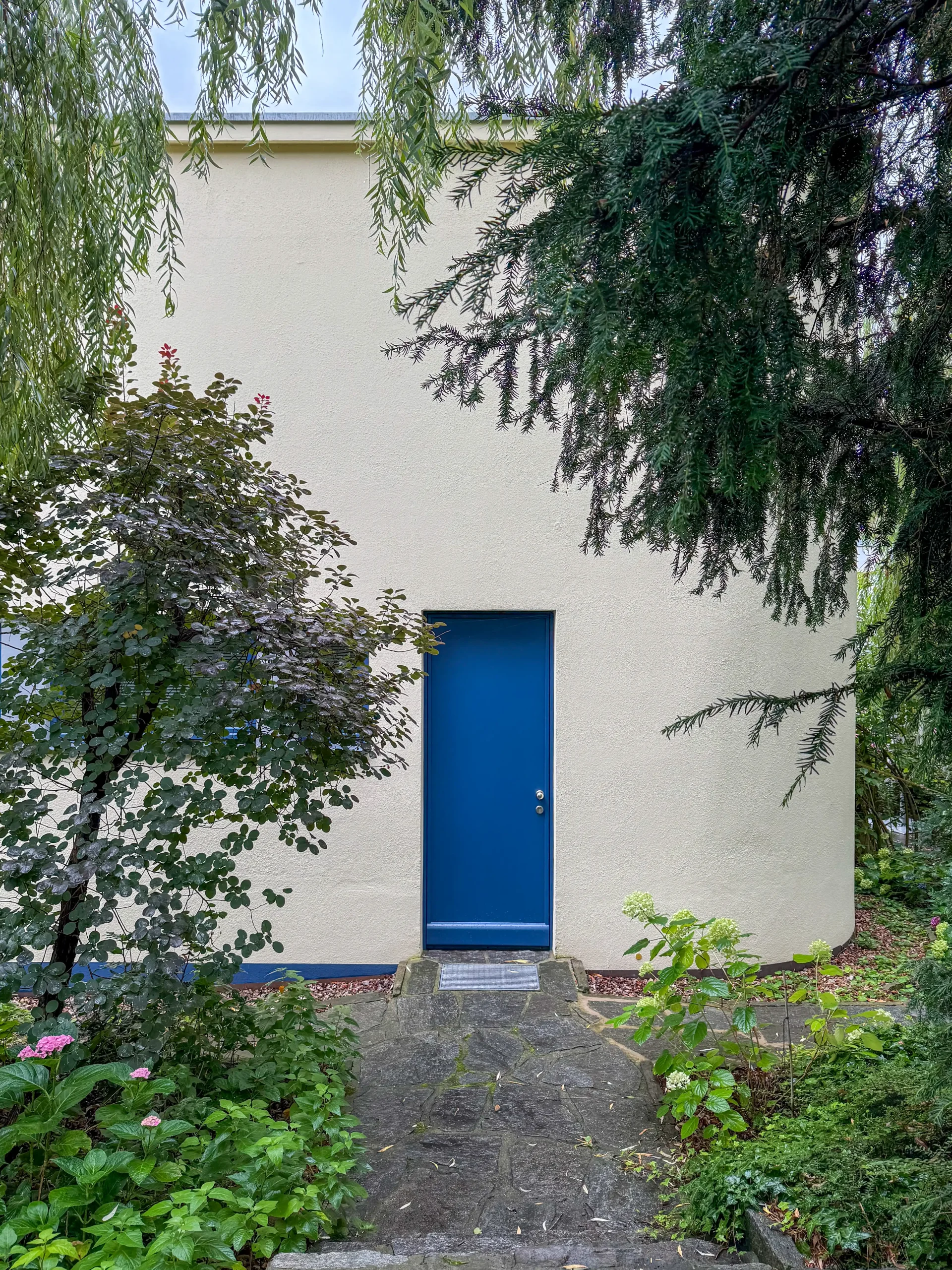
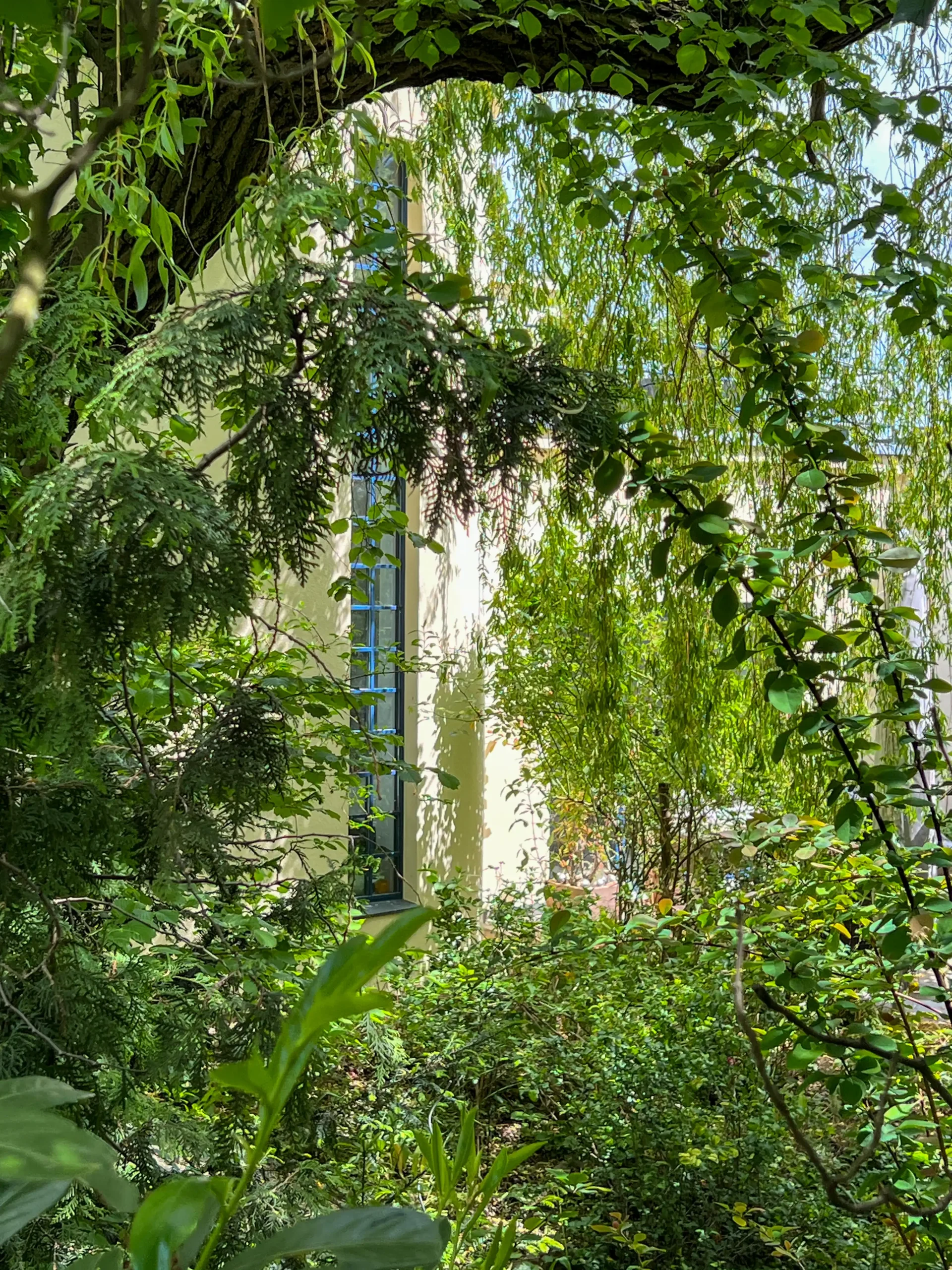
Built from large-format hollow blocks, the structure is complemented by a semicircular staircase projecting to the west and a terrace on the south side. The single-story cube is reserved for the living area, while the kitchen, bathroom, bedrooms, and study are located in the two-story wing. A narrow, vertically oriented window accentuates the staircase with its rounded top.
The plans shown were implemented with slight modifications.
Carl Fieger
Carl Fieger was a design architect in Walter Gropius’s office and one of his closest collaborators for many years. Beginning in 1927, he taught in the architecture department at the Bauhaus.
Fieger trained at the School of Building Trades and Applied Arts in Mainz, where he studied to become an architect and interior designer.
From 1911 to 1921, with an interruption due to World War I, he worked in Peter Behrens’s Berlin studio alongside Ludwig Mies van der Rohe and Le Corbusier. It was during this time that he met Walter Gropius and became his long-time collaborator.
From 1921 to 1934, Fieger worked for Gropius in Weimar, Dessau, and Berlin. In 1925, he followed Gropius and the Bauhaus to Dessau, where he designed his most notable works, including the Kornhaus restaurant and his own residence, Haus Fieger.
In 1927, he began teaching in the architecture department at the Bauhaus. Three years later, he followed Gropius to Berlin. However, after the National Socialists came to power, he was denied membership in the Reich Chamber of Culture (or Reich Chamber of Fine Arts), which amounted to a professional ban. He spent the years from 1934 to 1945 in Berlin and then returned to Dessau.
After the war, Fieger worked as the city planning director in Dessau until 1952. He played a role in the revival of the Bauhaus under Hubert Hoffmann. Subsequently, he worked at the Academy of Architecture in East Berlin.
There, he applied the experience he had gained at the Bauhaus as a research associate. In 1953, he participated in designing the GDR’s German Academy of Architecture’s first experimental prefabricated building project.
A serious illness forced him to retire from professional life. He died in Dessau in 1960 and is buried in the local cemetery.
Fieger House
While the design draws from Gropius’s functional style, it also exhibits distinctive features of Fieger’s approach.
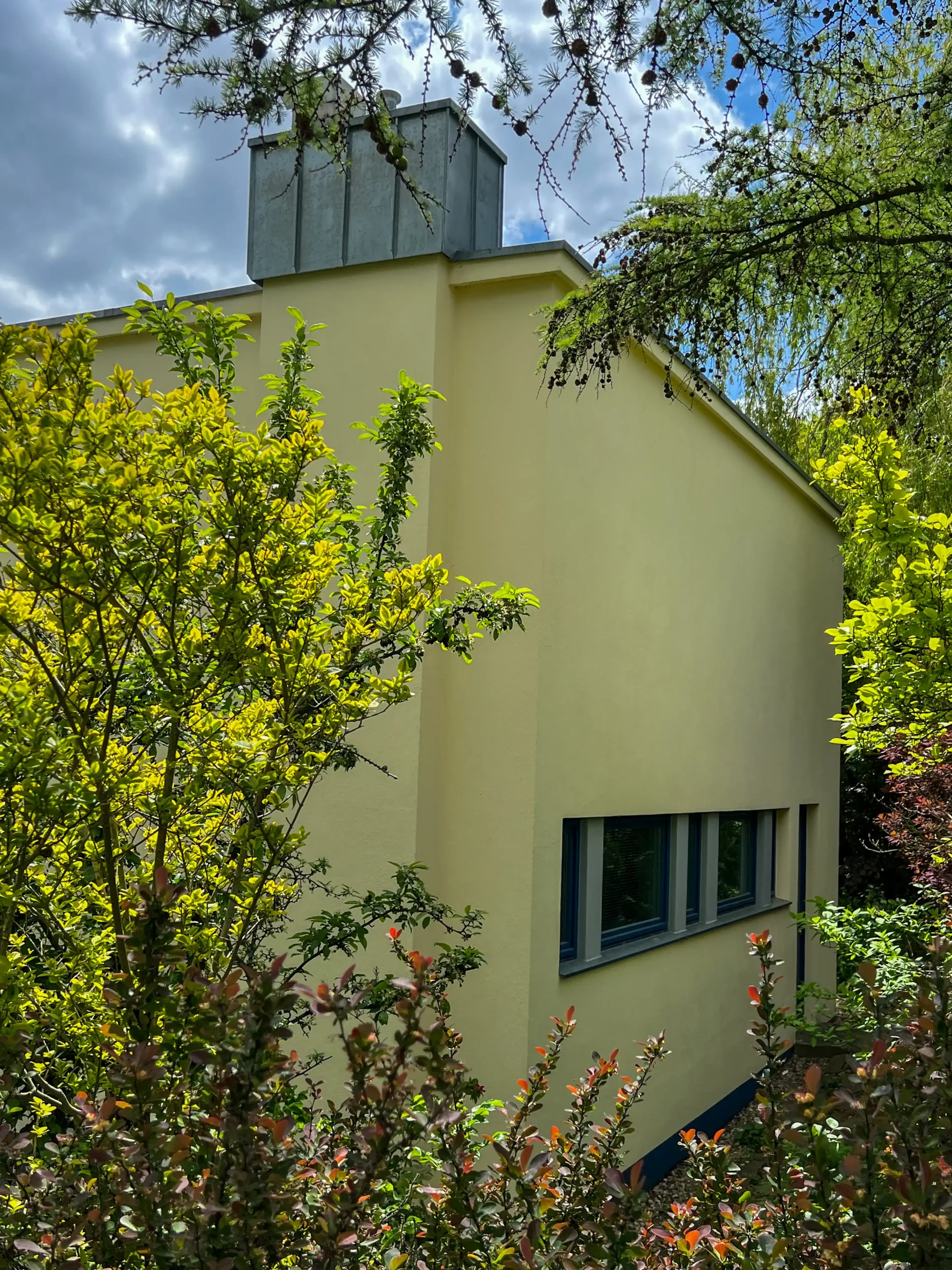
This two-story cubic structure has plastered facades and a flat roof, with a total living area of 74 square meters. A semicircular stair tower and varied window shapes set the building apart.
The house was to be plastered with a smooth, lemon-yellow finish. The terrace railing, front door, and window and door frames were painted cobalt blue to create a complementary contrast.
The vertical sections of the front door frame and the wide mullions of the window row were to be painted a medium shade of gray, contrasting with the cobalt blue window and door frames and door trim.
The tops of the pergola slats were to be painted a reddish-orange color (which were not installed), and the side elements were to be painted a light shade of gray.
Fieger House, 1926-1927. Architect: Carl Fieger. Photo: Daniela Christmann
Fieger House, 1926-1927. Architect: Carl Fieger. Photo: Daniela Christmann
Fieger House, 1926-1927. Architect: Carl Fieger. Photo: Daniela Christmann
Design
The design is the result of Fieger’s exploration of floor plan optimization and building service use. It largely corresponds to the design sketch published in: Carl Fieger, Die vereinfachte Haushaltung durch gute Organisation, Bauwelt 17, 1926, Heft 40, S. 972.
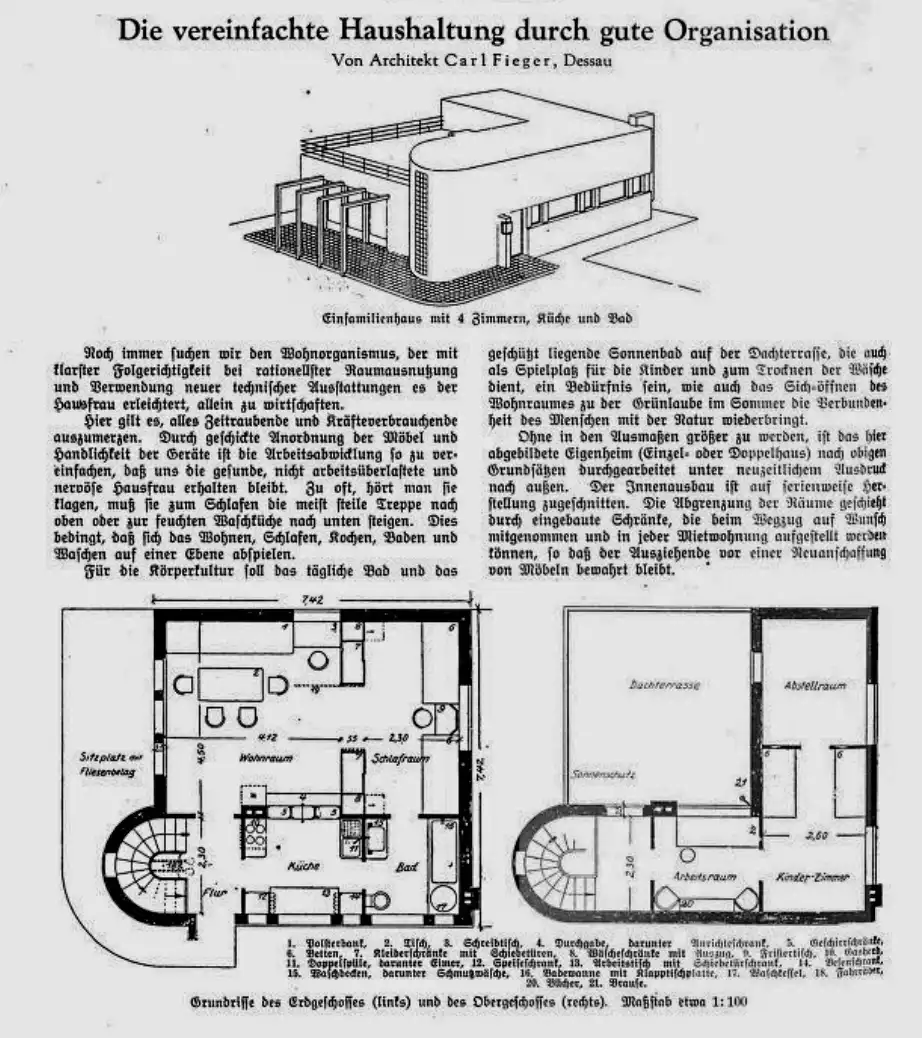
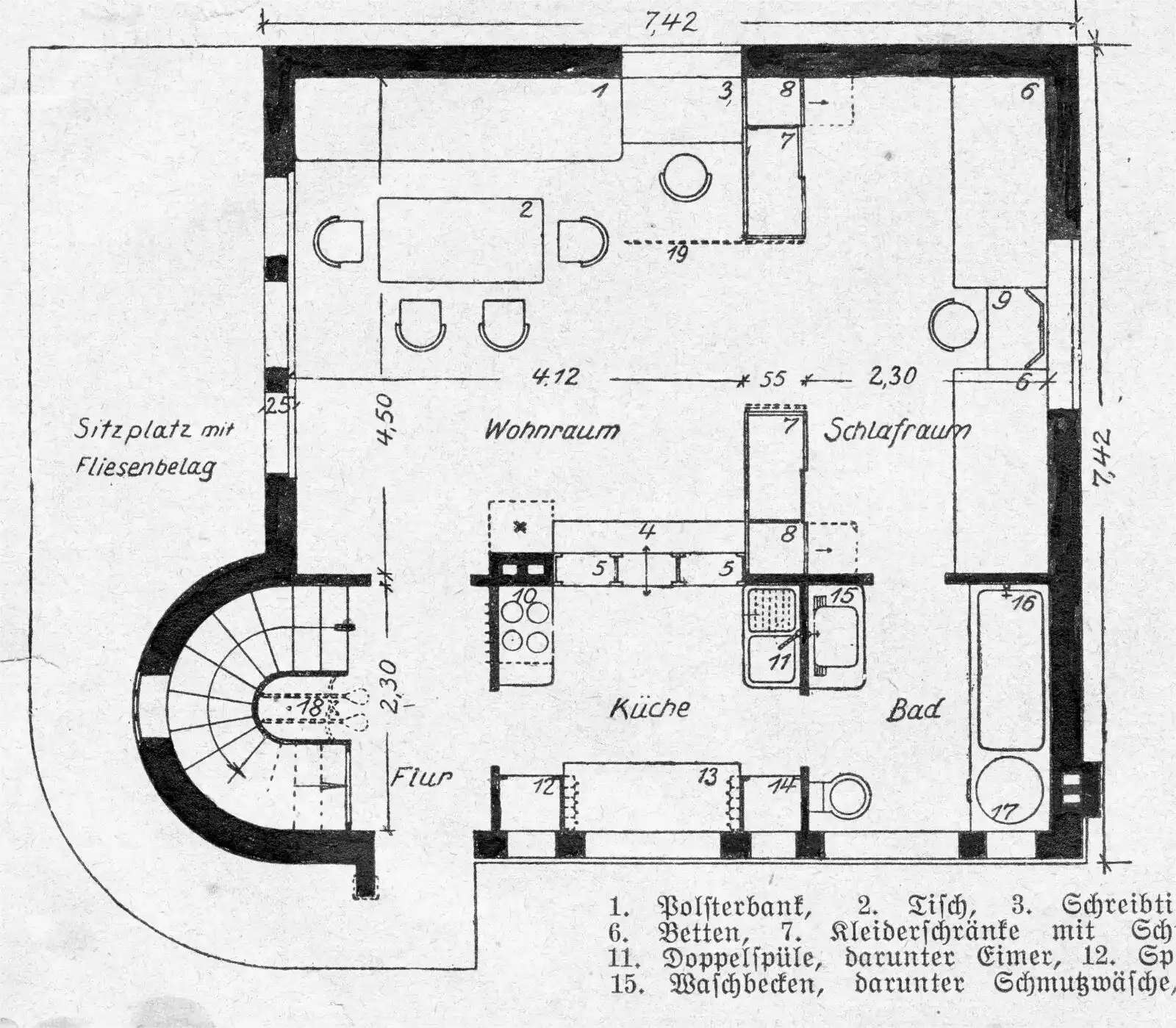
The bedrooms and bathroom face north, while the living and work areas face south. Thus, the arrangement of the rooms was based on their respective functions. Fieger planned virtually no circulation spaces, so all rooms adjoin one another directly.
The ground floor features a living room and a bedroom. These rooms are separated only by built-in closets and a sliding door. During the day, they can be combined into one large room, allowing for flexible use. The kitchen has a serving hatch that leads to the living room.
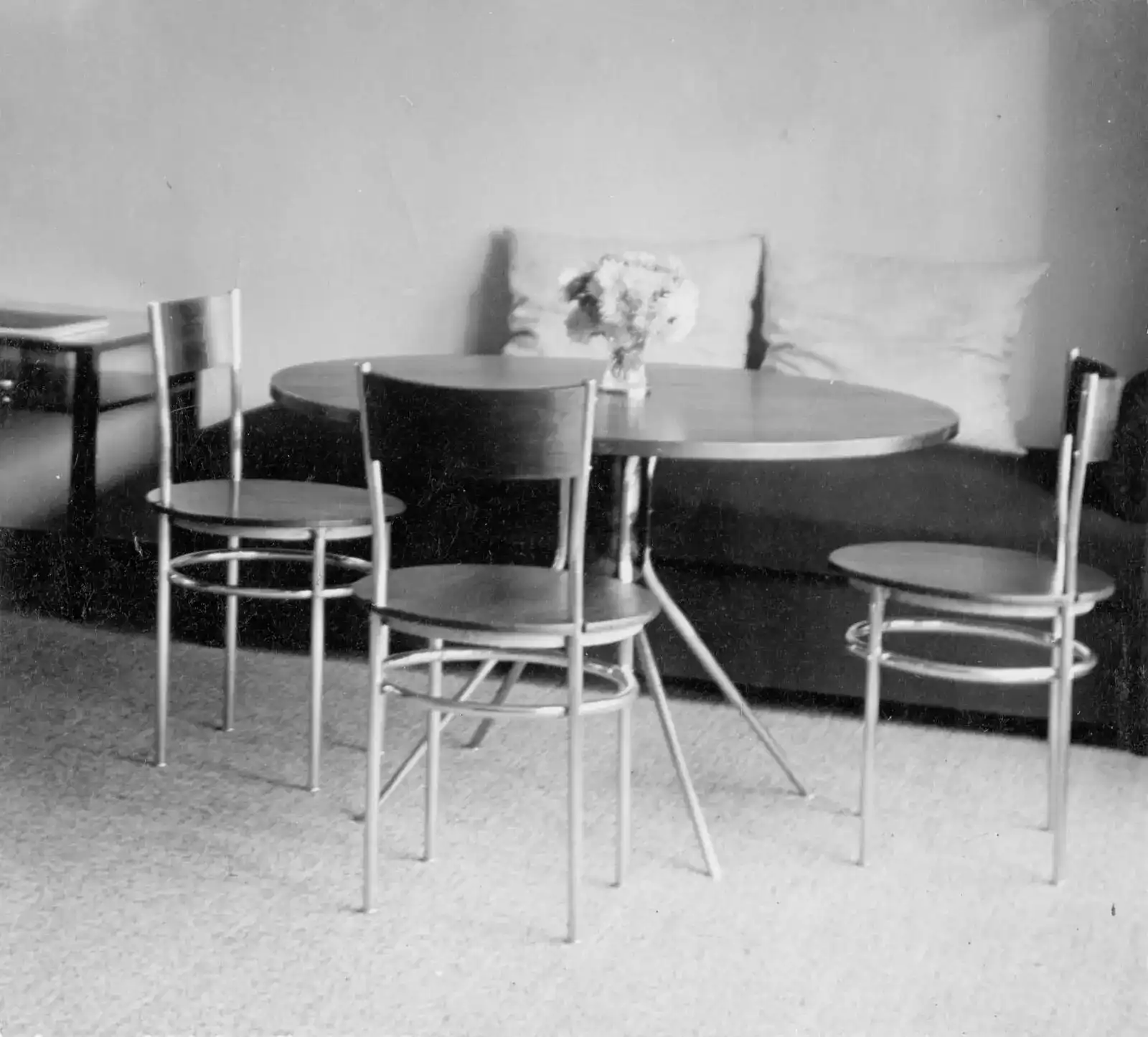
The interior furnishings, crafted in the Bauhaus workshops according to Fieger’s designs, further structure the spaces. Fieger designed strictly geometric furniture for the bedroom, as well as a tubular steel piece, both of which were manufactured in the Bauhaus workshops.
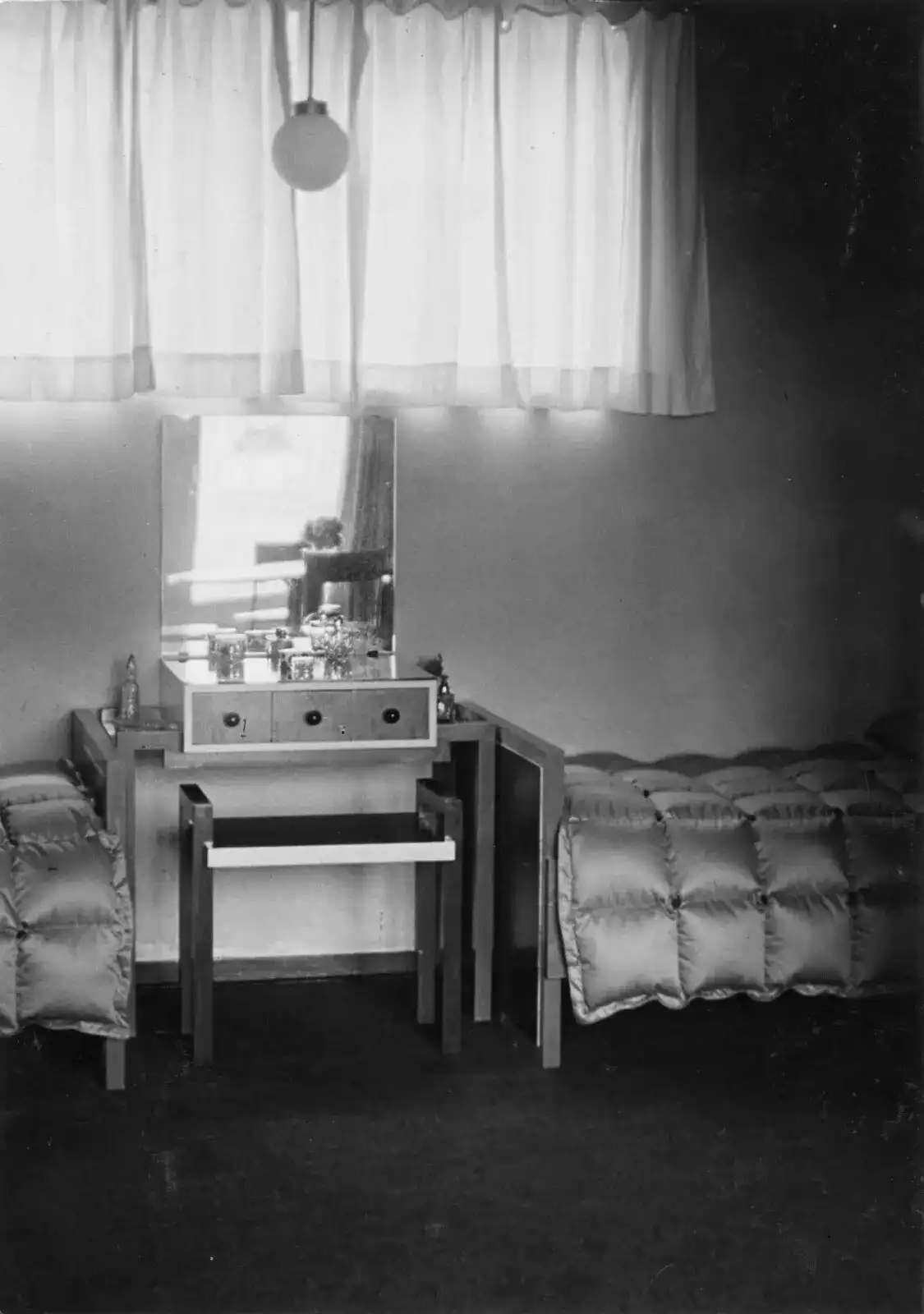
Fieger House, 1926-1927. Architect: Carl Fieger. Contemporary photo
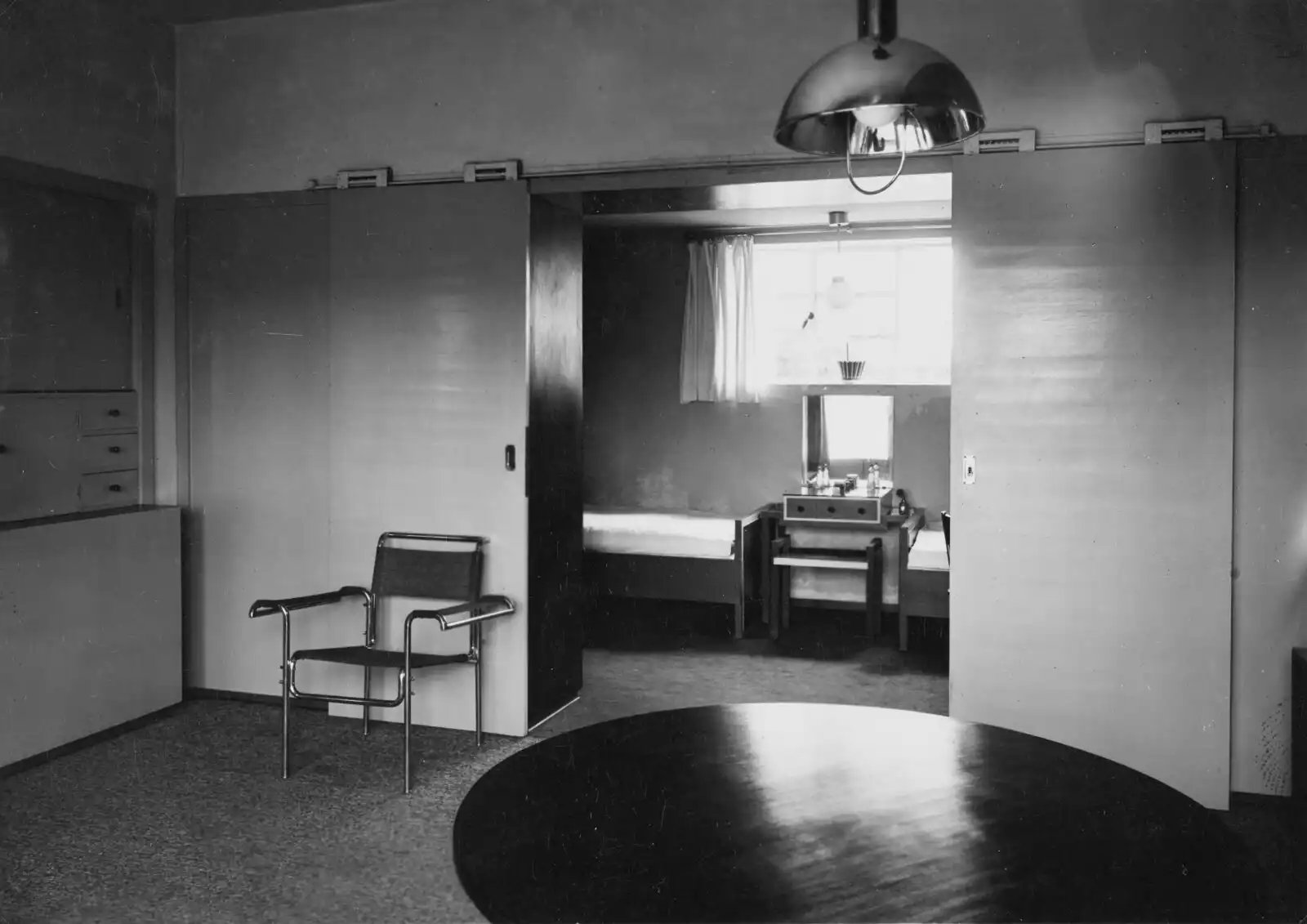
Fieger House, 1926-1927. Architect: Carl Fieger. Contemporary photo
Postwar Period and Current Use
The house was built by Carl Fieger in 1927–28. He left Dessau in 1928 to work with Walter Gropius in Berlin. Carl Fieger and his wife Dora lived in the house from 1945 to 1960.
It remained in Fieger’s possession until his death, after which it was sold by his wife.
The new owner added a room and a garage to the east façade. Otherwise, however, the original structure remained unchanged.
The house remains privately owned and is not open to the public.