
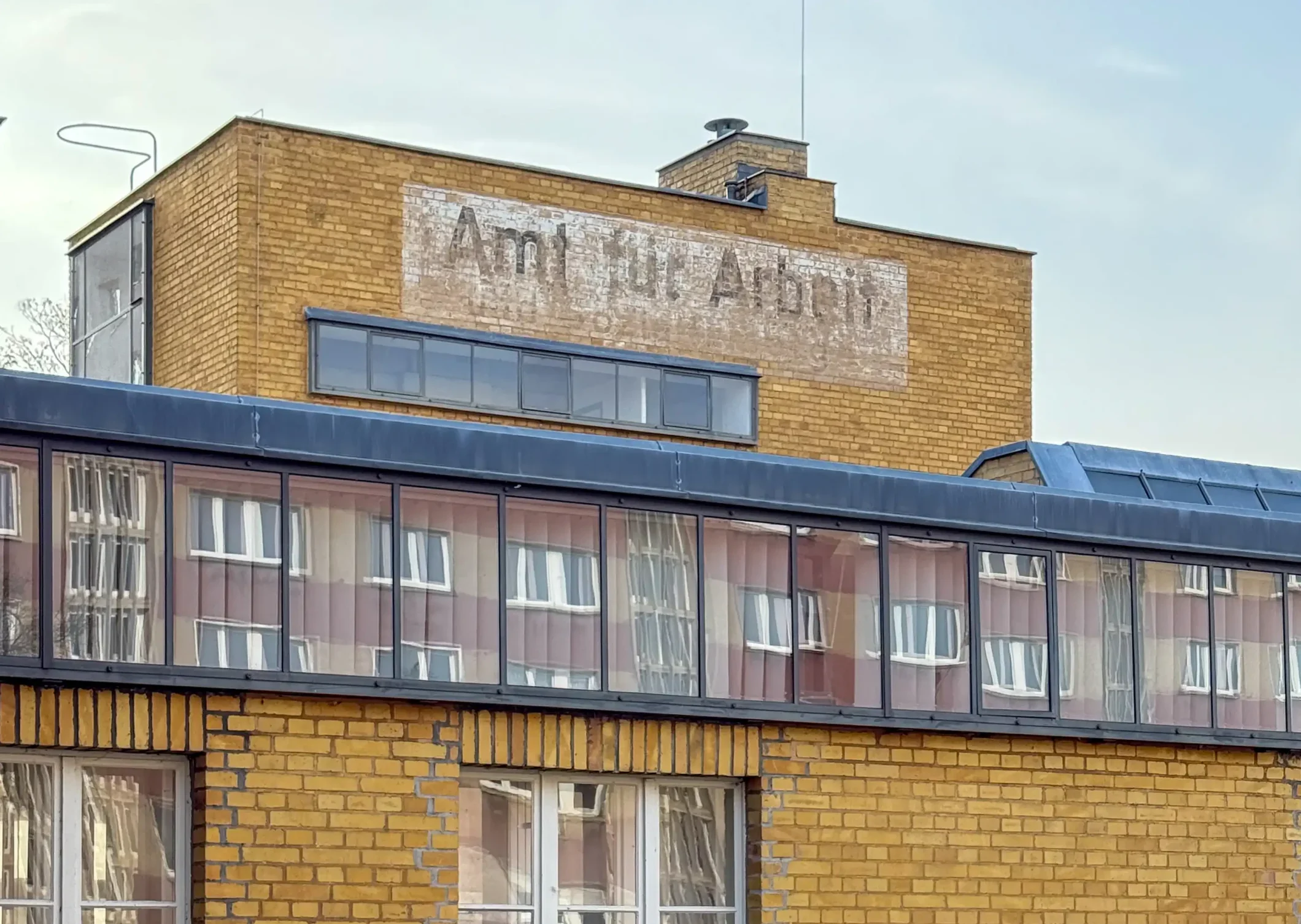
1928–1929
Architect: Walter Gropius
August-Bebel-Platz 16, Dessau-Roßlau, Germany
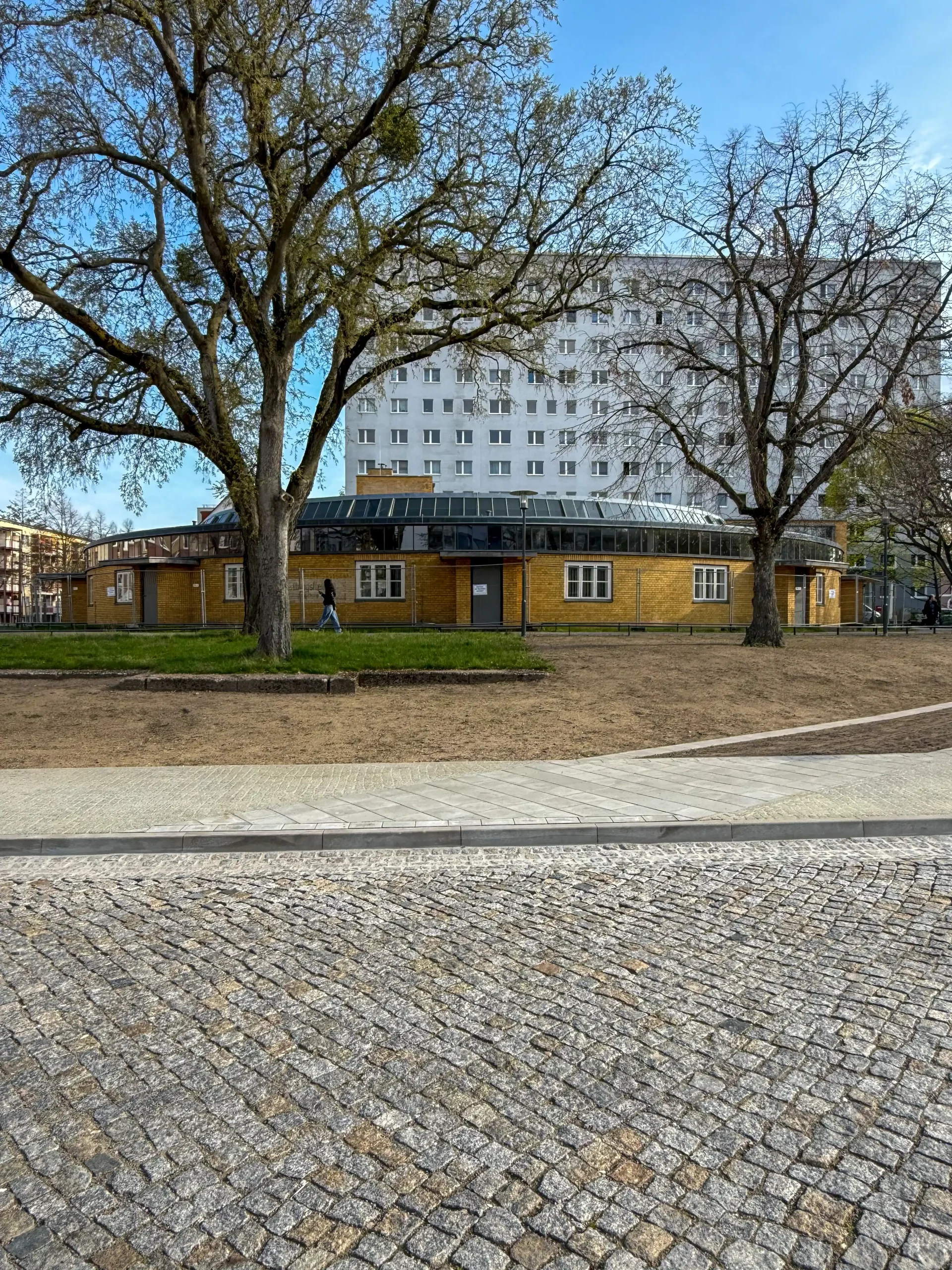
Dessau Employment Office, 1928-1929. Architect: Walter Gropius. Photo: Daniela Christmann
Reich Institute for Employment Services and Unemployment Insurance
The early 20th-century industrialization process highlighted the need to place and administer the unemployed and job seekers. Based on this conviction, the Reich Institute for Employment Services and Unemployment Insurance was founded in 1927.
The Employment Placement and Unemployment Insurance Act (AVAVG) of July 16, 1927 (RGBl. I p. 187) established the combination of employment placement and unemployment insurance, a characteristic that remains in Germany today. This act also served as the legal basis for the Reich Institute’s establishment. Earlier attempts had failed for financial reasons.
The Reichsanstalt was Germany’s first independent agency responsible for public employment services, career counseling, and unemployment insurance administration. It is considered the predecessor of today’s Bundesagentur für Arbeit (Federal Employment Agency).
Employment Office Competition
In early 1928, Walter Gropius was commissioned to design the new Dessau Employment Office after winning a restricted competition against architects Max Taut and Hugo Häring.
The goal was to “efficiently match a large number of job seekers from various professional fields with civil servants” (Walter Gropius, Bauhaus Buildings in Dessau, Munich, 1930, p. 202).
An entry in Ise Gropius‘s diary shows that Gropius submitted his plans for the office on March 1, 1927 (Ise Gropius, diary entry from March 1, 1927, Bauhaus Archive, Berlin).
On April 2, 1927, the jury decided on the submitted designs in the library room of Dessau City Hall. Ise Gropius reports on this: “Häring is eliminated, and Max Taut and Gr. have the same number of points. Gr. would receive the commission if the situation hadn’t changed due to the Reich taking over the employment records.”
The building was commissioned during the Great Depression to accommodate a large influx of unemployed people with a small staff. After one year of construction, it opened in May 1929.
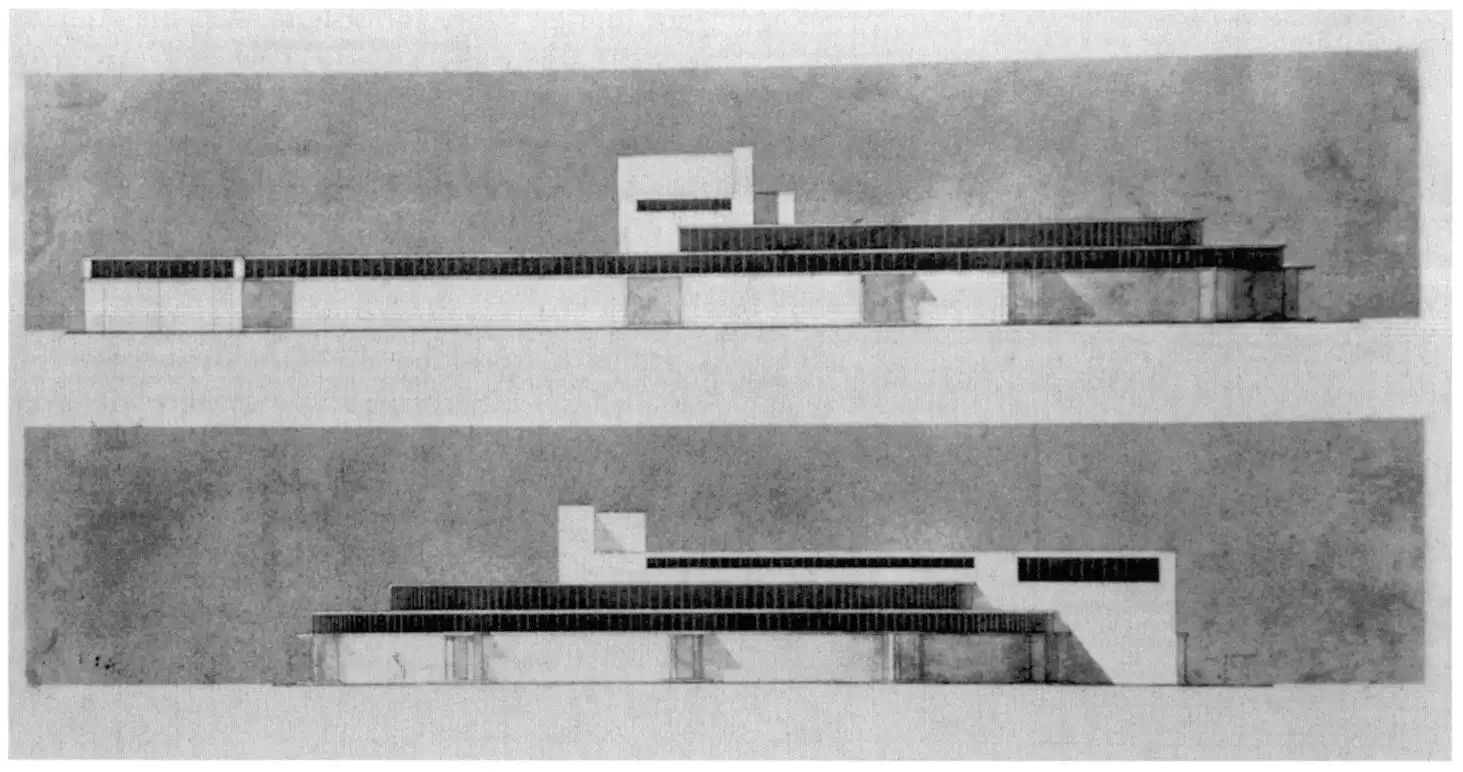
Walter Gropius, preliminary design drawing of the Dessau Employment Office, views from the east and north, 1927. Cambridge, Mass., Busch-Reisinger Museum
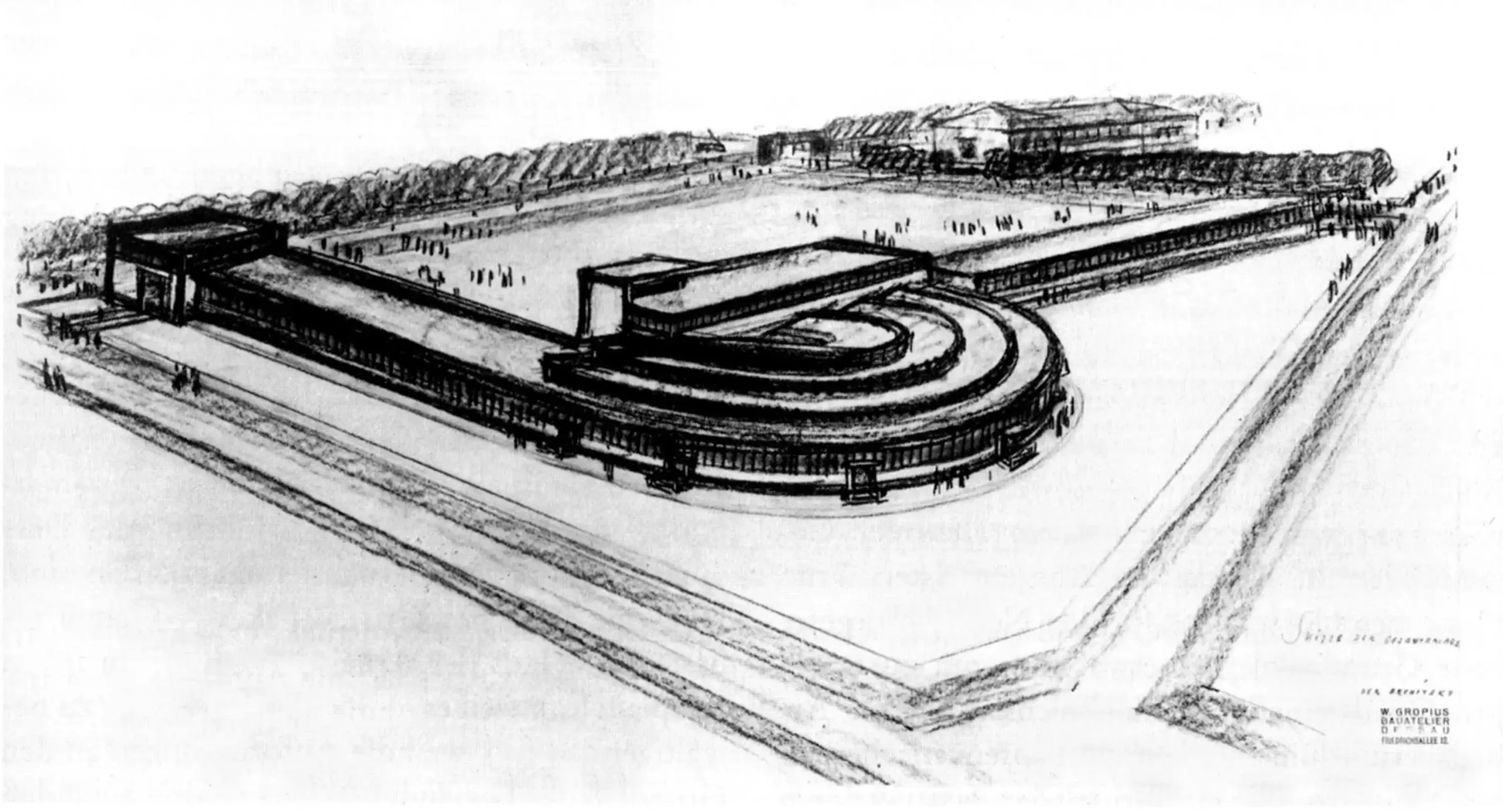
Walter Gropius, preliminary design drawing of the Dessau Employment Office, view from the northeast, 1927, Carl Fieger (attributed), photograph of the drawing
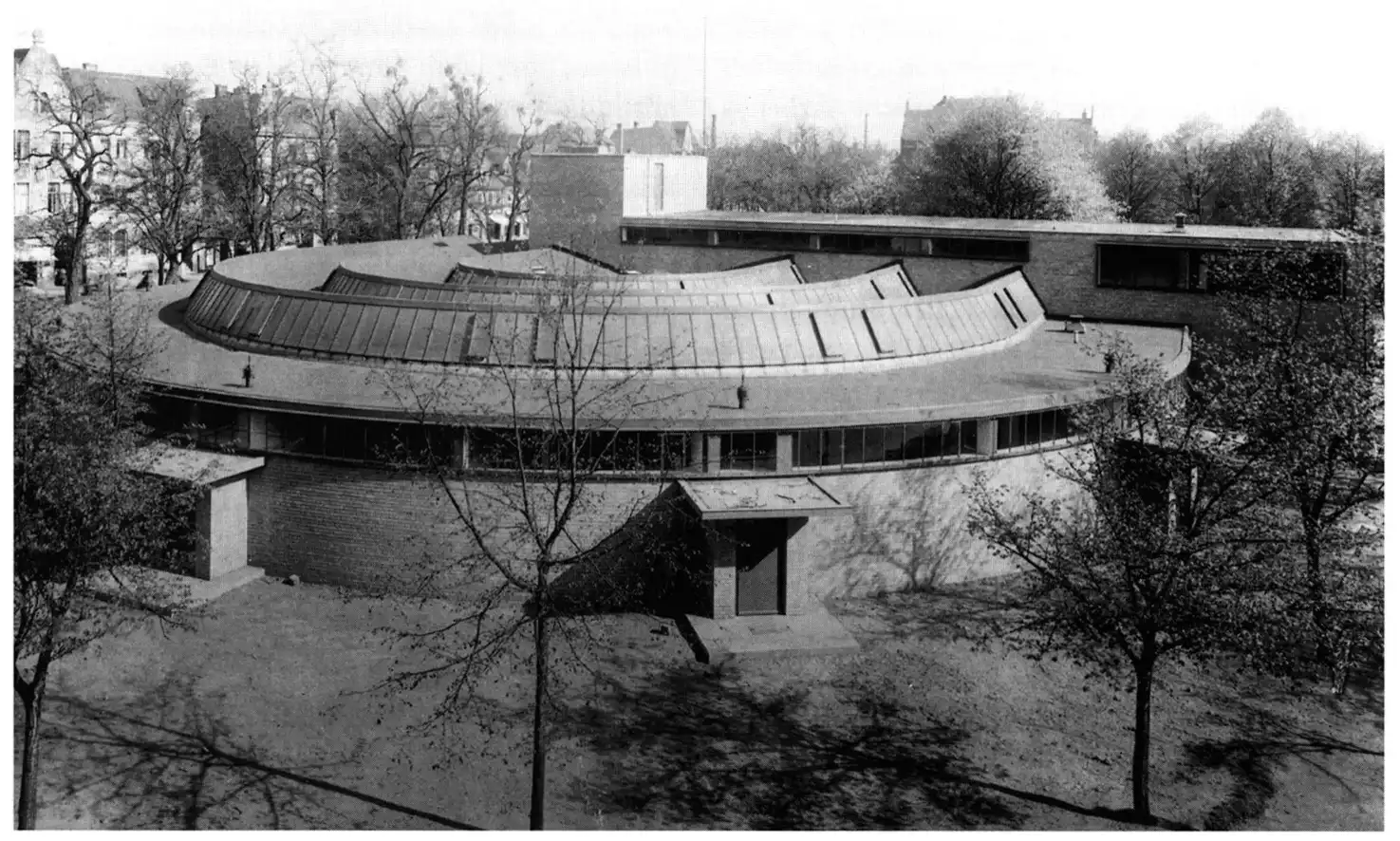
Walter Gropius, Dessau Employment Office, North Elevation, 1929
Gropius’s Employment Office
It is characterized by a commitment to rationalization, a principle that was also being implemented in the business world at the time.
Gropius designed two sections of the building differentiated by function: a linear structure for administration and a semicircular structure for public services.
The single-story public services structure is in front of the two-story administrative building. The latter has a floor plan that allows for the creation of large waiting areas. A conventional cubicle-style office layout would not have been able to accommodate the high volume of visitors.
An administrative wing, which is not accessible to the public, is attached to the semicircular, low-rise building. A recess in front of the building provides light to the basement.
The semicircular building has a steel frame, concentric interior walls clad in white glazed bricks, and a continuous glass roof.
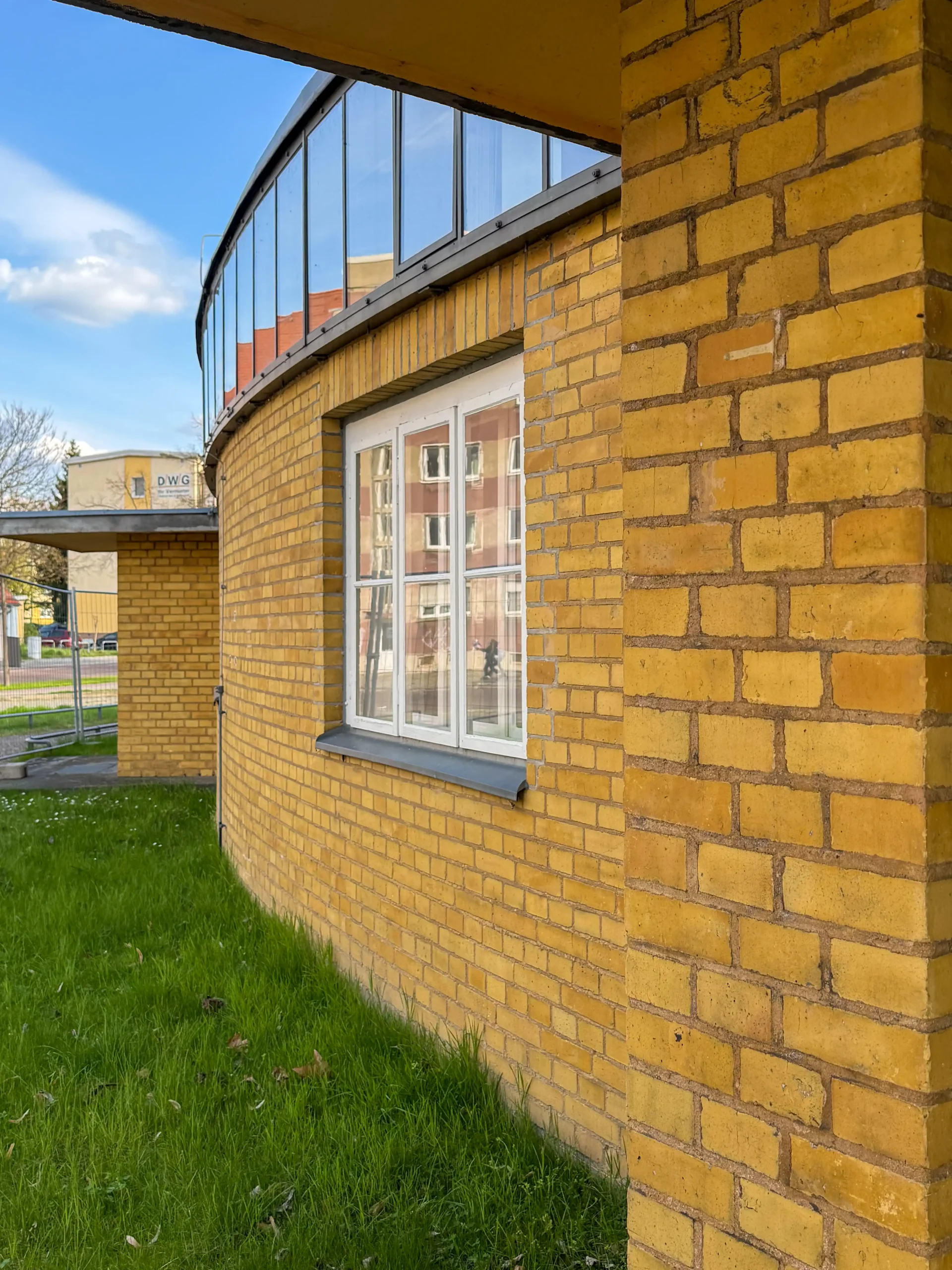
Dessau Employment Office, 1928-1929. Architect: Walter Gropius. Photo: Daniela Christmann
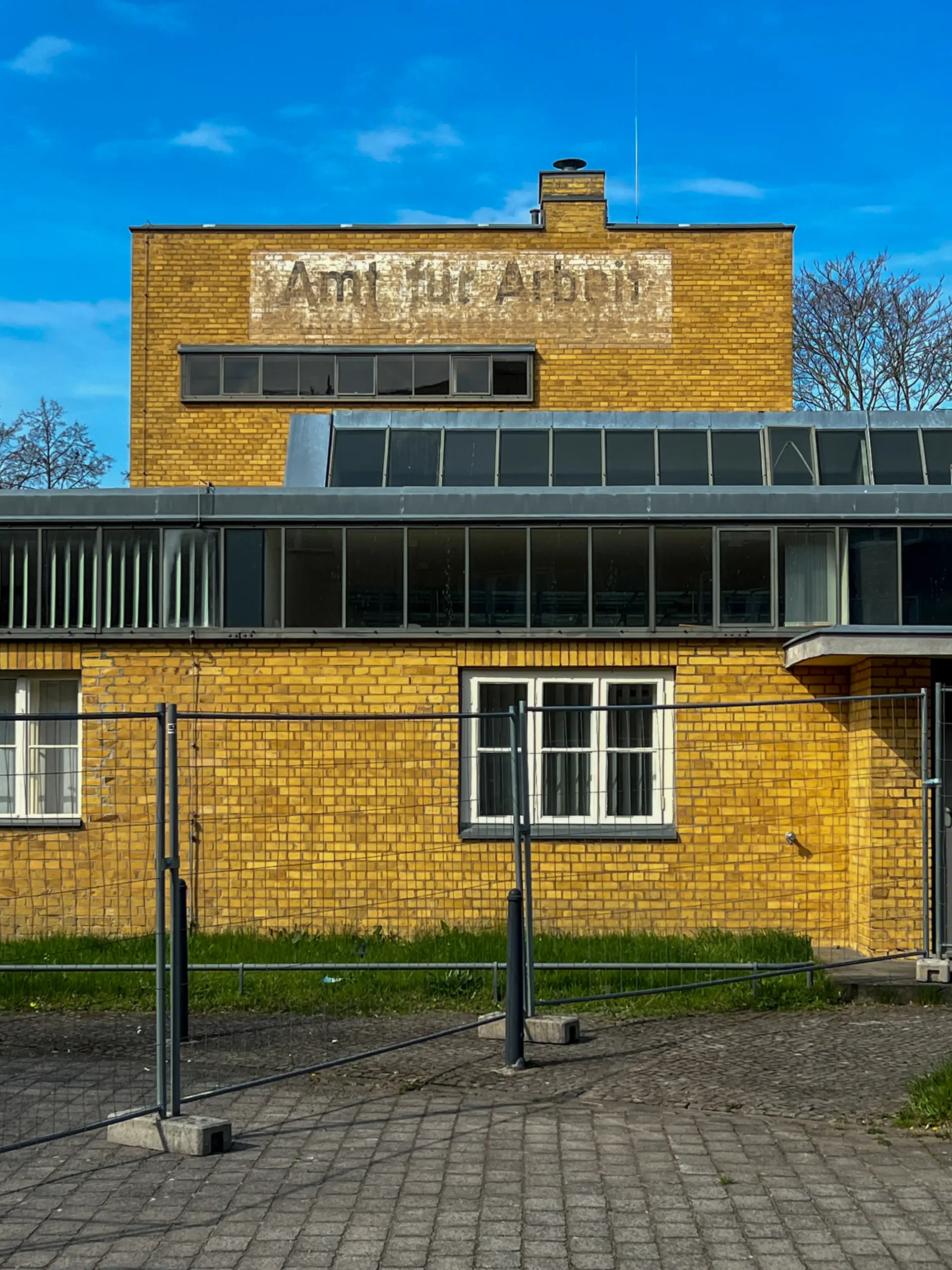
Dessau Employment Office, 1928-1929. Architect: Walter Gropius. Photo: Daniela Christmann
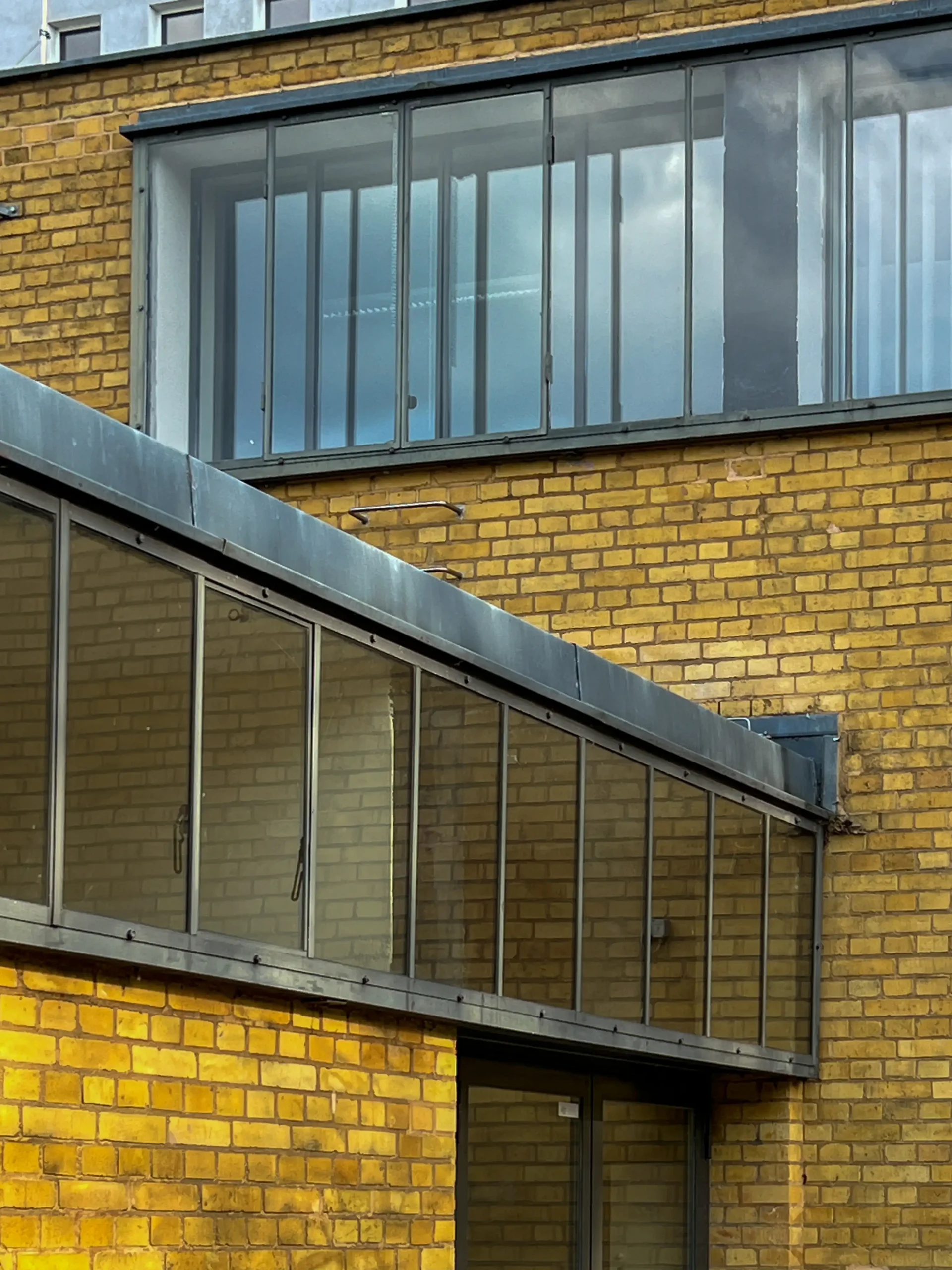
Dessau Employment Office, 1928-1929. Architect: Walter Gropius. Photo: Daniela Christmann
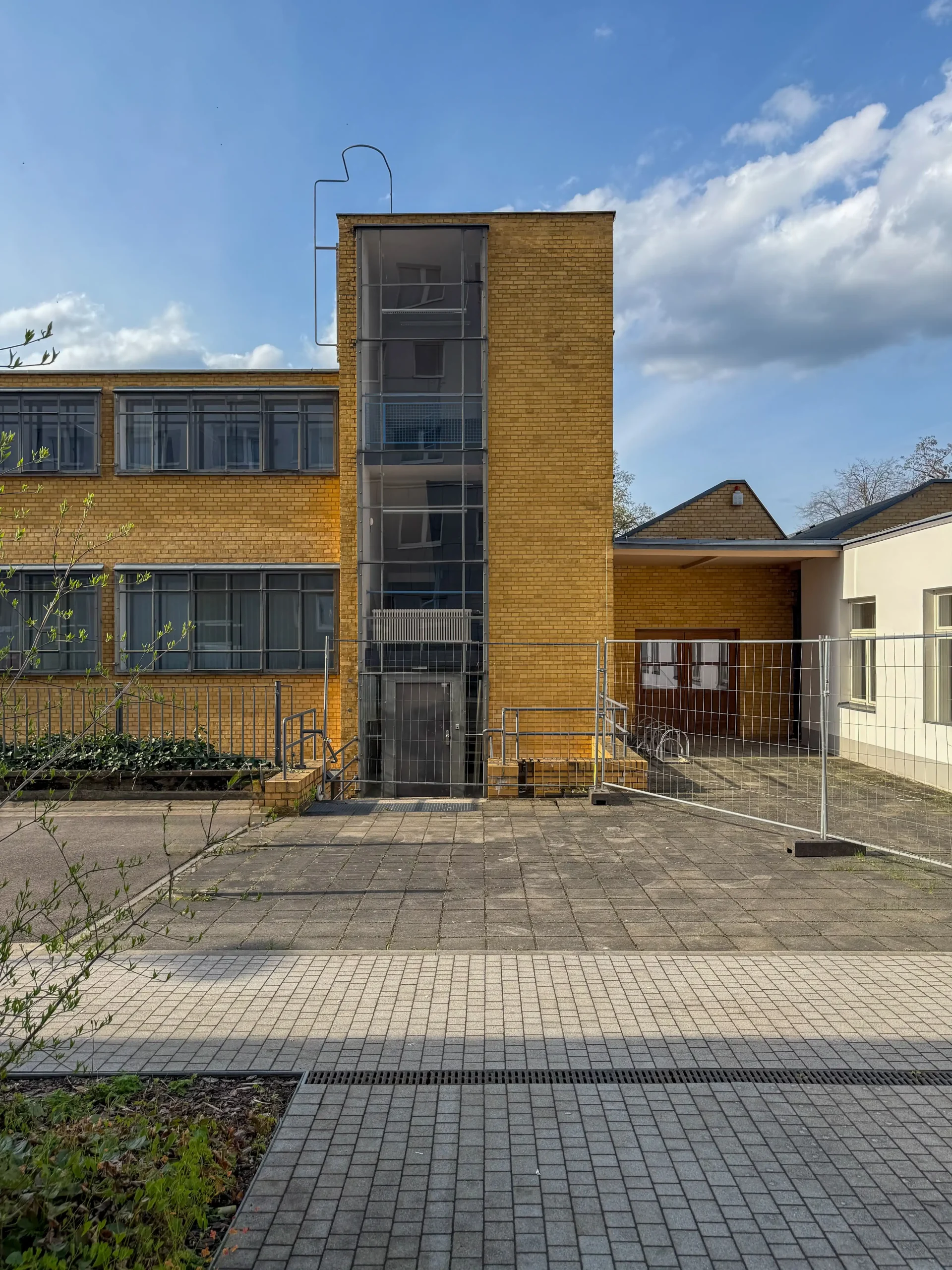
Dessau Employment Office, 1928-1929. Architect: Walter Gropius. Photo: Daniela Christmann
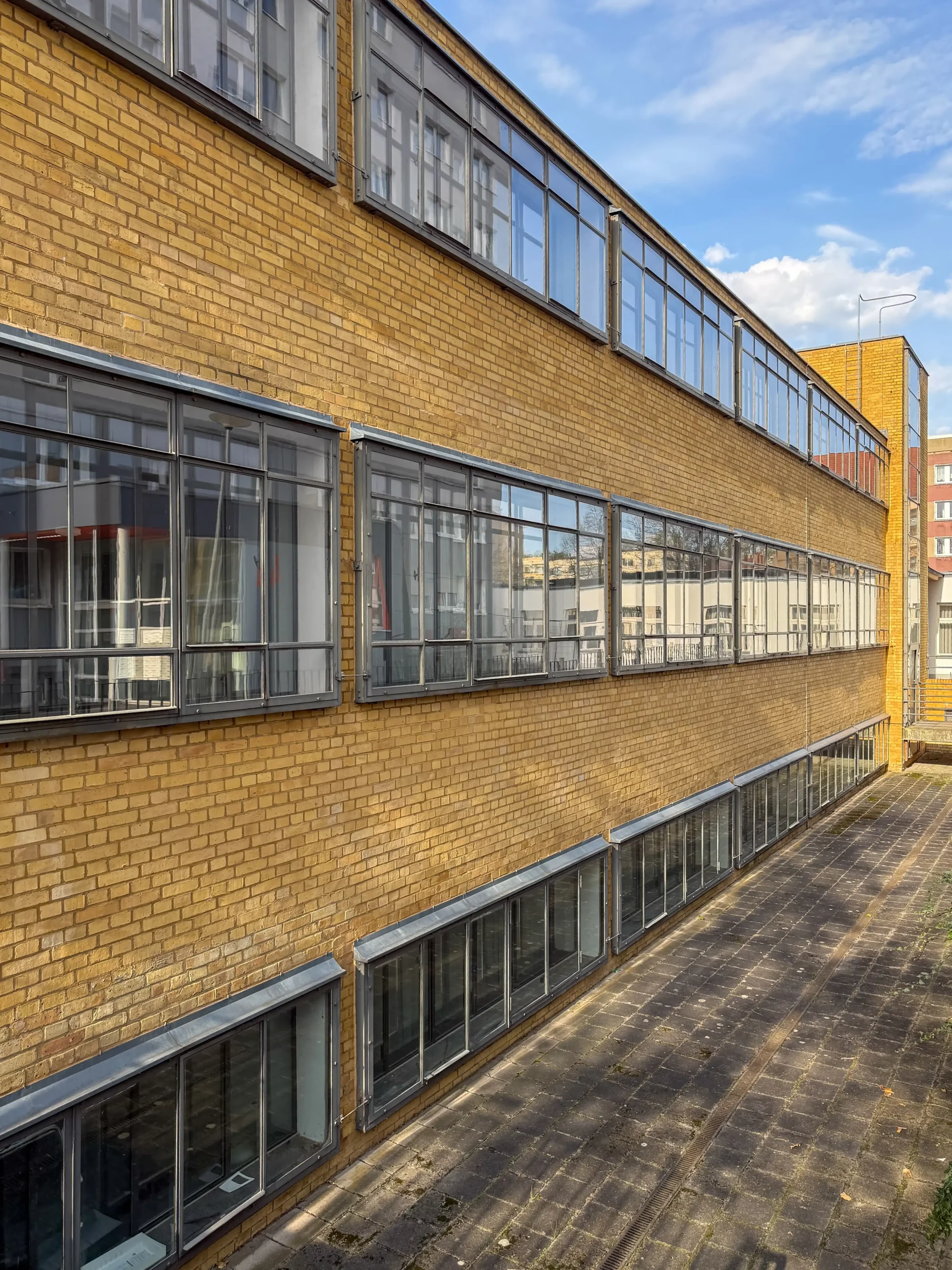
Dessau Employment Office, 1928-1929. Architect: Walter Gropius. Photo: Daniela Christmann
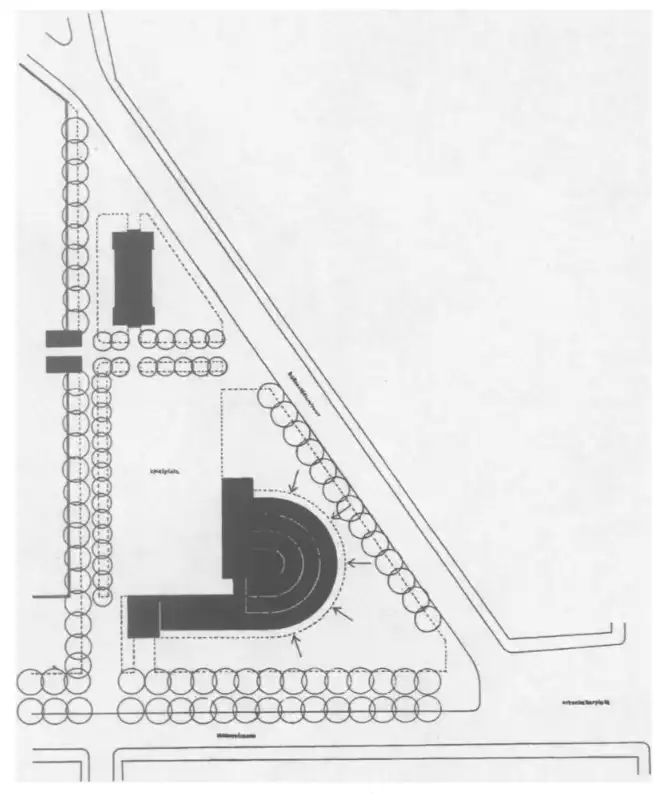
Walter Gropius, Dessau Employment Office, Site Plan, 1927
Floor Plan
To channel the influx of job seekers, numerous doors were installed along the exterior wall of the freestanding building to direct people toward the counters. There are six entrances, separated by gender and occupation, that lead to similarly organized areas behind them.
The waiting rooms for the various professional groups were arranged along the periphery of the building in a segmented pattern, while the individual consultation rooms were located inside.
Gropius described the architect as a “synthesizing organizer” who “must gather all the scientific, technical, economic, and design problems of building and, in collaboration with numerous specialists and workers, systematically merge them into a unified work.” He explained that the semicircular shape meant that the interior rooms were lit with the help of concentrically arranged skylights (Walter Gropius, Bauhaus Buildings in Dessau, Munich 1930, pp. 202, 216).
Since the Dessau employment office favored individual counseling, Gropius’s main task was arranging the rooms by profession for job placement, unemployment insurance, and career counseling in a way that best accommodated the workflow. To this end, he chose a semicircular floor plan and divided it into six ring-shaped sections.
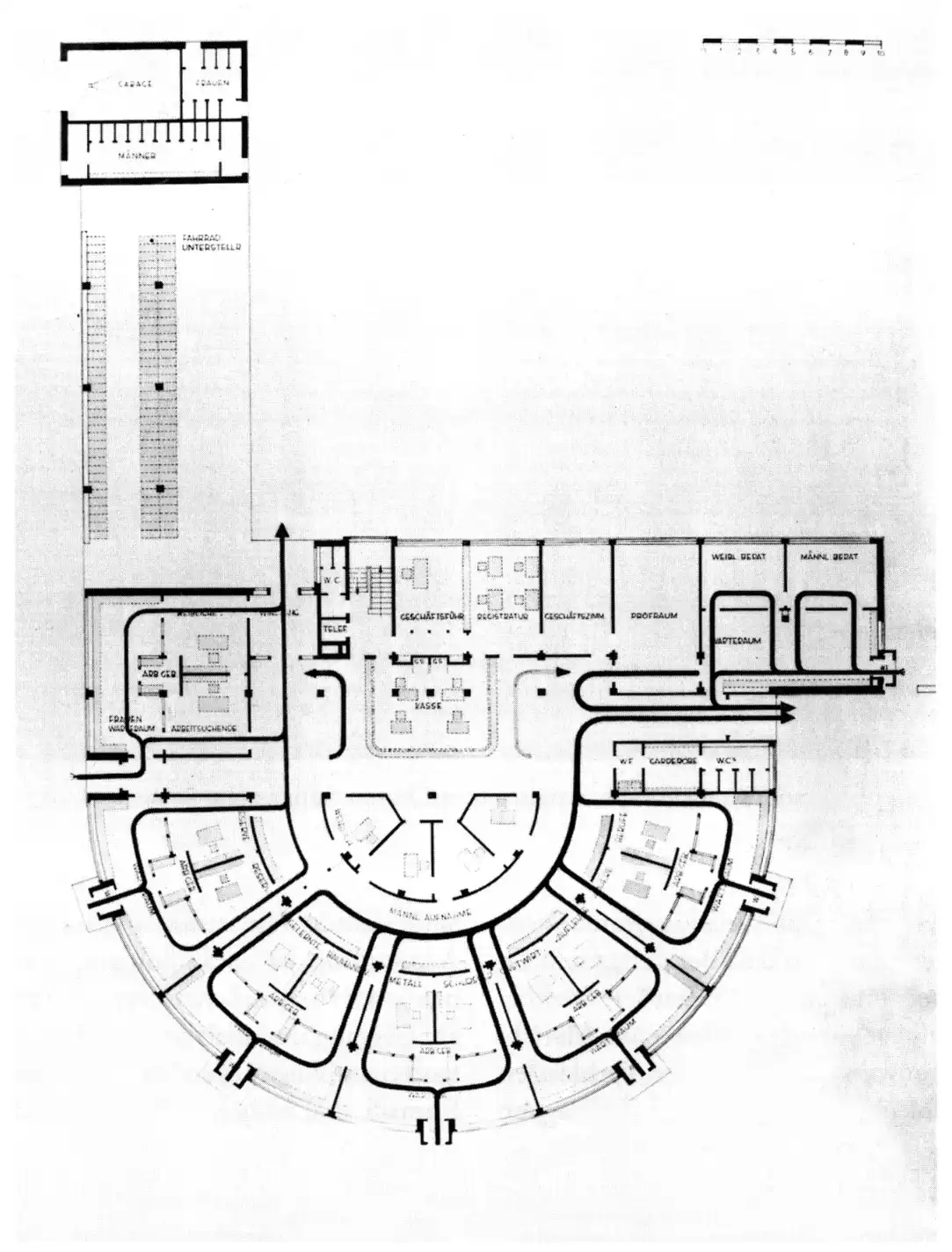
Walter Gropius, Dessau Employment Office, Floor Plan, 1927
Rings
Five entrances led from the outside to the waiting rooms of the first ring, which were separated by occupation. The rooms in the second ring were reserved for employers. The third ring housed the offices of the employment agents.
If a placement was successful, one could leave the office via the fourth ring, a wide corridor. If not, one waited in the corridor for a light signal indicating it was time to enter the fifth ring, the reception area for unemployment insurance.
The reception area led to the sixth ring, a widened corridor that formed a plaza. The unemployment benefits office was at the center of the ring-shaped building. From there, one could proceed to either of the two exits or to the rooms of the youth employment placement service, which were separated by gender and linked to career counseling.
Gropius’s floor plan layout is unparalleled in its consistency. It met all the requirements for a smooth workflow.
The central placement of the cashier’s desk emphasized the social security provided to job seekers through unemployment benefits. In this way, the Dessau Employment Office embodies the AVAVG‘s legal innovation: centralizing job placement and unemployment insurance within the state-run Reichsanstalt.
To the best of our knowledge, no other building in the Weimar Republic represents this significant legislative act more effectively than the Employment Office in Dessau.
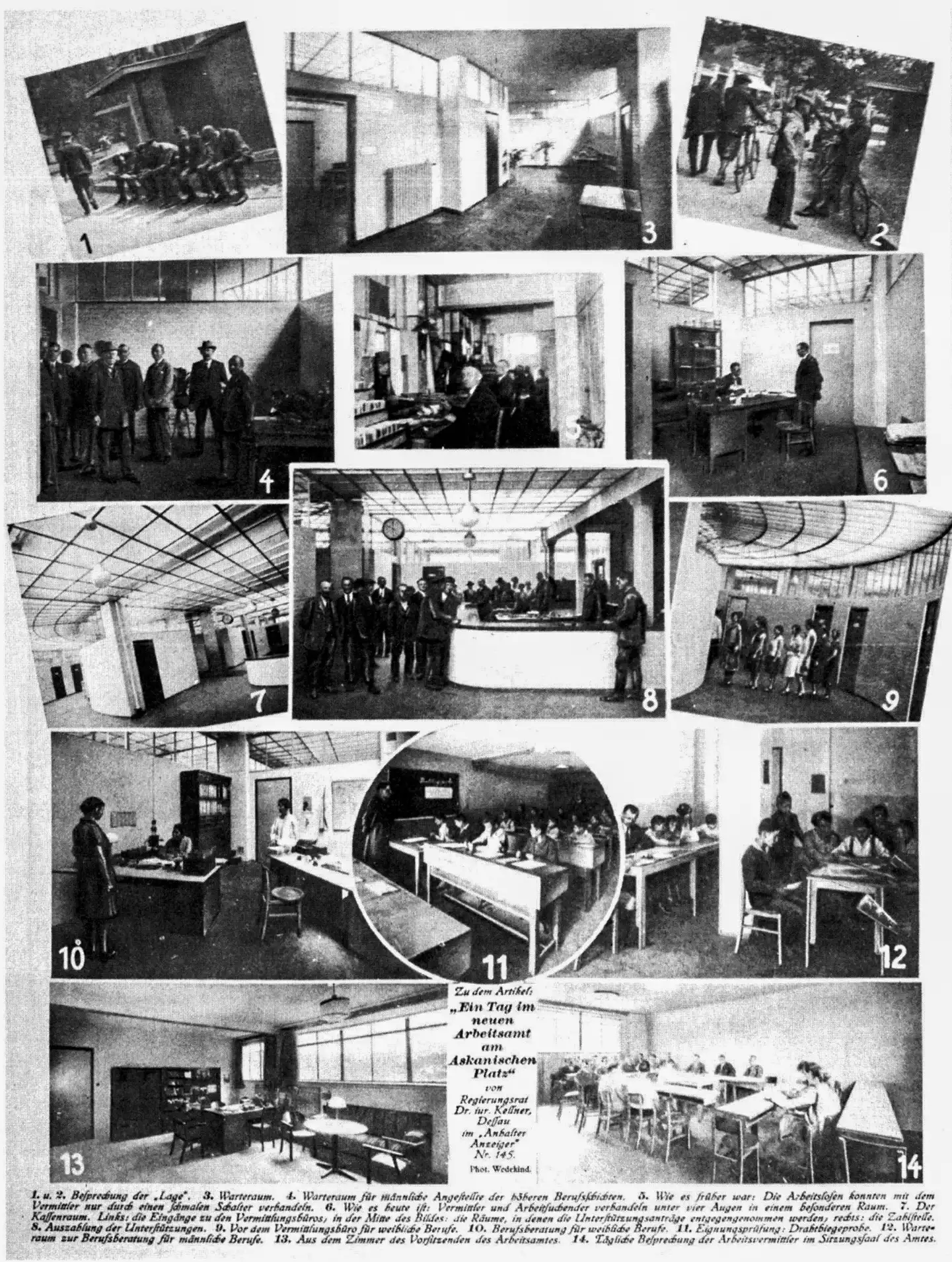
‘A Day at the New Employment Office on Askanischer Platz’, article in the ‘Anhalter Anzeiger’, No. 145
Interior Spaces
Although the rotunda had no windows on its façade, visitors were surprised by the great brightness of its interior, which streamed into the building from above through the shed roof construction. The upper sections of the interior walls are made of glass, allowing light to flood through the building.
The walls in the public areas of the rotunda were clad with white-glazed facing bricks, while the walls in the consultation rooms were plastered.
The pillar opposite the ticket office is clad in sheet metal. The matte-nickel door handles at the entrance and the door knobs designed by Gropius and Meyer and supplied by the Berlin-based firm S. A. Loevy are also worth noting.
Above a height of 2.50 meters, all the rotunda walls were enclosed with floor-to-ceiling mirrored glass panels. To provide sufficient natural light to the rooms within the rotunda, a shed roof structure supported by steel columns was chosen.
The glass surfaces of the shed roofs facing away from the south provided uniform lighting and improved the indoor climate.
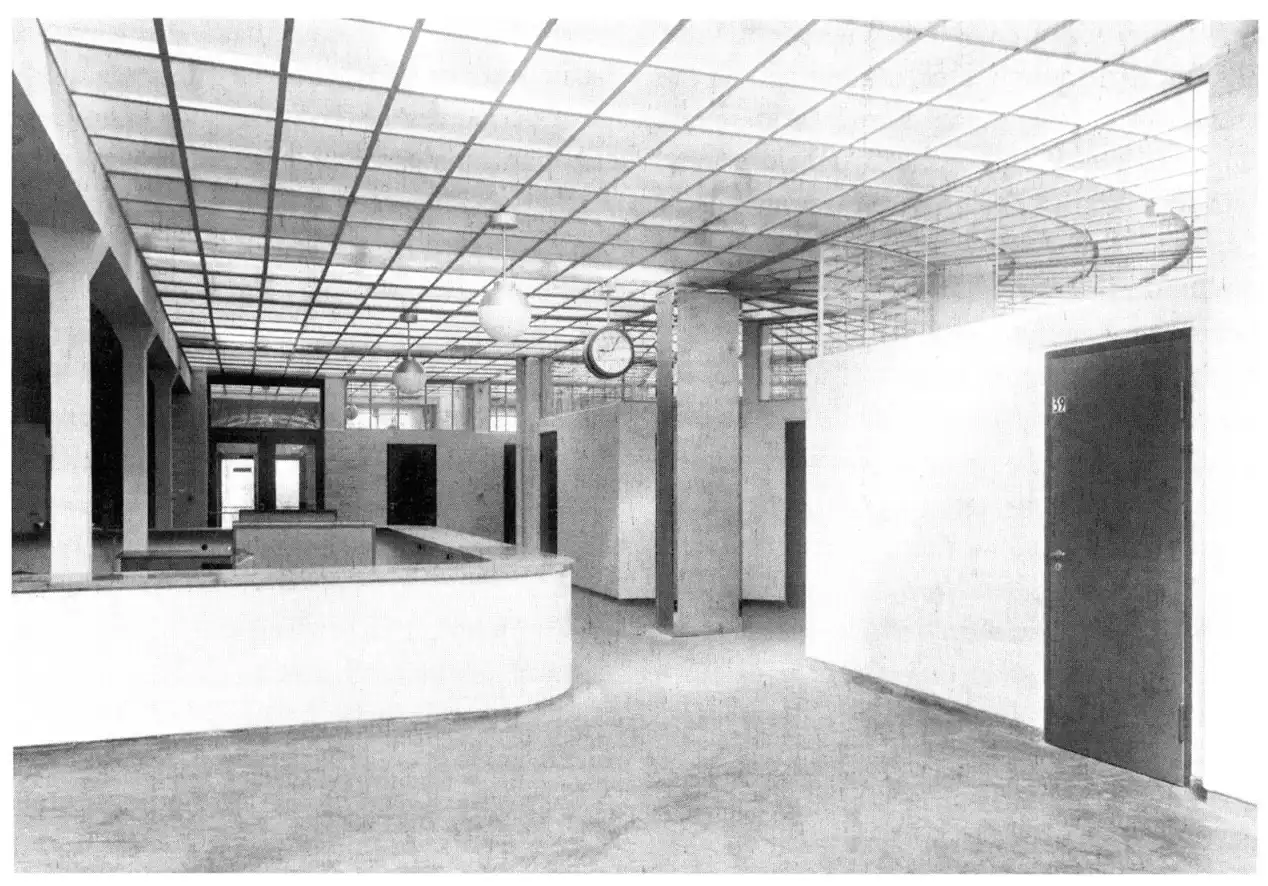
Dessau Employment Office, view of the central hallway, 1929
Sheds
Glass with wire mesh inserts was likely used for the shed’s windows. This material first appeared on the market in 1891 and was highly shatter- and weather-resistant. Beneath the shed roofs was a glass ceiling supported by steel ribs.
Commonly used in interior design, glass ceilings were also implemented in the ring-shaped building of the Dresden Employment Office. The Employment Office in Dessau had a glass ceiling made of ribbed prismatic glass. Due to its surface structure, the glass directed incoming light rays so that balanced light levels prevailed throughout the space. Additionally, the lighting conditions in the center of the circular building were optimized by using glass blocks.
The soft light created by the different types of glass significantly shaped the overall impression of the interiors, corresponding to the contemporary ideal of light-filled spaces.
Bauhaus Workshops
Marianne Brandt designed additional lighting fixtures at the Bauhaus. The Bauhaus Workshops carried out the furnishing and color scheme of the rooms under the direction of Hannes Meyer, whom Gropius recommended as his successor in 1928.
As the new director, Meyer insisted that building design become “a collective endeavor” (Hannes Meyer, “Bauen,” Bauhaus, Issue 2, 1928, pp. 12–13).
The tiled walls and terrazzo floors have been preserved. The intention was to create a surface that was easy to clean when workers came in their work clothes for consultations. Only the staff rooms were plastered.
Ventilation and Heating
The rooms were ventilated by a mechanical system with dampers in the suspended ceiling and sheds. A coal-fired heating system generated warm air.
Pipes were installed in the basement and underground along all radial axes. Fresh, warmed air was forced into the hollow columns through these pipes and then removed via the damper system.
Each room was ventilated by a damper that established a connection to the roof level via a mechanical system. Fresh, warmed air was forced into the hollow columns through pipes installed in the basement or in the ground along all radial axes and removed again via the damper system.
Electrical Installations
Next to the doors of the consultation rooms, there were electrically powered light signals recessed into the wall. Depending on the situation, either “Please wait!” or “Please enter!” appeared on a small white opal glass sign.
Furnishings
When he left the Bauhaus on April 1, 1928, Gropius noted that the furniture in the employment office came from the woodworking shop and the lighting fixtures came from the metalworking shop. The color scheme was the responsibility of the mural painting workshop.
Wera Meyer-Waldeck designed the table in the conference room. The chairman’s office featured the round folding table developed by Gustav Hassenpflug in 1928. Characteristic of the Bauhaus woodworking workshop between 1928 and 1929 are the backless chair with a round seat used in many areas of the employment office, the armchair in the chairman’s office, and the so-called standard table TI 207 in the career counseling office for men. These pieces were created under the artistic direction of Josef Albers.
Immediately after the employment office opened, the staff expressed discontent due to the lack of windows. To alleviate the complaints, each staff room was painted a different color.
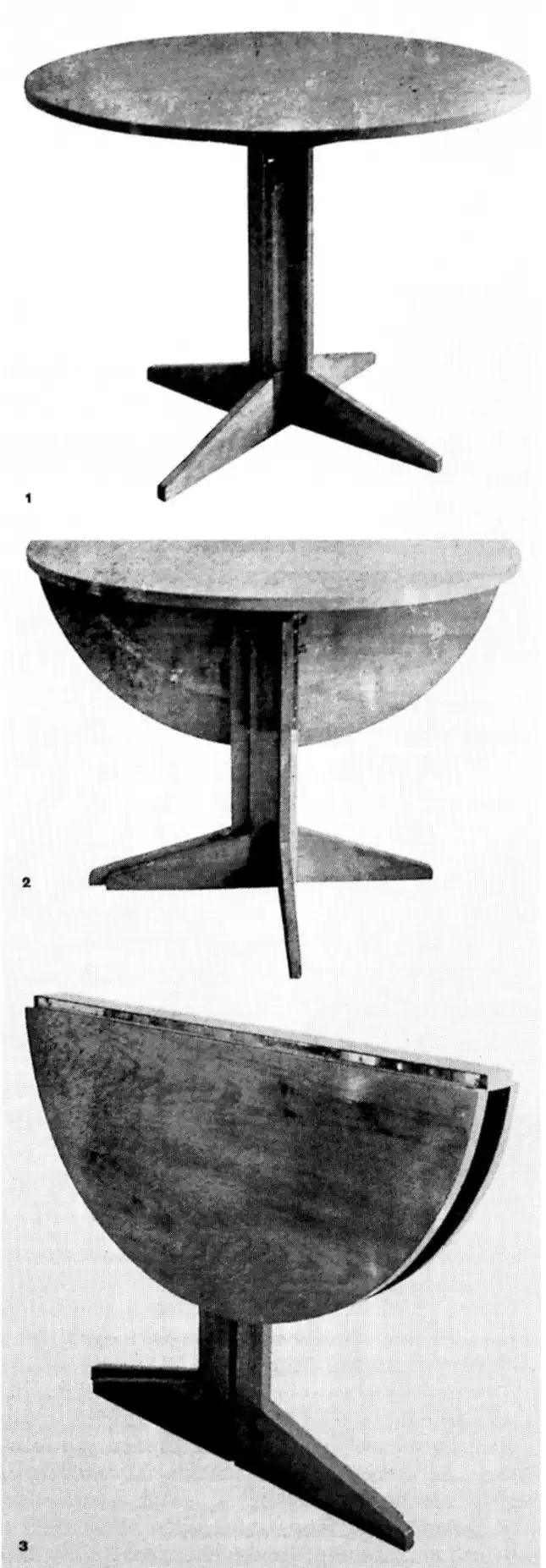
Gustav Hassenpflug, Folding Table, 1928
Lighting
The waiting rooms had Kandem ceiling lights, and the switchboard and reception rooms had ceiling lights with aluminum shades.
The hallways had pendant lights with two-zone glass globes in two designs. Various types of cylindrical ceiling lights were installed throughout the long building. All of the aforementioned lighting fixtures were designed by Marianne Brandt, the deputy head of the metal workshop.
The director’s office in the main building features the architecturally significant Kandem double-cylinder light fixture, which was designed by Marianne Brandt in collaboration with Helmut Schulze.
Additionally, the Wilhelm Wagenfeld and Carl Jakob Jucker table lamp was used in the career counseling offices and the director’s office. The offices in the long building were equipped with Kandem desk lamps designed by Marianne Brandt and Hin Bredendieck.
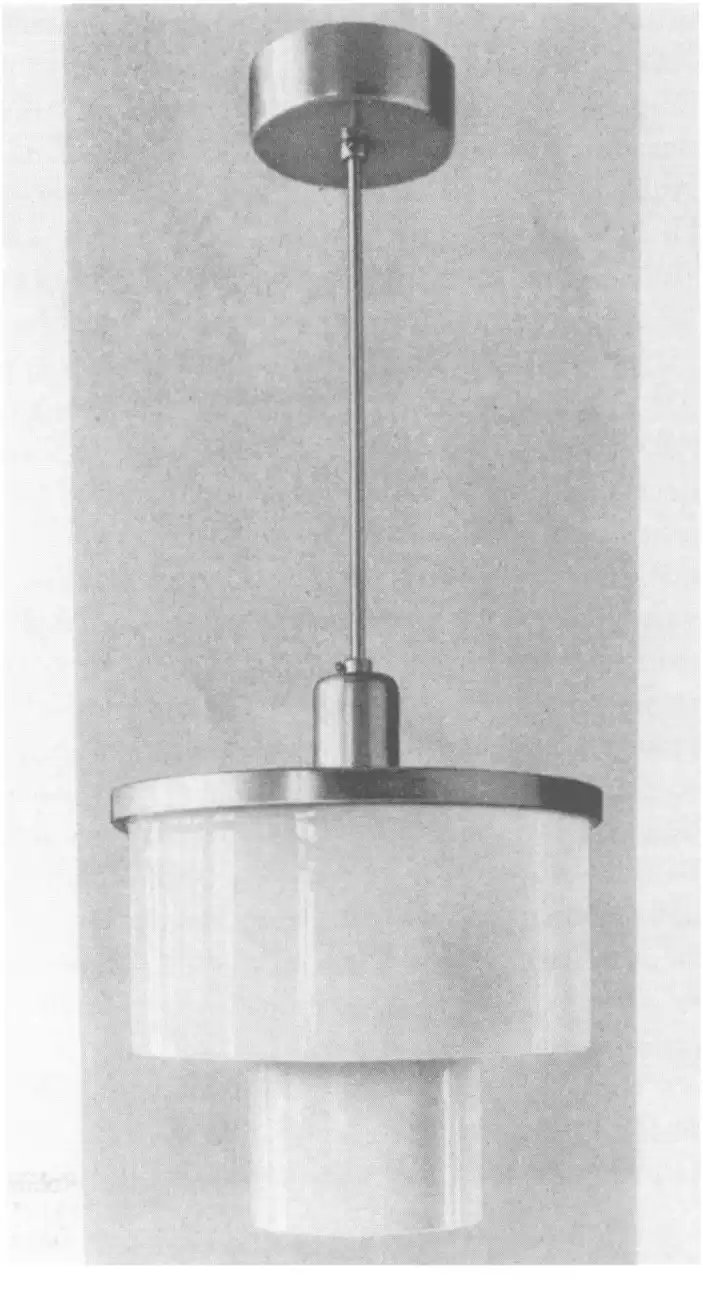
Marianne Brandt, Helmut Schultze, Kandem Double Cylinder Lamp, 1928
Construction
The employment office is a steel-frame building with brick masonry on a concrete foundation. Although the preliminary design drawings show plastered walls, the finished building has yellow brickwork. This was rather unusual for Gropius at the time, in contrast to Max Taut and Hugo Häring.
It is possible that one of the architects originally planned brick cladding, which Gropius later incorporated into his design.
Gropius had most recently used yellow brick in the expansion buildings for the Fagus Factory from 1919 to 1925.
In 1927, Max Taut entered a competition for a school complex in Berlin-Lichtenberg and won first prize. Like the Dessau Employment Office, the building was constructed using yellow brick.
Its structure consists of a steel framework with masonry made of yellow Greppin clinker brick, and the Bauhaus workshops executed the interiors and furnishings.
The following members of the Gropius Bauatelier were involved in constructing the employment office: Otto Meyer-Ottens was the studio director; Max Krajewski and Richard Paulick were the construction managers; and Carl Fieger, Johan Niegeman, Stefan Seböck, Bernhard Sturtzkopf, and Franz Throll were the architects (ledger of the Gropius Bauatelier, Bauhaus Archive Berlin).
Renovation
The original spatial layout was lost due to renovations as requirements changed. Additional windows were installed in 1936.
Because of its shape, the building complex was incorporated into the triangular Askanischer Platz. After World War II, however, the square was redesigned, and the original integration is no longer apparent.
The building was restored in 2002–2003 and subsequently served as the headquarters of the Dessau City Office of Public Order and Transportation.
The curved steel beams behind the facade of the employment office originated from the Dessau railway car factory.
Prior to the renovation, fine hairline cracks ran through the facade of the employment office, behind which these steel profiles were located.
During the renovation, the damaged areas were opened only to the extent necessary, and the rusted areas were painted using the duplex method before being closed with yellow bricks.
Gropius opted for single glazing as well as sheds made of simple wired glass for the construction of the rotunda.
As part of the renovation, the horizontal glass ceiling was converted into an insulated layer. The corrugated glass that needed to be replaced was supplemented with a pane of safety glass to meet current regulations for safe overhead glazing.
The original skylights were preserved so that the prismatic Luxfer corrugated glass still provides even light diffusion today.
Conclusion
From a formal standpoint, the employment office’s structure is comparable to the cinema on Kurfürstendamm at the corner of Cicerostraße in Berlin. Erich Mendelsohn designed both buildings around the turn of 1926/27. The cinema has a semi-cylindrical structure on its main façade.
Another notable example is Bruno Taut’s private residence in Dahlewitz from 1926, consisting of a segment of a quarter circle and a largely rectangular extension.