
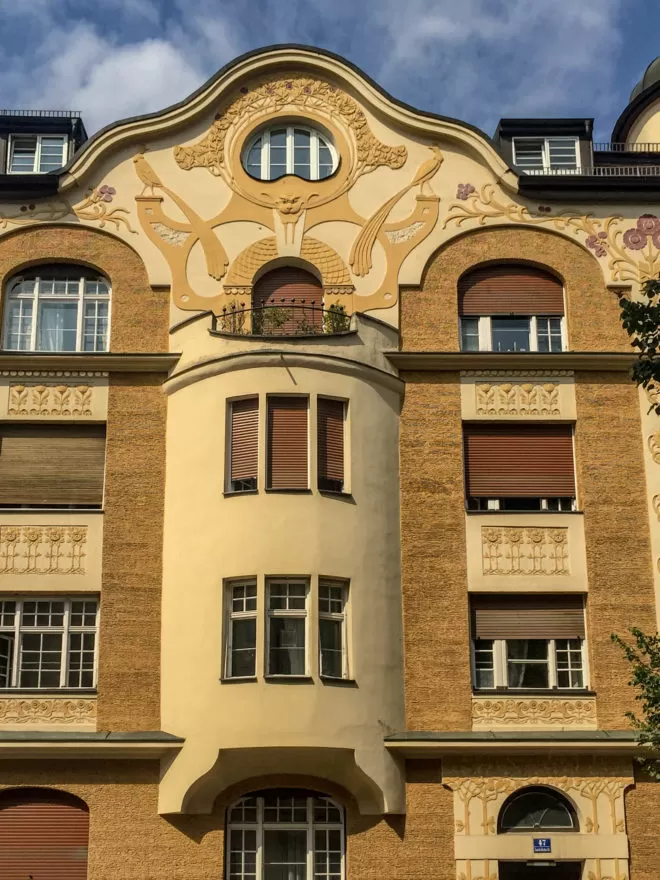
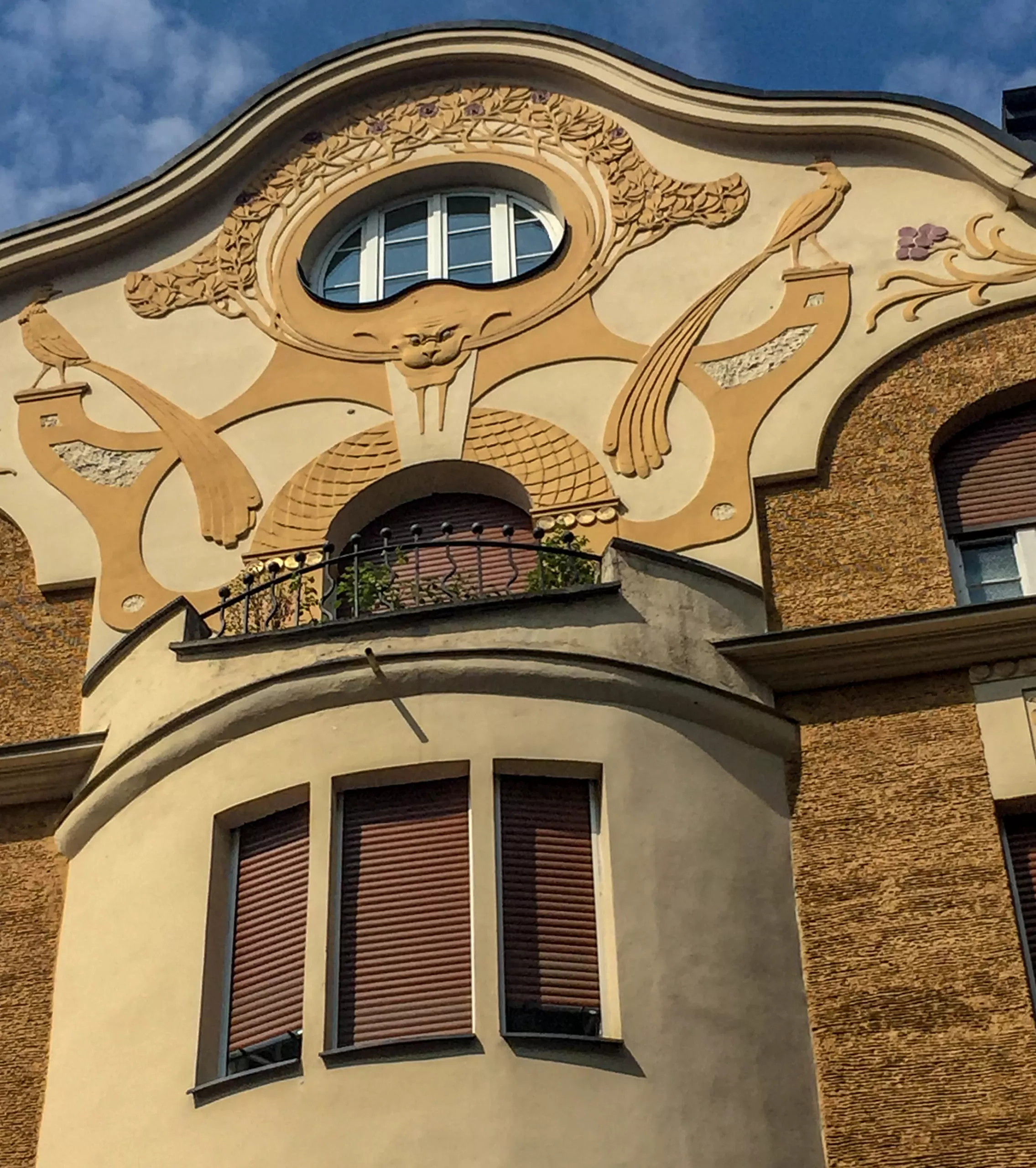
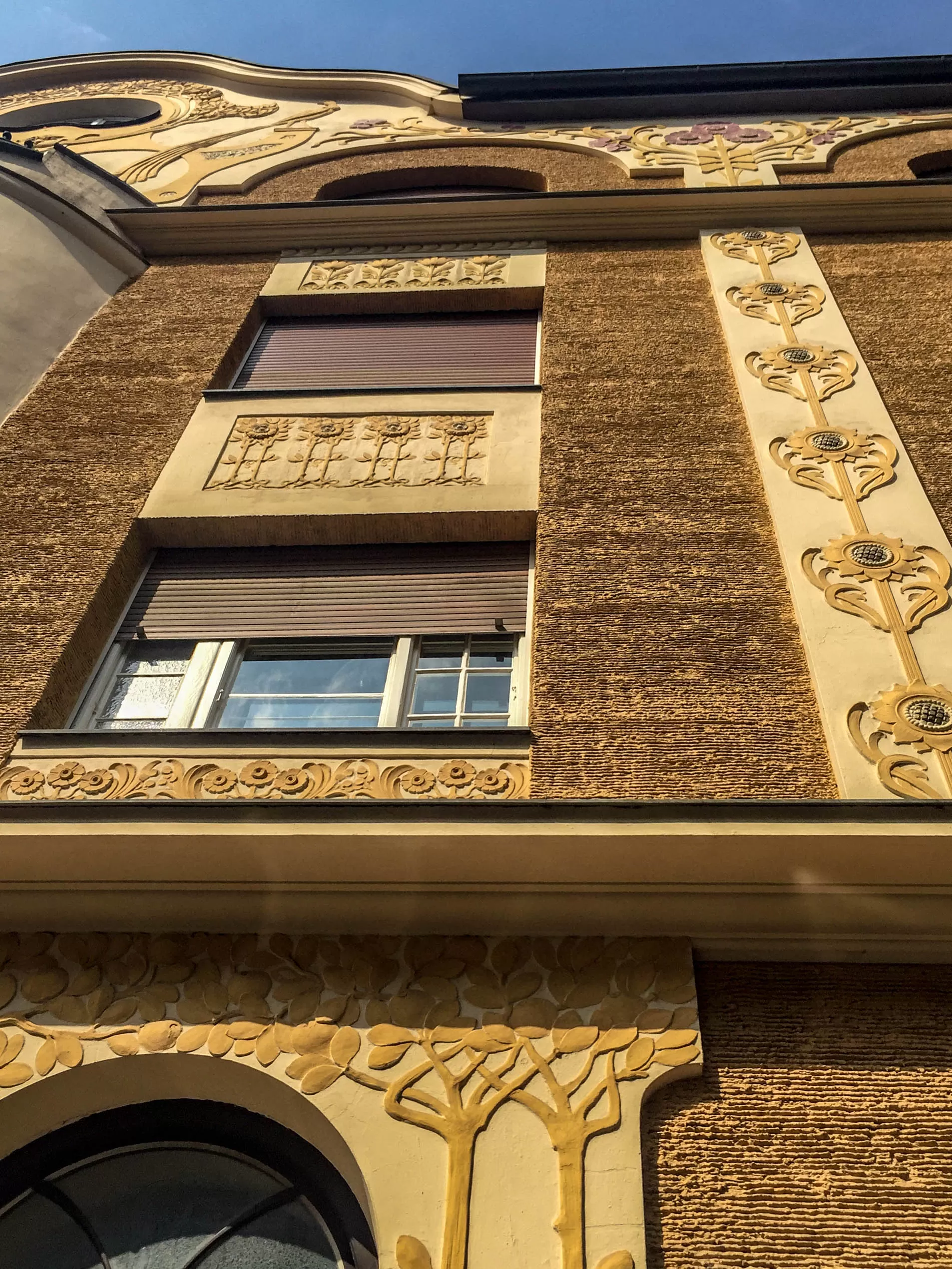
Apartment building, 1901. Architect: Johann Zitter. Photo: Daniela Christmann
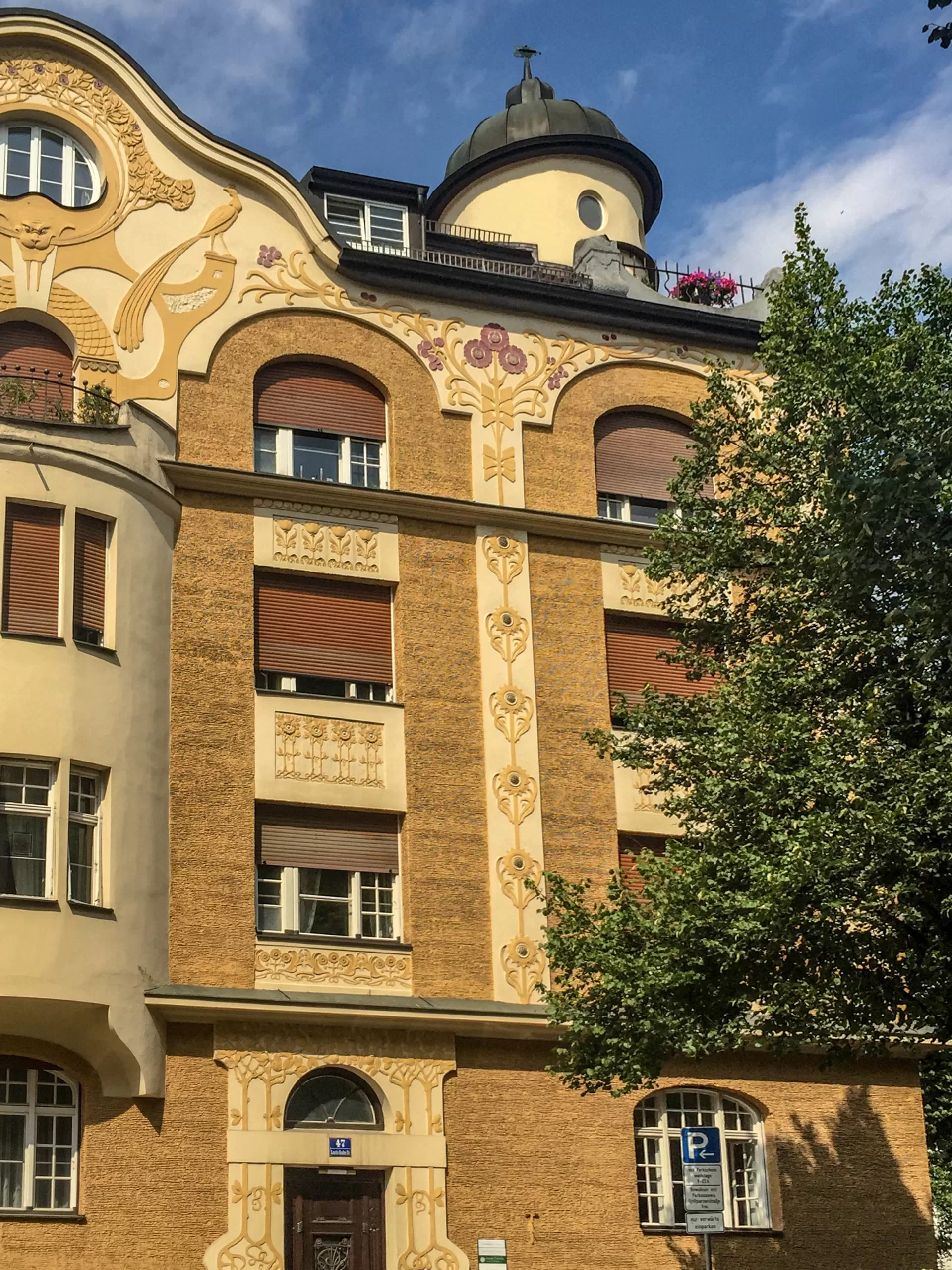
Apartment building, 1901. Architect: Johann Zitter. Photo: Daniela Christmann
1901
Architect: Johann Zitter
Lucile-Grahn-Straße 47, Munich
The corner building on Lucile-Grahn-Strasse in Munich‘s Haidhausen neighborhood was completed in 1901. According to plans by architect Johann Zitter, it features a richly stuccoed gable and Art Nouveau-style floral decorations.
Munich Quarters
In the 19th century, Munich’s population grew from 40,000 to 100,000.
By the second half of the century, Munich had become a major city. For the first time, urban expansion outside the medieval fortifications became necessary.
Haidhausen
.While the urban expansions of Maxvorstadt and Gärtnerplatzviertel were still under royal planning commissions, the urban expansion of Franzosenviertel in Haidhausen was under Munich’s new municipal government for the first time, beginning in 1870.
The construction of the railroad line to Simbach and Rosenheim, as well as the Ostbahnhof, made the development of the land between the new train station and the old edge of the Haidhausen settlement inevitable.
Arnold von Zenetti, the municipal chief building officer at the time, directed the urban planning of the city expansion, which was approved by the minister on July 9, 1871.
French Quarter Haidhausen
The geometric design, based on a rectangular grid relative to Rosenheimer Straße and Orleansstraße, was inspired by French urban planning.
A three-beam, consisting of the diagonals of Weißenburgerstraße, Belfortstraße, and Wörthstraße, overlaps the grid and focuses urban development on Ostbahnhof.
The Ostbahnhofviertel stands out among comparable urban expansion projects in Germany at that time due to its different street widths and profiles, staggered heights, rhythmic street-plaza sequences, ornamentally designed plazas, and street plantings.
Tenements
The most prestigious apartments in the tenements were located in the front buildings. At the time, it was considered a living requirement that living rooms face the street.
The staircases were on the courtyard side. The staircase to the upper floors was accessible from the passageway.
Starting in 1879, apartments were finally equipped with narrow toilets and cold water connections with sinks in the kitchen.
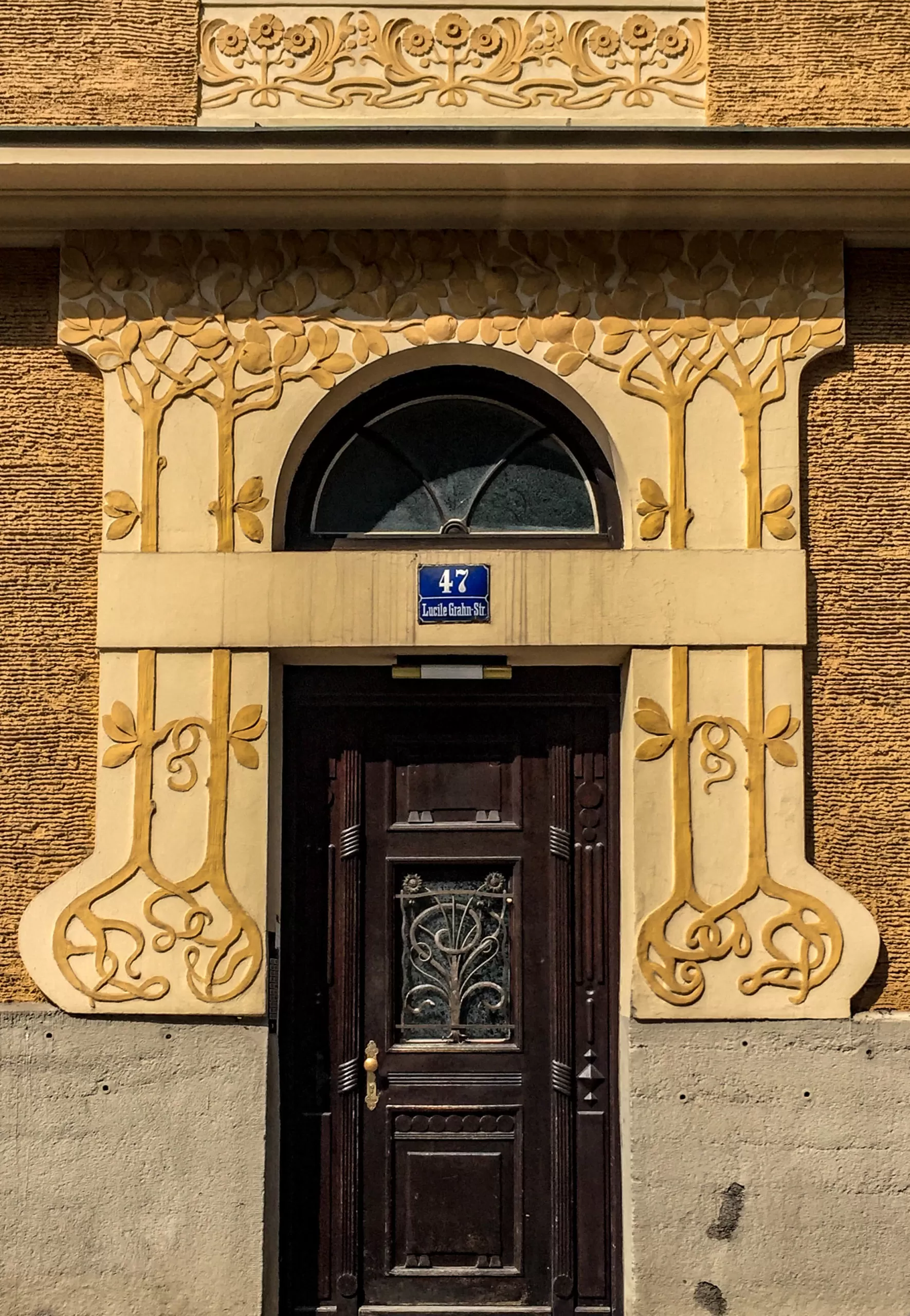
Apartment building, 1901. Architect: Johann Zitter. Photo: Daniela Christmann
Apartment building, 1901. Architect: Johann Zitter. Photo: Daniela Christmann