
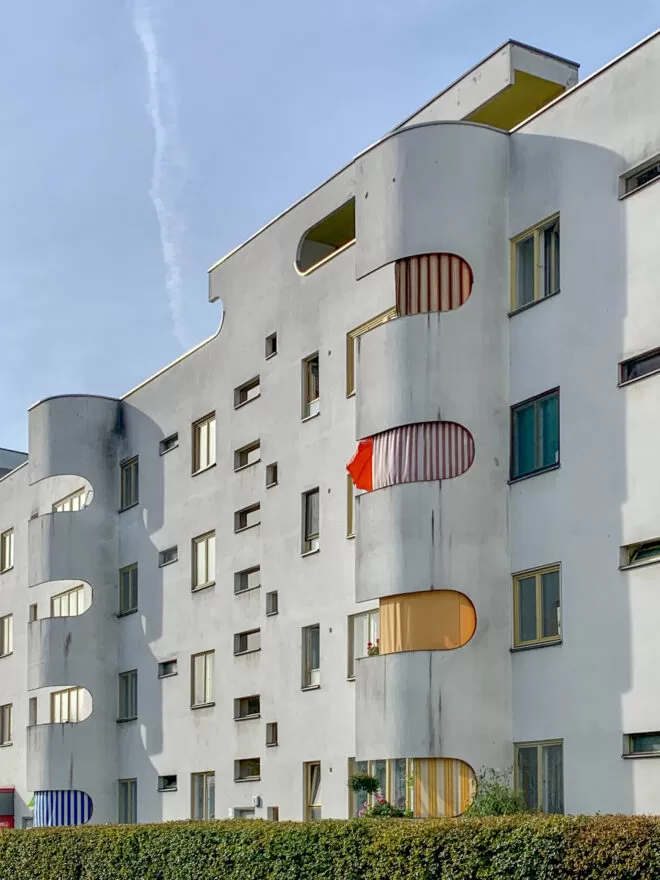
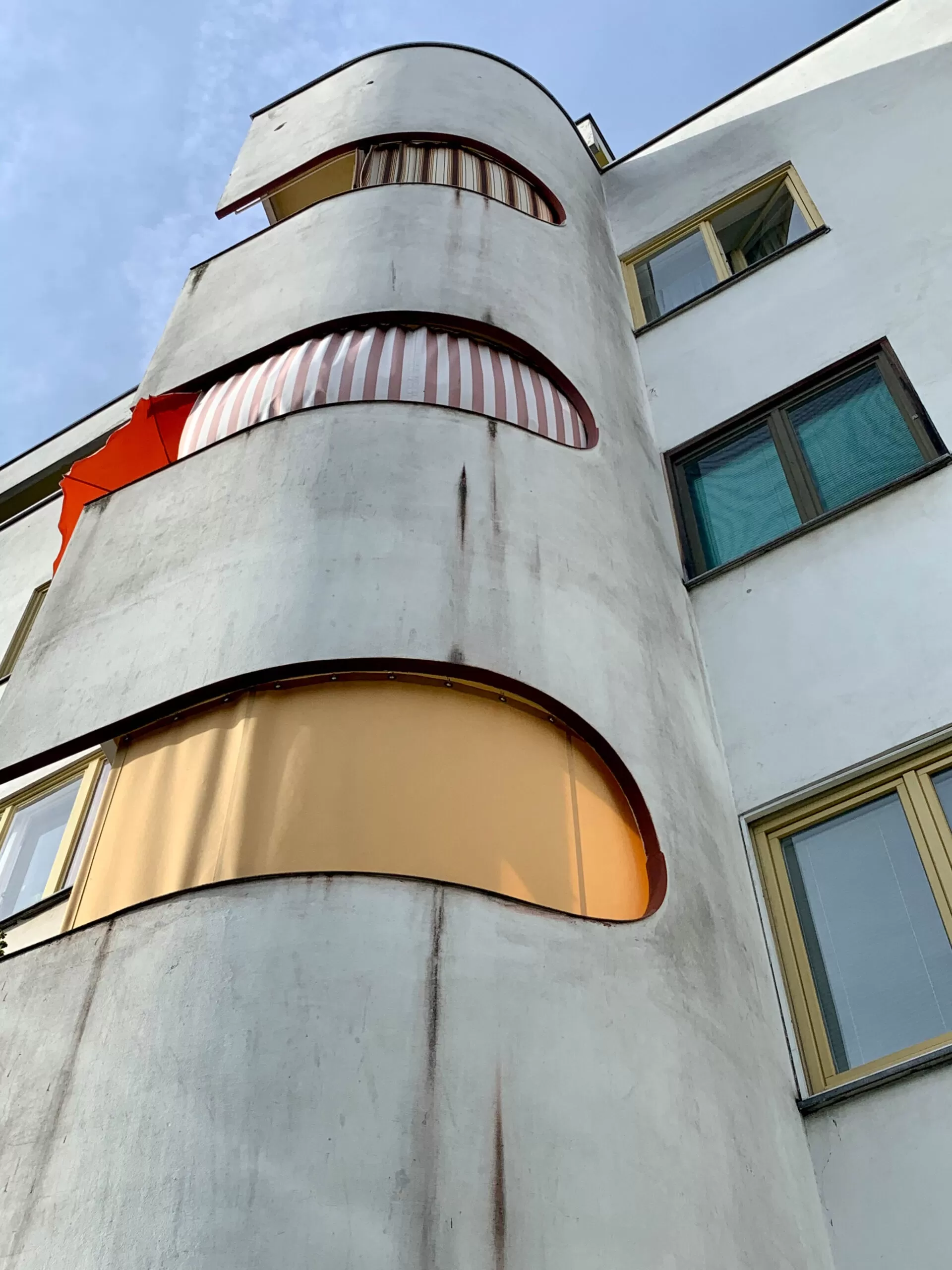
Residential complex Panzerkreuzer, 1929-1930. Architect: Hans Scharoun. Photo: Daniela Christmann
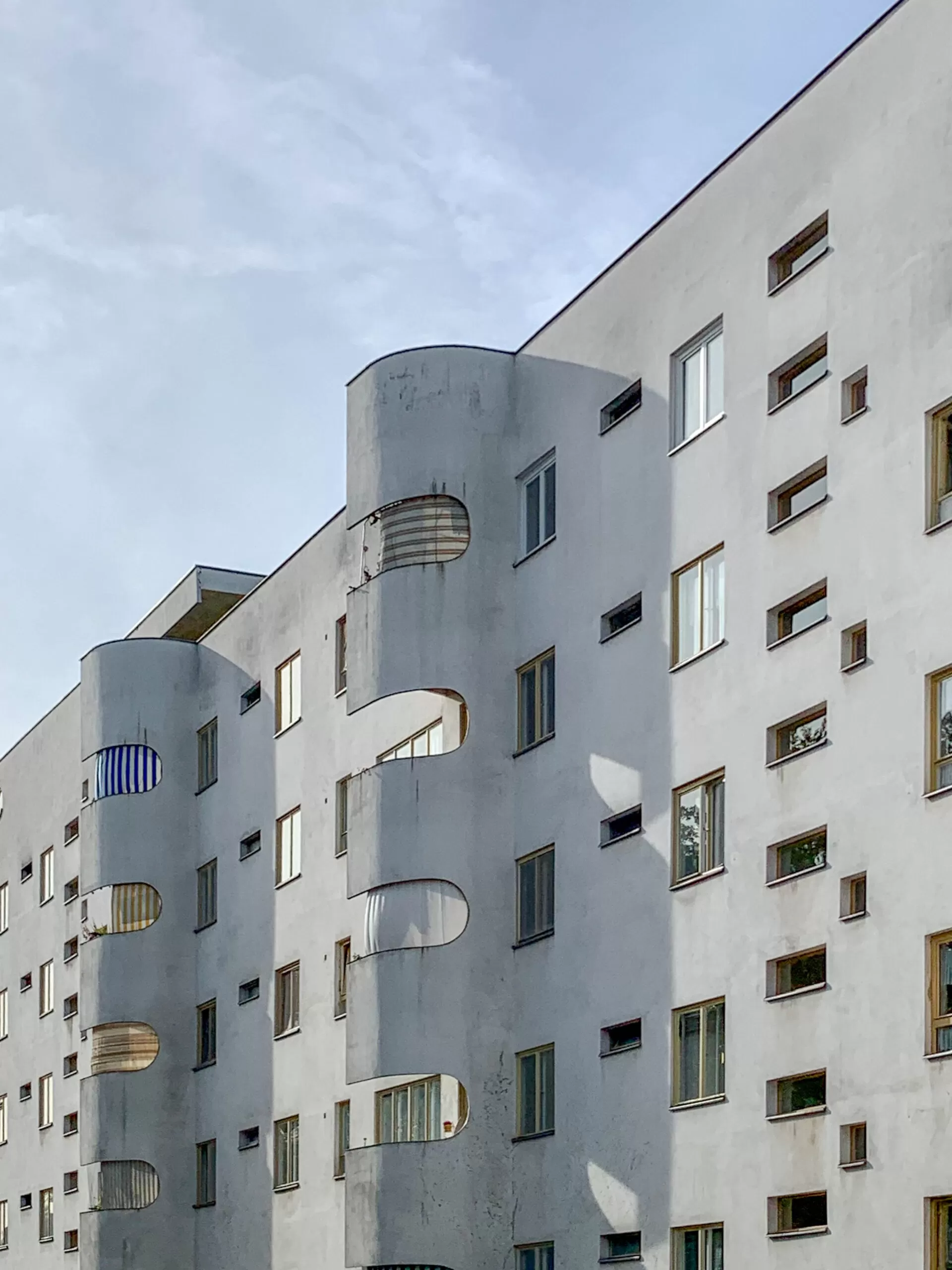
Residential complex Panzerkreuzer, 1929-1930. Architect: Hans Scharoun. Photo: Daniela Christmann
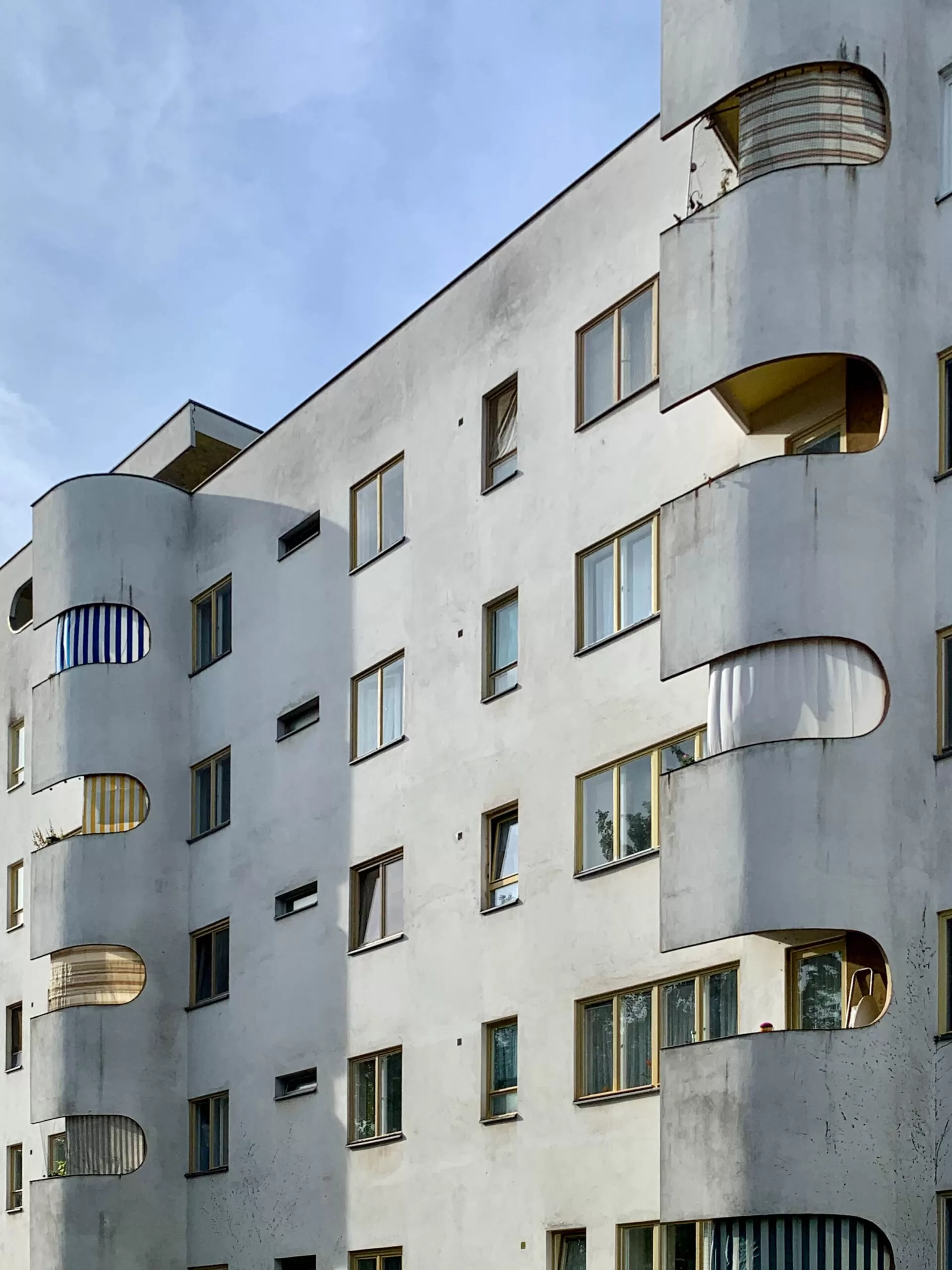
Residential complex Panzerkreuzer, 1929-1930. Architect: Hans Scharoun. Photo: Daniela Christmann
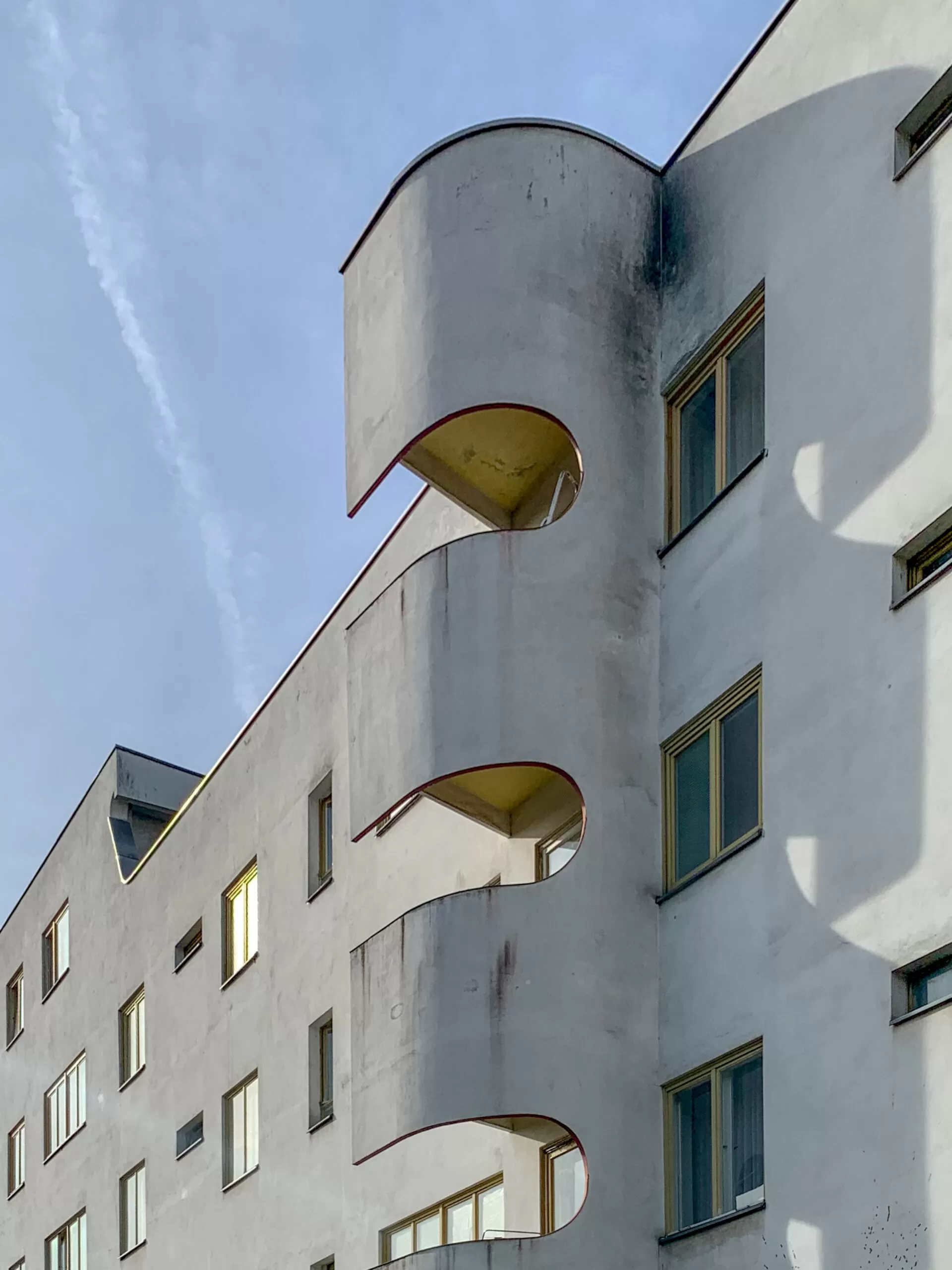
Residential complex Panzerkreuzer, 1929-1930. Architect: Hans Scharoun. Photo: Daniela Christmann
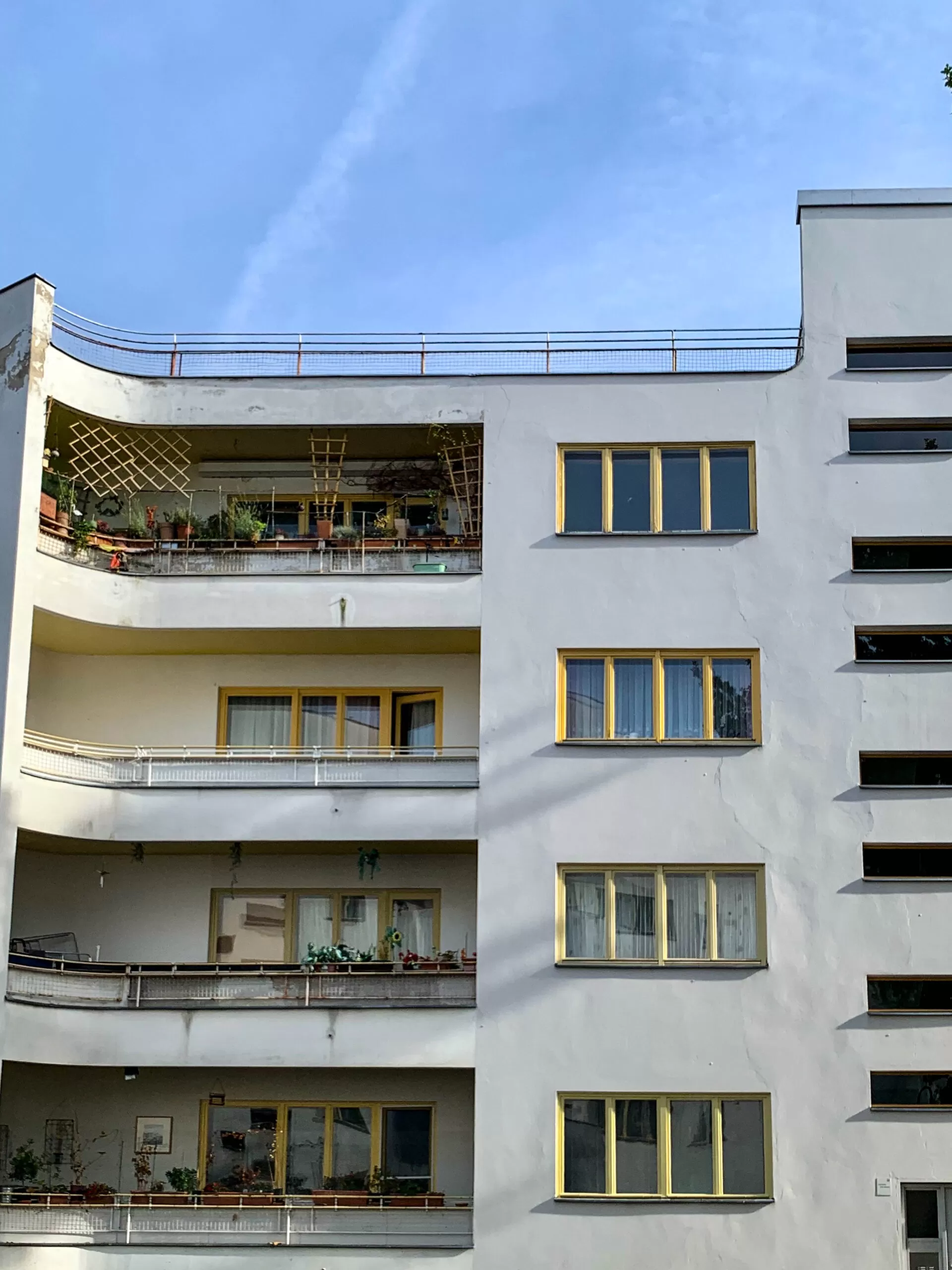
Residential complex Panzerkreuzer, 1929-1930. Architect: Hans Scharoun. Photo: Daniela Christmann
1929 – 1930
Architect: Hans Scharoun
Jungfernheideweg 1-15, 4-14, Mäckeritzstraße 6-22, Berlin, Germany
Siemensstadt Housing Estate
Also called Ringsiedlung, the Großsiedlung Siemensstadt established a new type of housing estate consisting only of multi-story apartment buildings, in contrast to the large Berlin housing estates Britz and Zehlendorf.
For the estate’s design, city building councillor Martin Wagner appointed members of the progressive architects’ association Der Ring, as well as architects Fred Forbát and Paul Rudolf Henning.
The 1,370 apartments and 17 stores, built in three phases, were intended primarily to provide new living spaces for Siemens employees and ensure local daily supplies.
The average apartment size was 54 square meters.
Development
Hans Scharoun‘s development plan points the way to an international, modern urban design of a loosened-up, structured, and greened city. Its core is a generous green area designed by garden architect Leberecht Migge.
Most of the housing estate’s rows are oriented north-south to ensure optimal lighting of the apartments.
The architects standardized the windows, doors, and floor plans of the apartments, most of which have two to two-and-a-half rooms, in the individual rows.
Heating System
The Siemensstadt housing estate was one of the first in Berlin to have its own district heating system.
Fred Forbat originally planned the building at a different location, but for technical reasons, it was placed in the middle of the housing estate, equidistant from the eastern and western rows, to keep the supply routes for heating and hot water to a minimum.
With the central heating system installed, the living space could be used more efficiently, as up to five square meters could be gained in each small apartment by eliminating the tiled stoves that had been common until then.
Although all the houses in Siemensstadt had laundry and drying rooms, the heating plant designed by Otto Bartning and engineer Max Mengeringhausen contained a central laundry for the entire settlement.
After the settlement connected to the Berlin district heating network, the district’s heating plant shut down, and the distinctive chimney demolished.
Panzerkreuzer
The staggered balconies and roof gradations reminiscent of a command bridge gave this Berlin-Siemensstadt residential complex the name Panzerkreuzer (Battleship).
Scharoun himself lived in one of the apartments at Jungfernheideweg 4 from 1930 to 1960 (fourth floor, right).
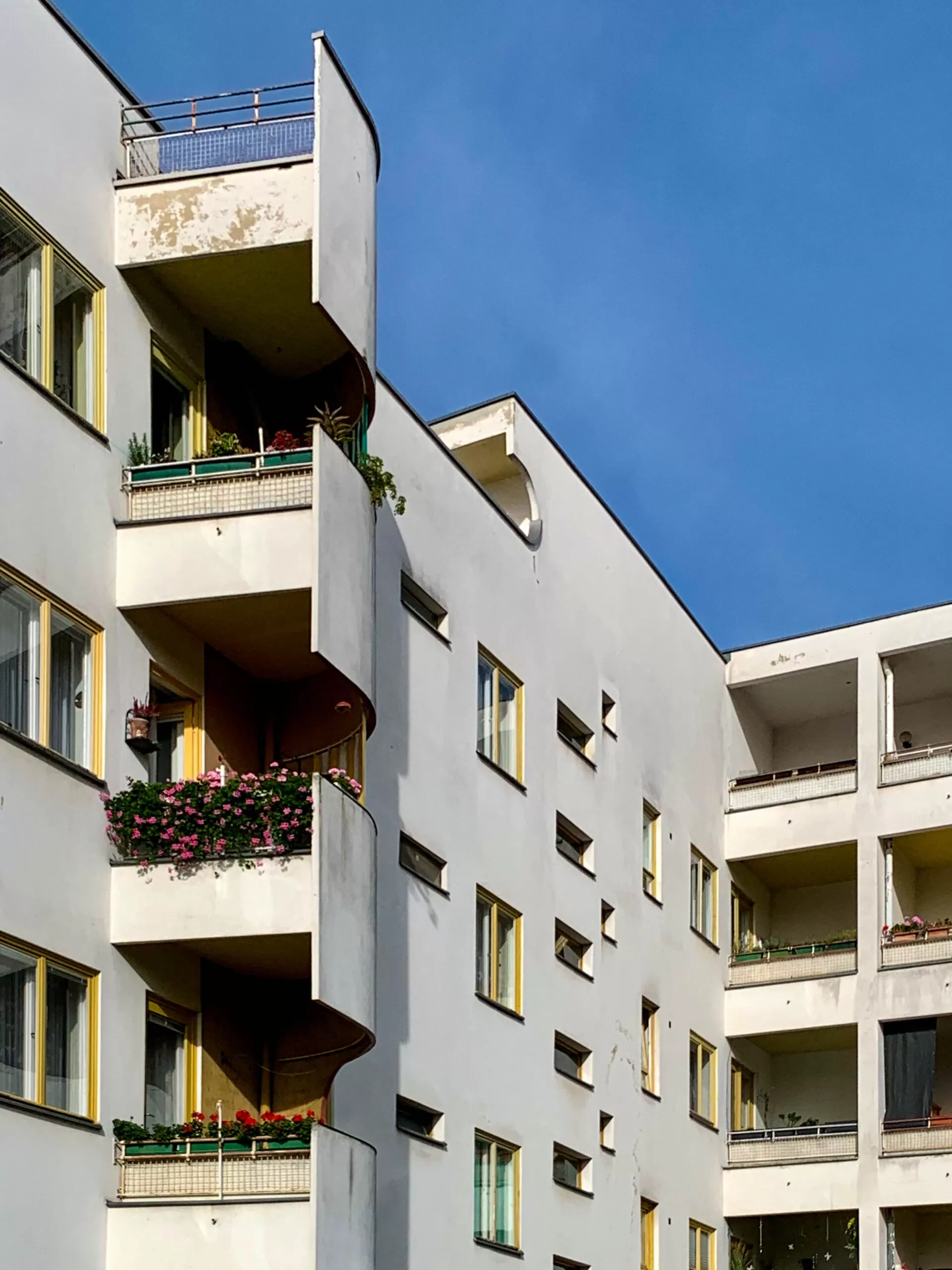
Residential complex Panzerkreuzer, 1929-1930. Architect: Hans Scharoun. Photo: Daniela Christmann
Residential complex Panzerkreuzer, 1929-1930. Architect: Hans Scharoun. Photo: Daniela Christmann
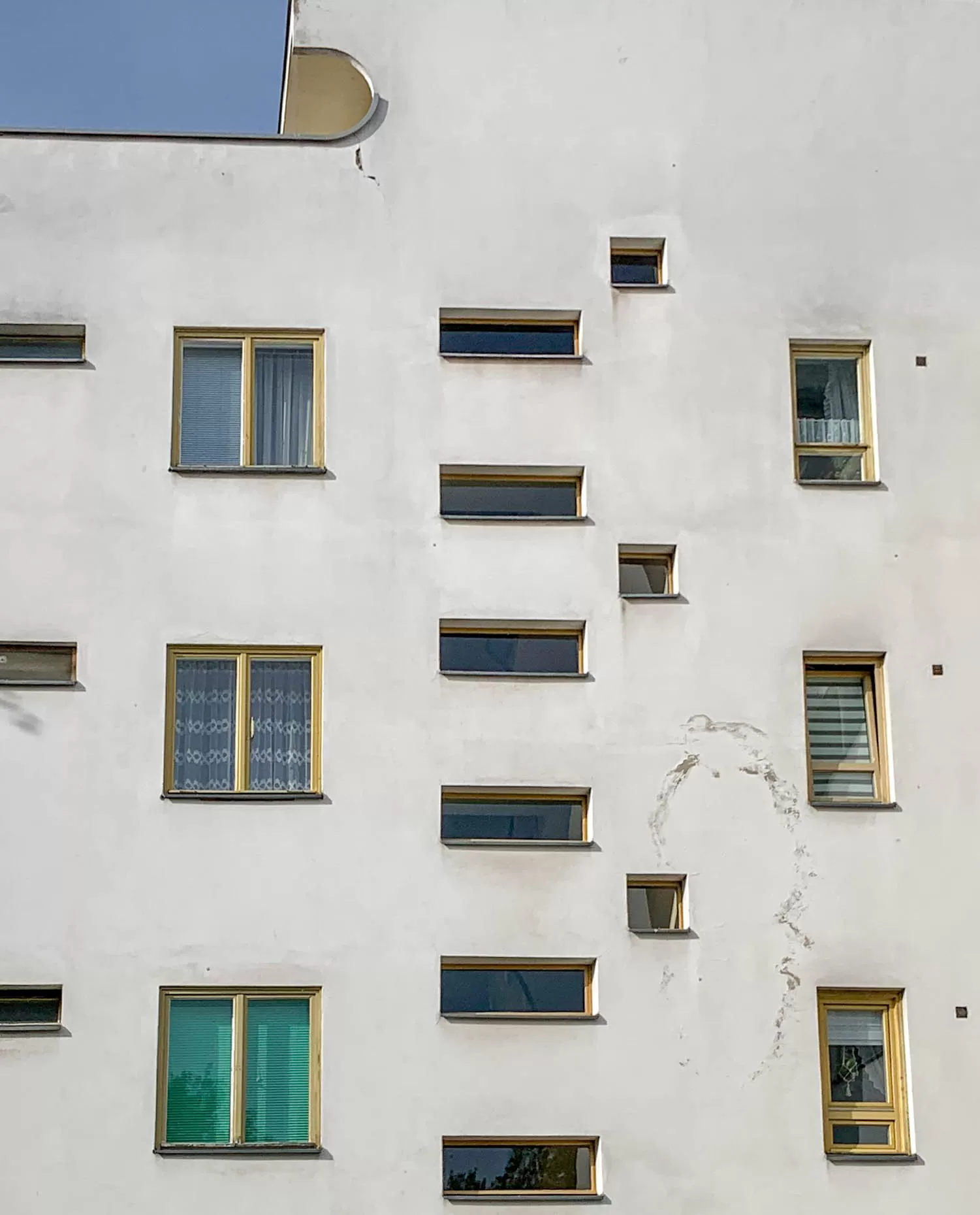
Residential complex Panzerkreuzer, 1929-1930. Architect: Hans Scharoun. Photo: Daniela Christmann
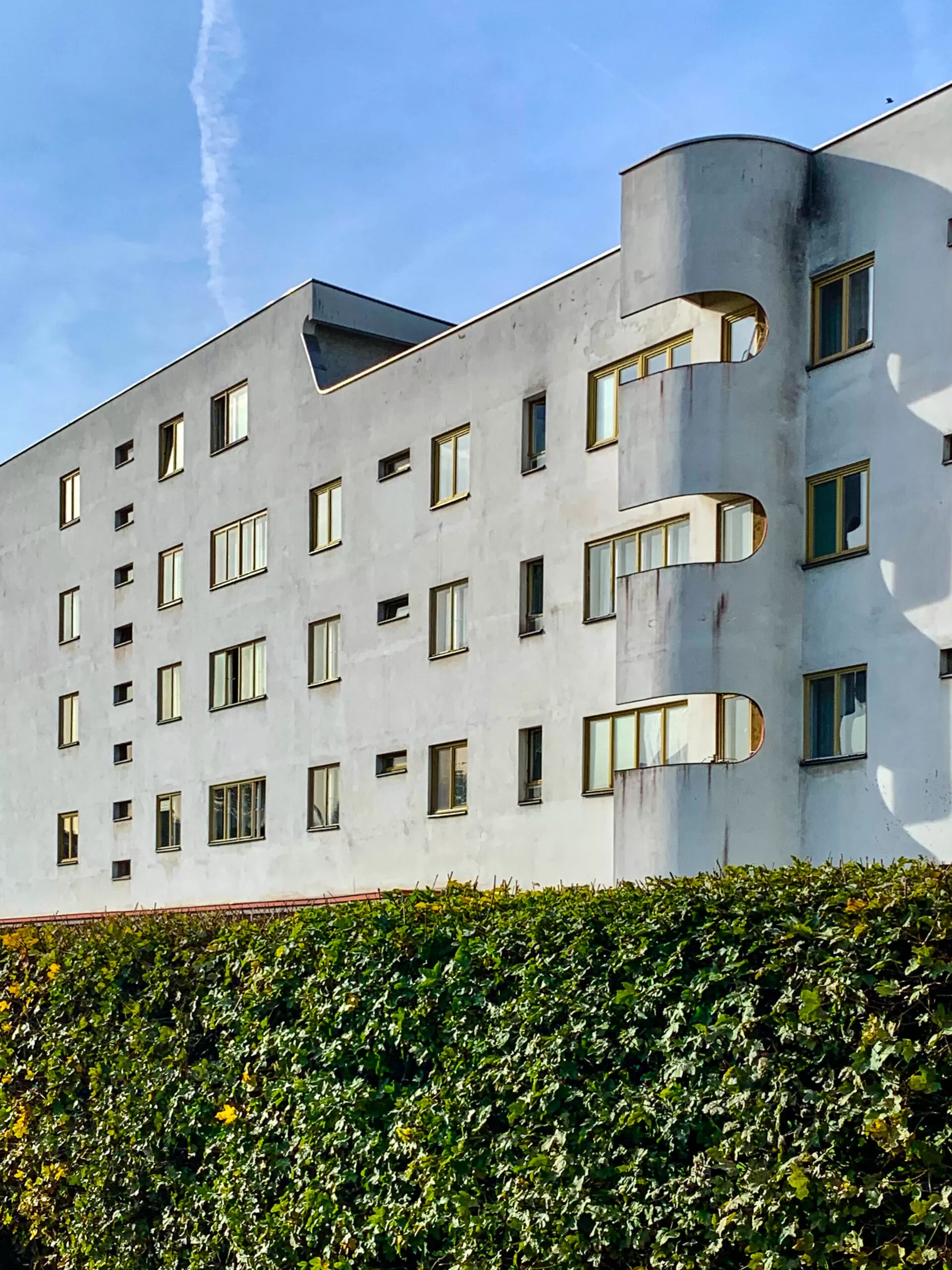
Residential complex Panzerkreuzer, 1929-1930. Architect: Hans Scharoun. Photo: Daniela Christmann