
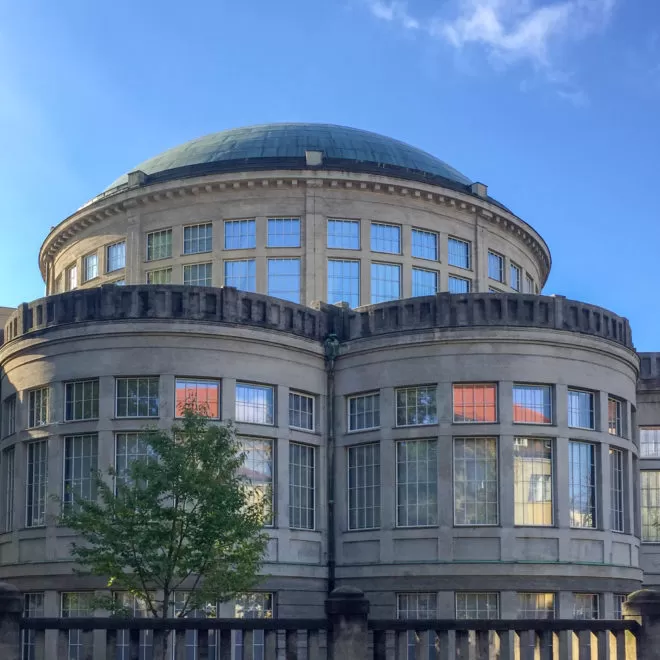
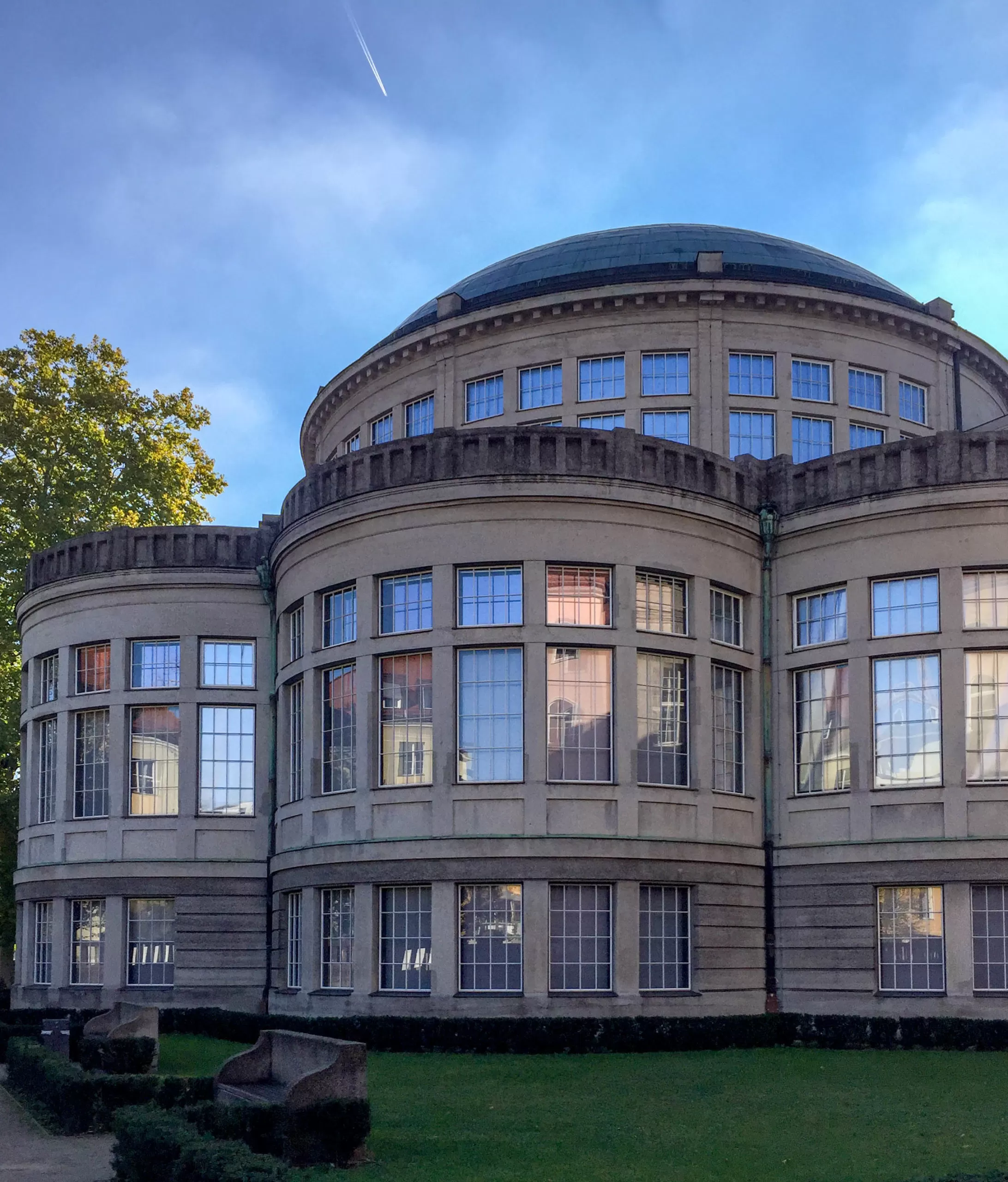
Institute of Anatomy, 1905-1907. Architect: Max Littmann. Photo: Daniela Christmann
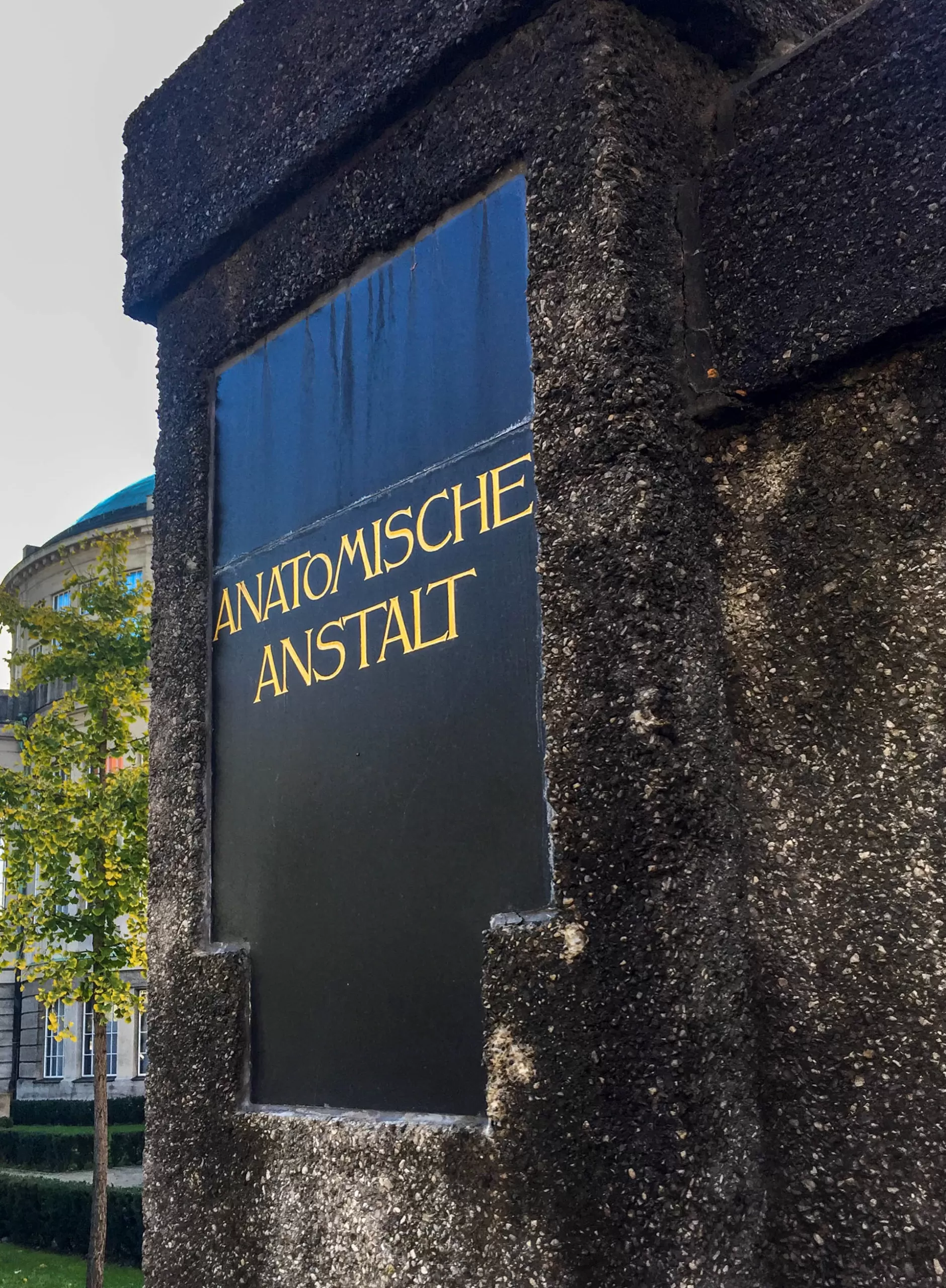
Institute of Anatomy, 1905-1907. Architect: Max Littmann. Photo: Daniela Christmann
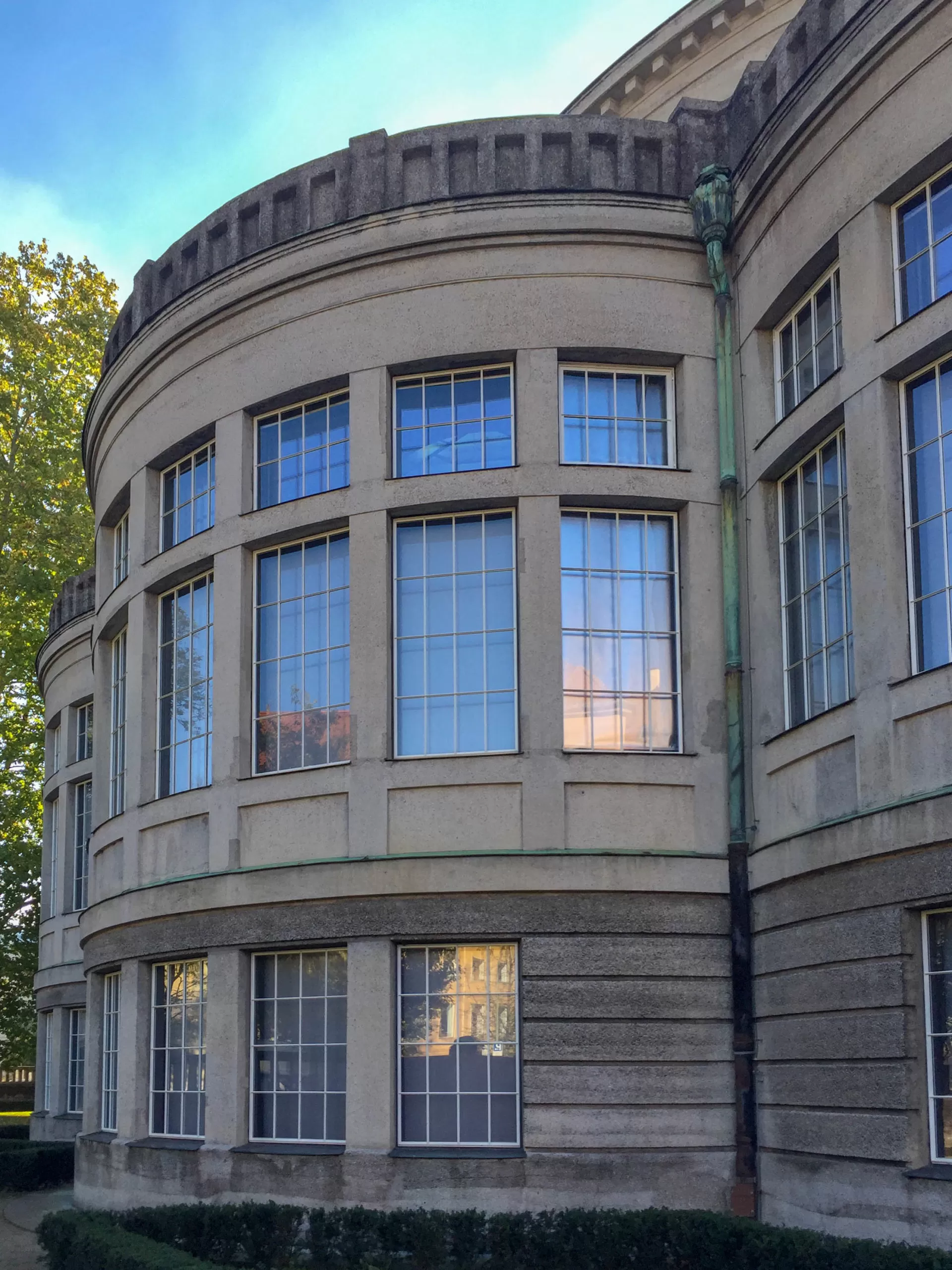
Institute of Anatomy, 1905-1907. Architect: Max Littmann. Photo: Daniela Christmann
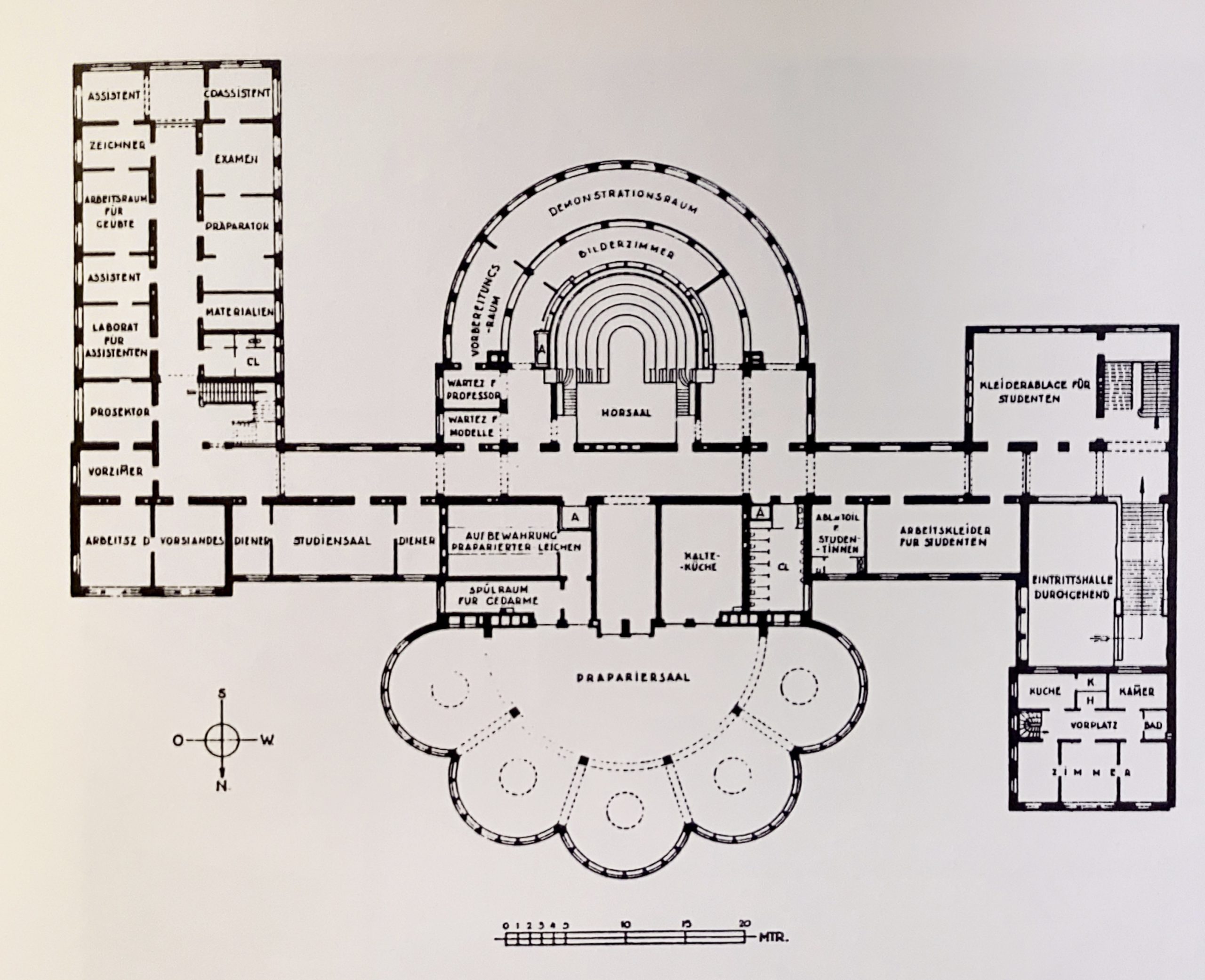
Floor Plan Institute of Anatomy, 1905-1907. Architect: Max Littmann. Photo: Daniela Christmann
1905 – 1907
Architect: Max Littmann
Pettenkoferstraße 11, Munich, Germany
The Royal Anatomy Institute in Munich was completed between 1905 and 1907 according to plans by the architect Max Littmann, and was originally known as the New Anatomical Institute.
Reinforced concrete
Even at the time of its construction, the building was considered unique in terms of its functional design, technical equipment, and use of reinforced concrete.
The entire building is constructed from reinforced concrete, which had never before been used to such an extent on an exterior façade.
To contemporaries, it therefore appeared, as a 1908 report in the Süddeutsche Bauzeitung stated, as if it were formed from one piece of concrete:
‘The walls are smooth and calm in the fine, dull grey of the concrete, and their only real decoration is the lines resulting from the construction of the iron framework, which also determines the simple division of the interior walls.’ …
The use of reinforced concrete to such an extent has not yet been dared in our architecture. One could say that the entire main building is made from a single piece of concrete.
The clear development of the forms is immediately apparent even to those unfamiliar with the purpose — the ensemble appears so organic.”
Construction
The irregular three-wing complex with a central dome was one of the major works of the beginning of modernism due to the use of exposed concrete for the facades, walls, ceilings and outdoor facilities. At the same time, it was one of the first large reinforced concrete buildings in Germany.
Building
The New Anatomical Institute is the successor to the Anatomy Institute designed by Leo von Klenze between 1824 and 1825. The original building was demolished after sustaining bomb damage during World War II.
The building consists of a central structure oriented east-west, measuring about ninety metres in length.
At the ends of this building are the west wing, which is forty-one metres long, and the east wing, which is fifty metres long, running north to south.
Structure
The building has a basement, a ground floor and three upper floors, with a total height of about twenty-seven metres.
The centrally located, semi-circular dissecting room extends over two floors and is designed as a classroom, with five adjoining, open, rosette-shaped apsidal rooms for student work.
Dome
The dome above the microscopy room has a diameter of about twenty-two metres, a shell thickness of 10 cm, and was one of the first domes in Germany to be made of reinforced concrete.
Other rooms in the anatomy department include a lecture hall designed by Littmann in the shape of an amphitheatre, a microscopy hall, an anatomical collection, a library, a stair hall, laboratories and a study area.
The building survived the Second World War without sustaining significant damage.
Monument Protection and Renovation
Today, the complex is a listed building which is still used for anatomy teaching by the Medical Faculty of Ludwig Maximilian University of Munich.
An extension was added to the west wing to the south between 2004 and 2006. The building was extensively renovated in 2014.
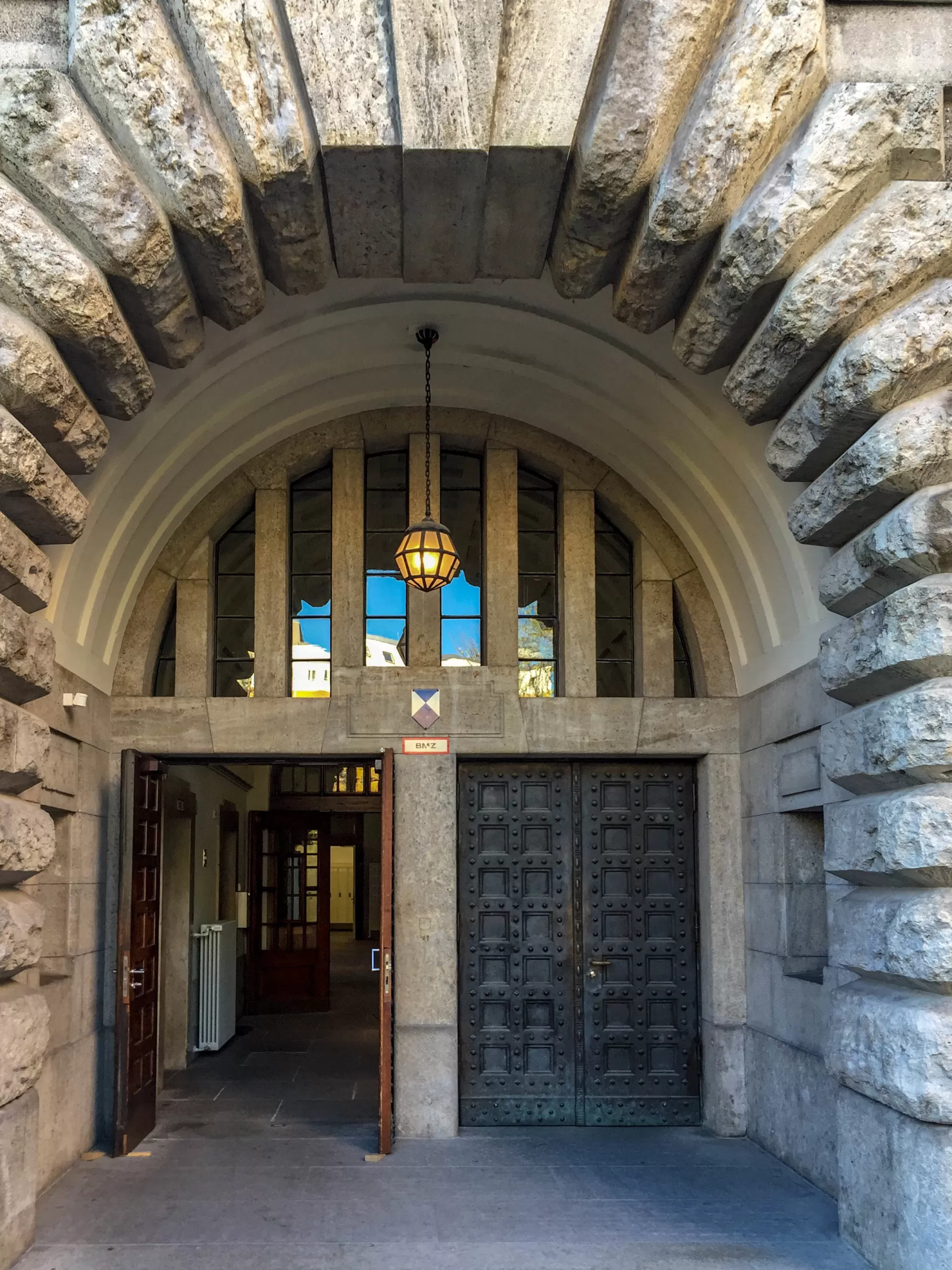
Institute of Anatomy, 1905-1907. Architect: Max Littmann. Photo: Daniela Christmann
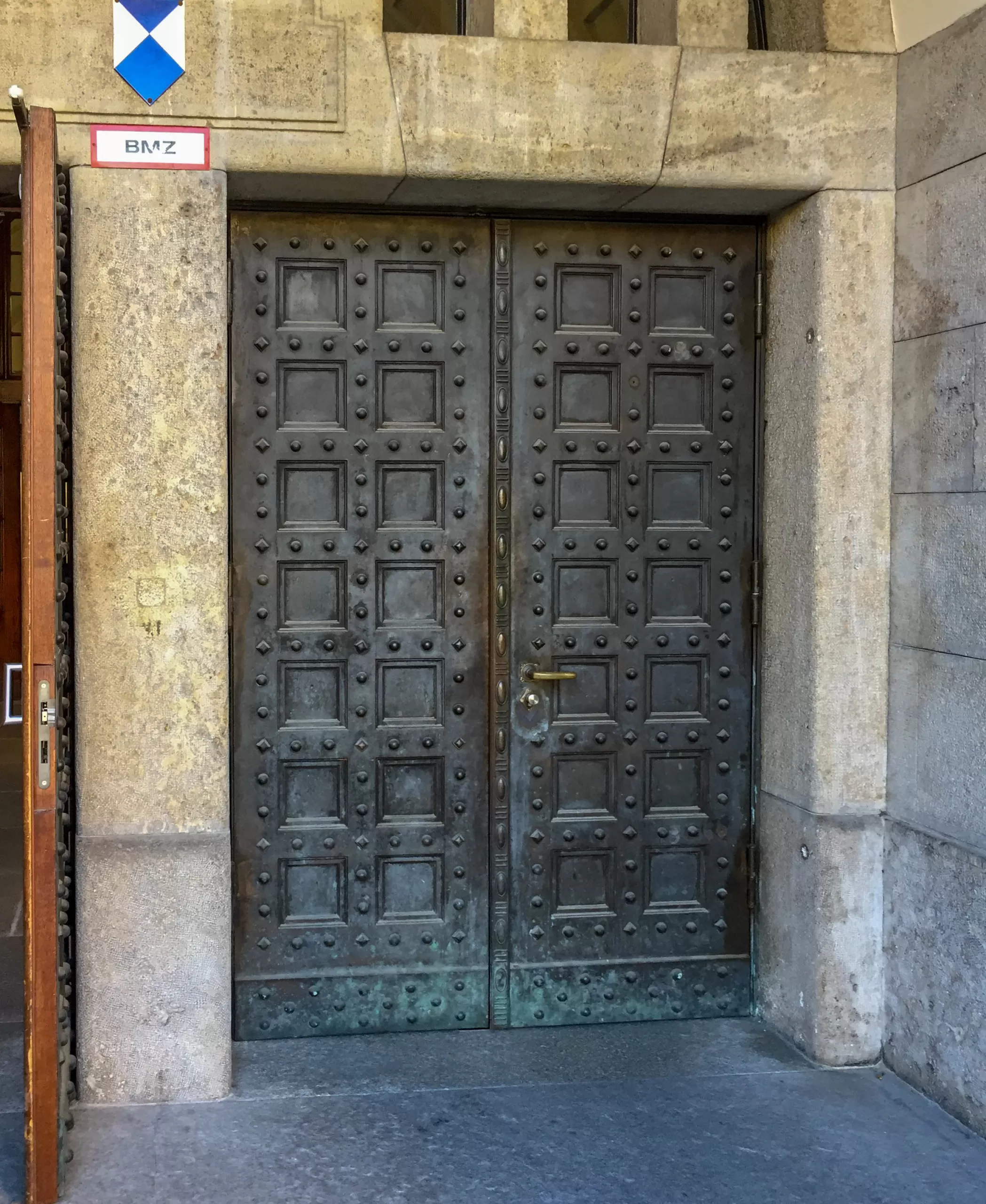
Institute of Anatomy, 1905-1907. Architect: Max Littmann. Photo: Daniela Christmann
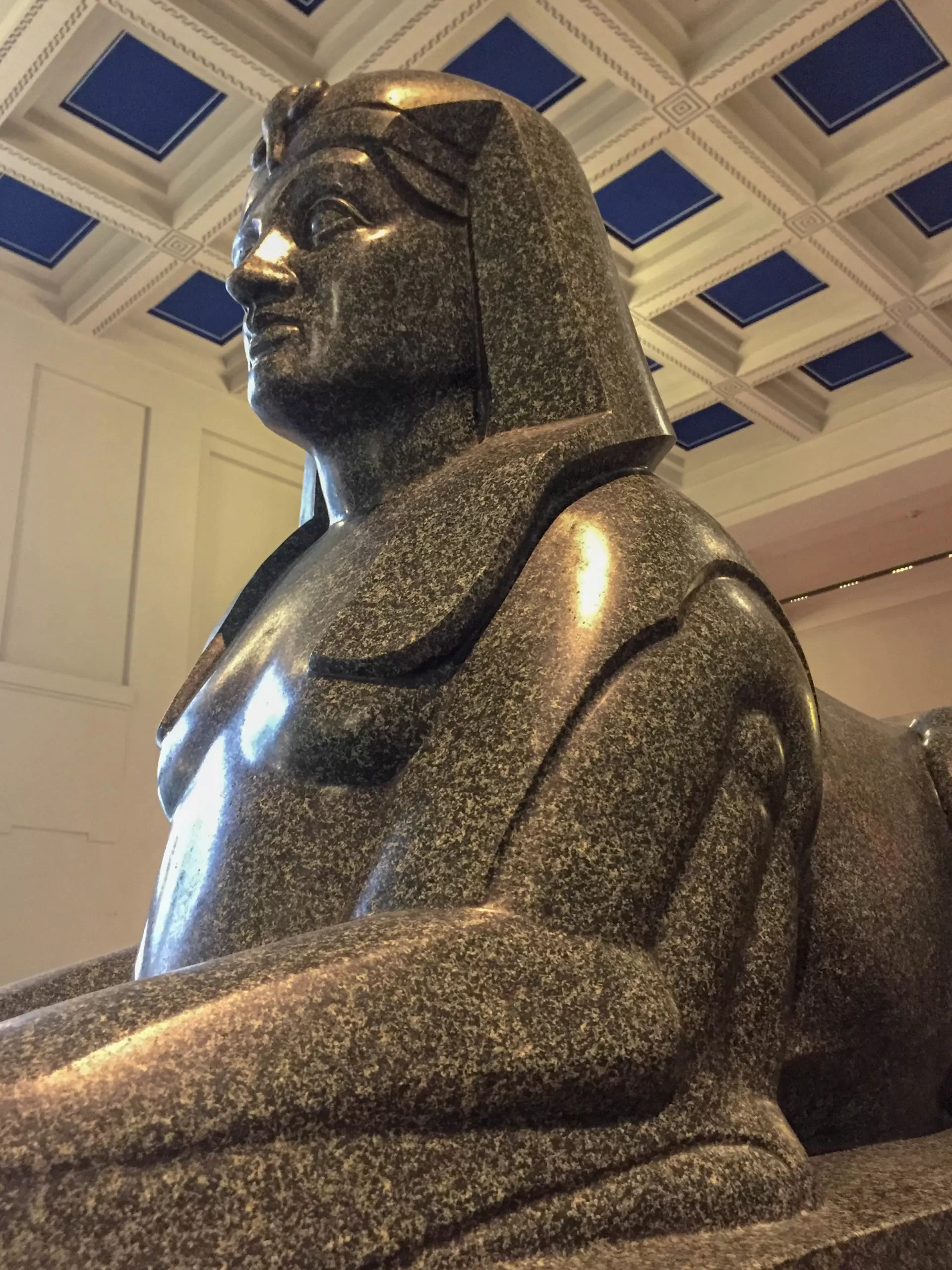
Institute of Anatomy, 1905-1907. Architect: Max Littmann. Photo: Daniela Christmann
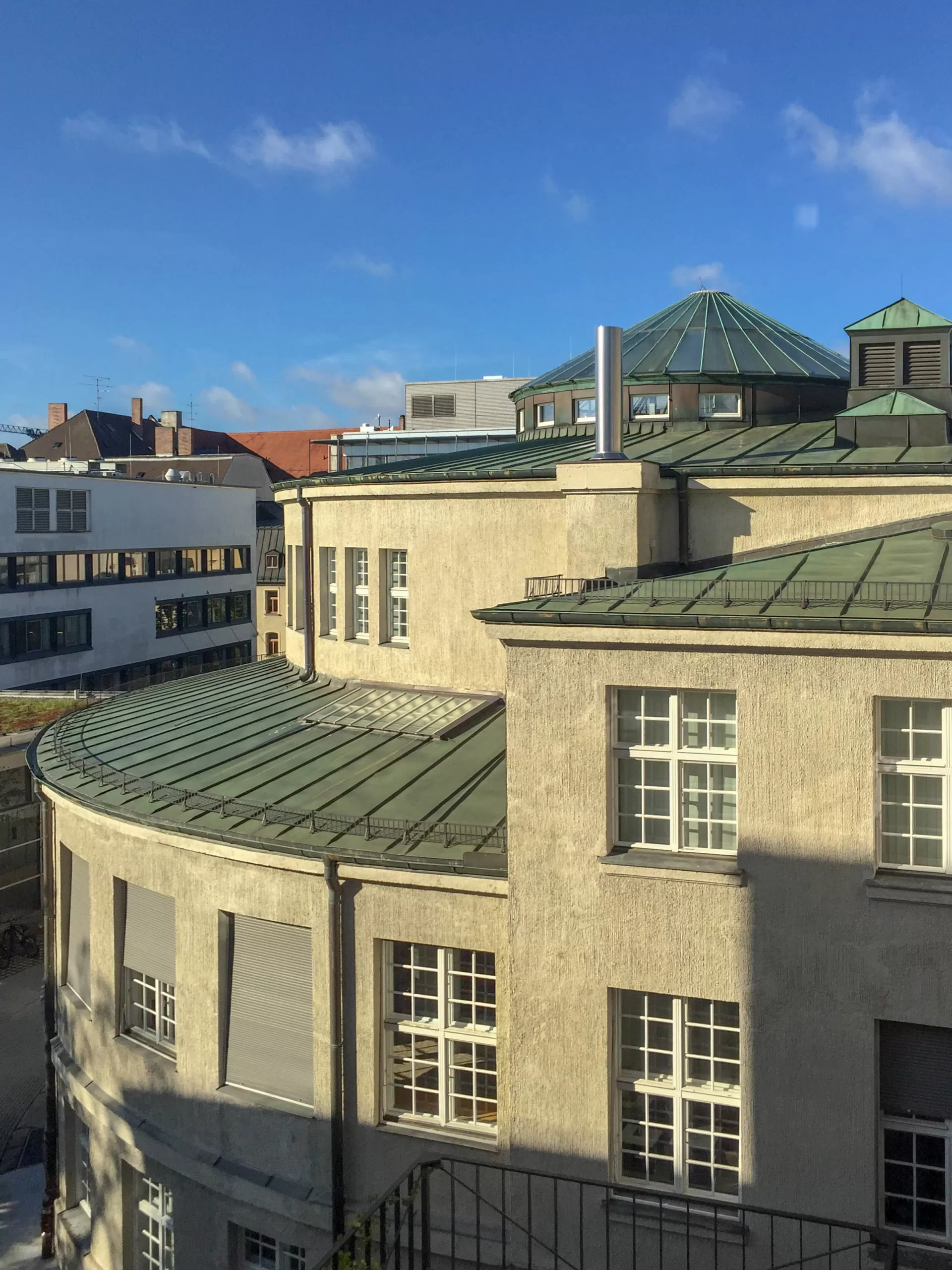
Institute of Anatomy, 1905-1907. Architect: Max Littmann. Photo: Daniela Christmann
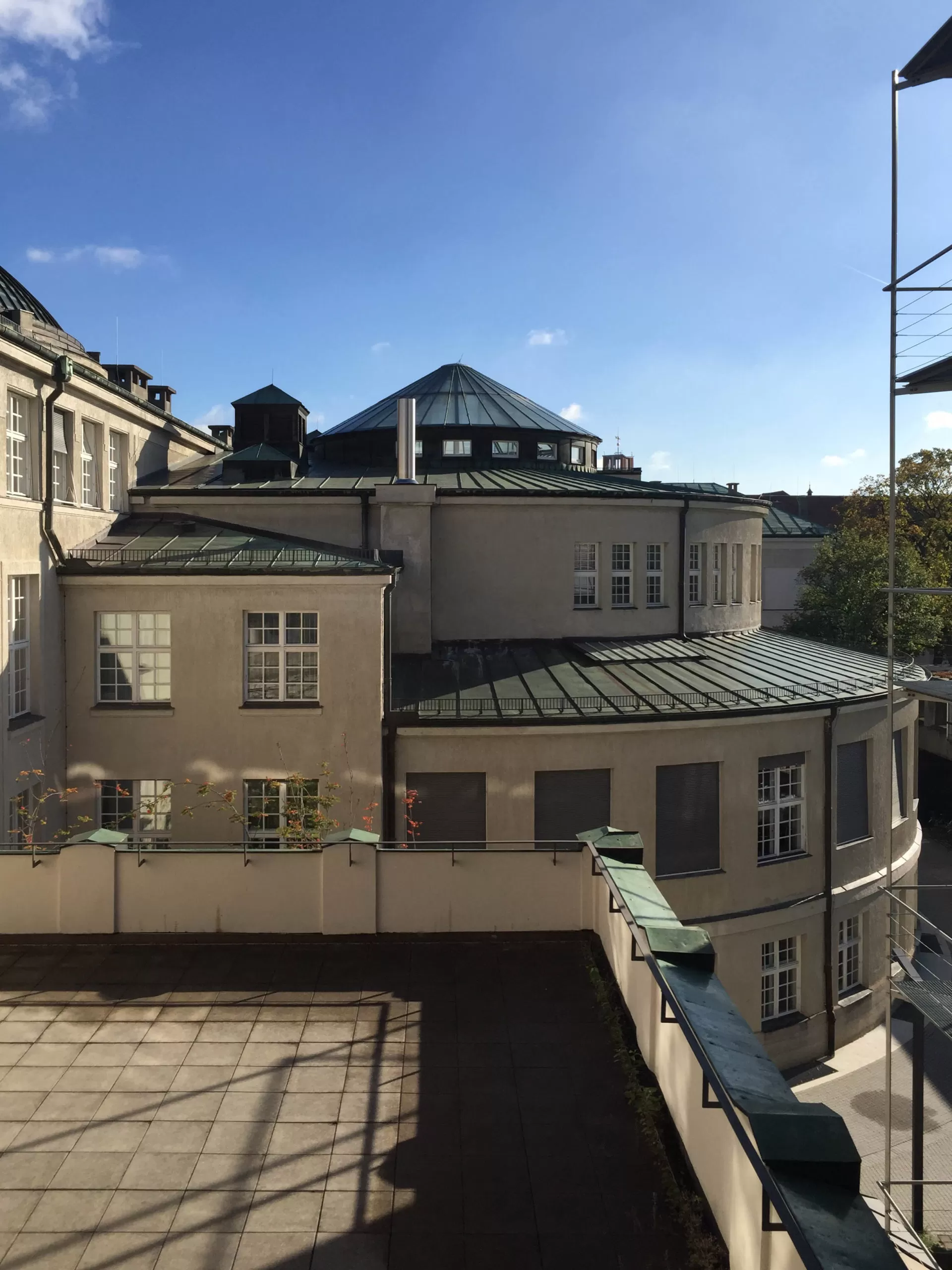
Institute of Anatomy, 1905-1907. Architect: Max Littmann. Photo: Daniela Christmann