
1928 – 1929
Architects: Walter Gropius, Otto Haesler, et al.
Bussardweg 27-49, 26-52, Dammerstockstr. 13-17, 23, 2-58, Danziger Str. 1-3, 8-14, Falkenweg 37-67, 42-72, Nürnberger Str. 1, 3, 5, Sperberweg 29-45, 49, 4-18, Karlsruhe, Germany
Dammerstock is a housing development in the Weiherfeld-Dammerstock district of Karlsruhe.g
Walter Gropius and Otto Haesler designed the settlement in collaboration with other architects.
It is one of the most important examples of the Neues Bauen architectural style in Germany.
Background:
The housing shortage in Germany during the 1920s was catastrophic due to the lack of construction activity during World War I.
Although construction resumed after inflation ended in 1924 and the economy recovered, housing remained unaffordable for the lower middle class.
For this reason, cooperative building associations were founded in numerous cities, including Berlin, Frankfurt am Main, Dessau, Breslau, and Karlsruhe. These associations built new, affordable housing estates.
Competition
In 1928, the city of Karlsruhe announced a competition to develop the city-owned Dammerstock site. The goal was to build small and very small apartments for middle- and lower-income families by mid-1929.
Eight architects from outside Karlsruhe were invited to participate, including Walter Gropius, Otto Haesler, Richard Döcker, Franz Roeckle, Max Schmechel and Wilhelm Riphahn with Caspar Maria Grod.
Additionally, 43 local Karlsruhe architects participated in the competition.
Prominent members of the jury included Ernst May, Ludwig Mies van der Rohe and Otto Völckers.
Walter Gropius and Otto Haesler
Gropius’s concept won first prize, followed by Haesler’s plan.
Gropius then became the artistic director and determined the design guidelines for the estate in this capacity.
He also coordinated the activities of the architects involved in the project.
Row Construction
Gropius’s most important planning idea was the row construction method. Rather than the conventional perimeter block development, buildings were constructed in parallel rows running north to south. The ends of these rows were alternately provided with transverse head buildings.
The goal was to optimize sun exposure and provide light in the bedrooms in the morning and in the living rooms in the afternoon.
Die Gebrauchswohnung
In October 1929, the city presented the model housing estate to the public with the exhibition “Die Gebrauchswohnung.”
Kurt Schwitters
Kurt Schwitters designed the accompanying publications.
In 1928, Otto Haesler, an architect from Celle, designed the multifunctional entrance building for the housing estate. It included a restaurant, an apartment for the tenant, a district heating plant, a central laundry building, and three additional apartments with garages.
Gate Building
Kurt Schwitters designed the lettering and schematic ground plan of the settlement on the gate building.
The two-story building containing a central heating system and a laundry room was built between 1928 and 1929 according to plans by Otto Haesler. In 1974, architects Rossmann and Partner remodeled the building for use as an architectural office.
Additional interior windows preserve the original ventilation flaps.
Due to the global economic crisis, only 228 of the planned 750 Dammerstock housing estate apartments were built.
Expansion and Renovation
Construction of the settlement according to Gropius’s original plans did not resume until after 1949.
The estate has since been renovated in accordance with the preservation order and is still fully inhabited today.
In 1991, the site was registered as a cultural monument of special importance. Before then, the facades were insulated and some of the original windows were replaced.
The ground plans remained largely unchanged.
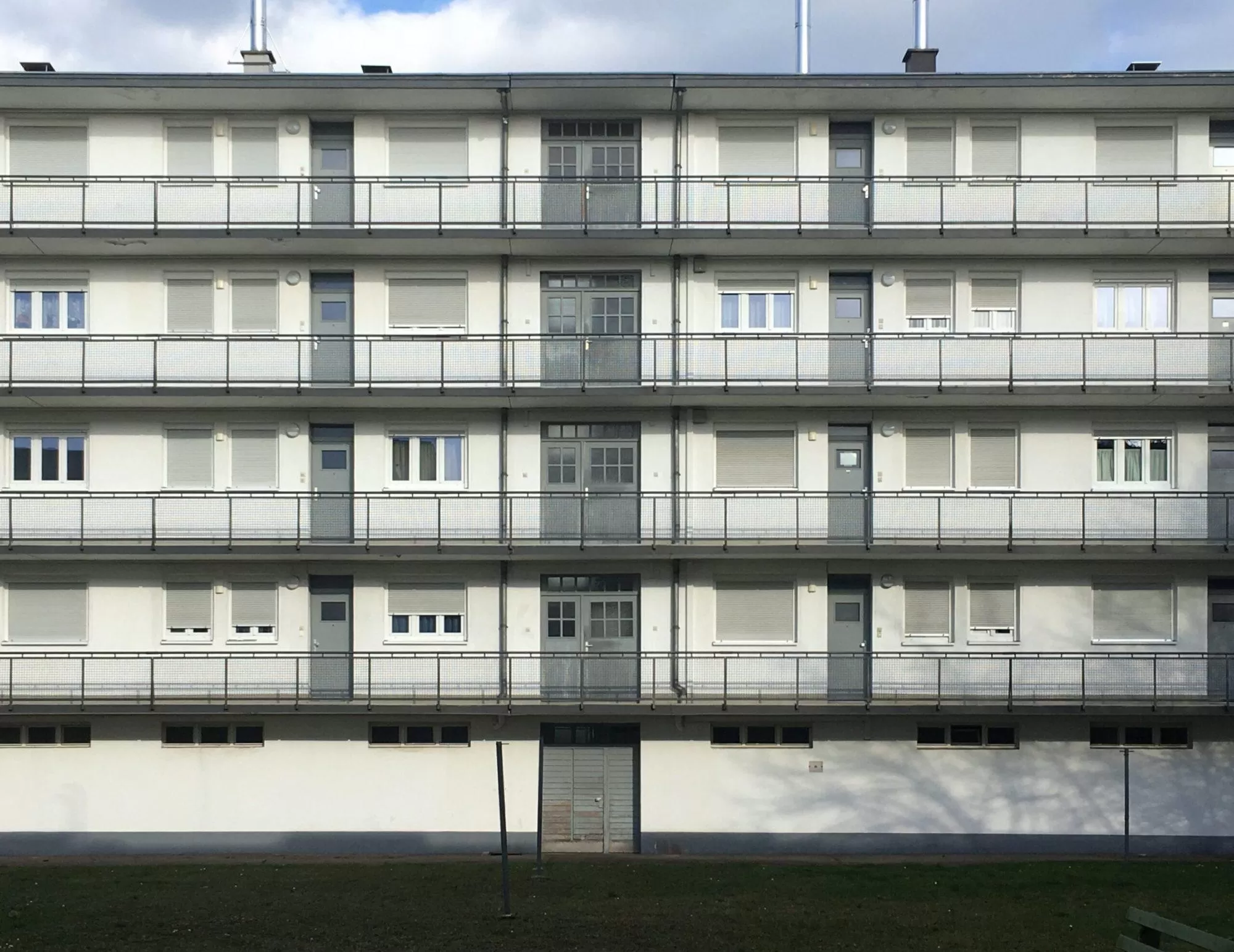
Dammerstock Estate, 1928-1929. Architect: Walter Gropius. Photo: Daniela Christmann
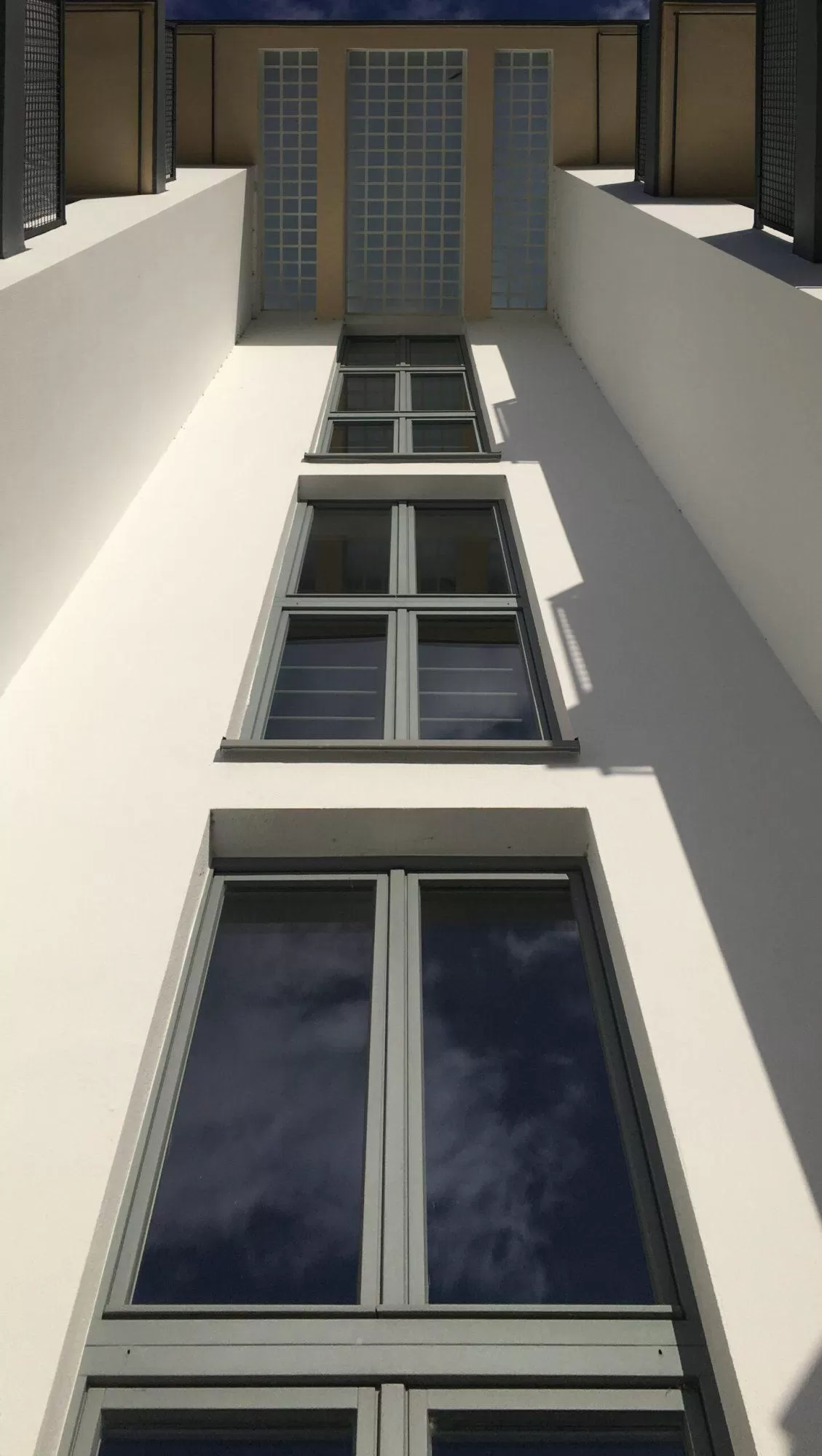
Dammerstock Estate, 1928-1929. Architect: Walter Gropius. Photo: Daniela Christmann
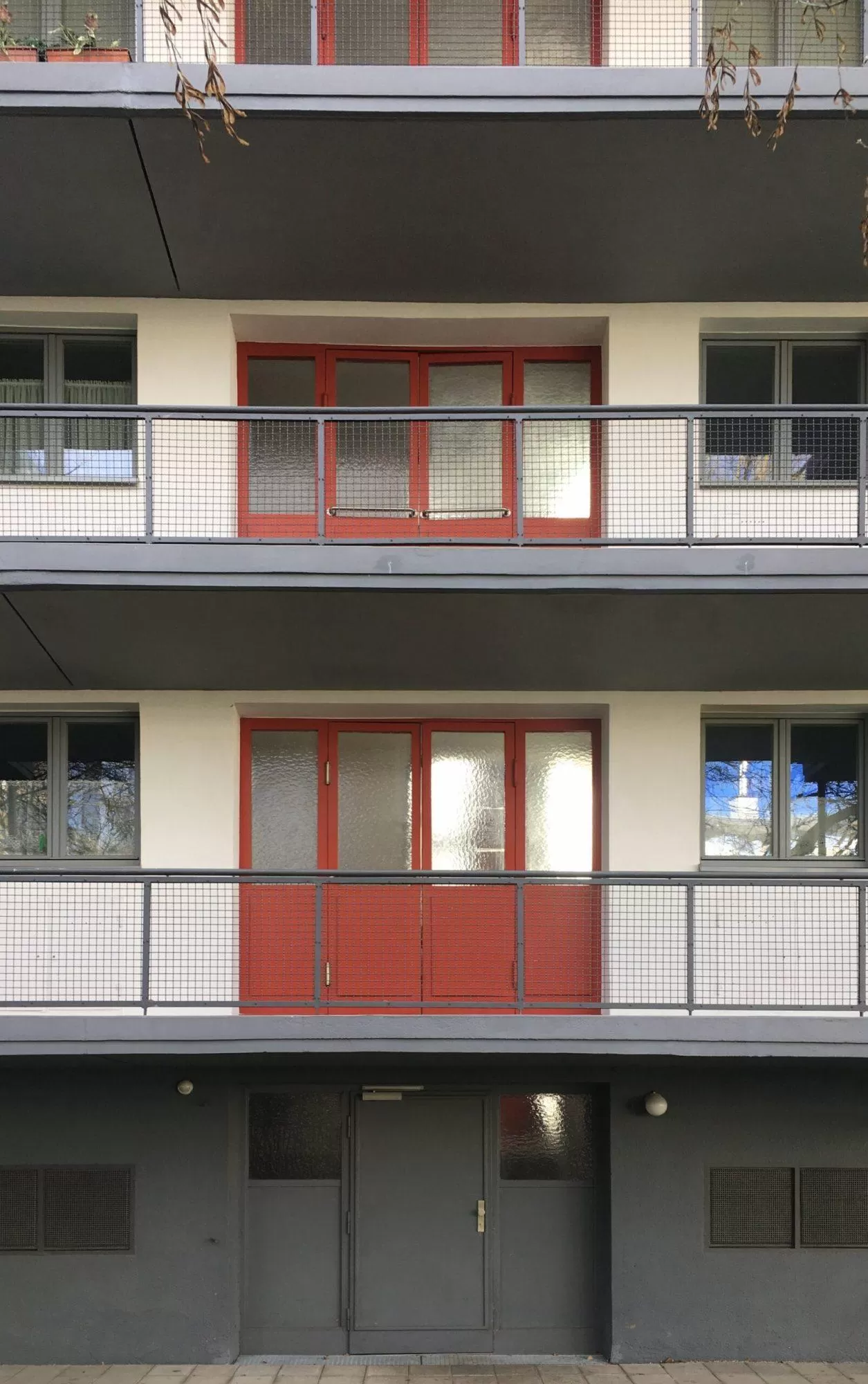
Dammerstock Estate, 1928-1929. Architect: Walter Gropius. Photo: Daniela Christmann
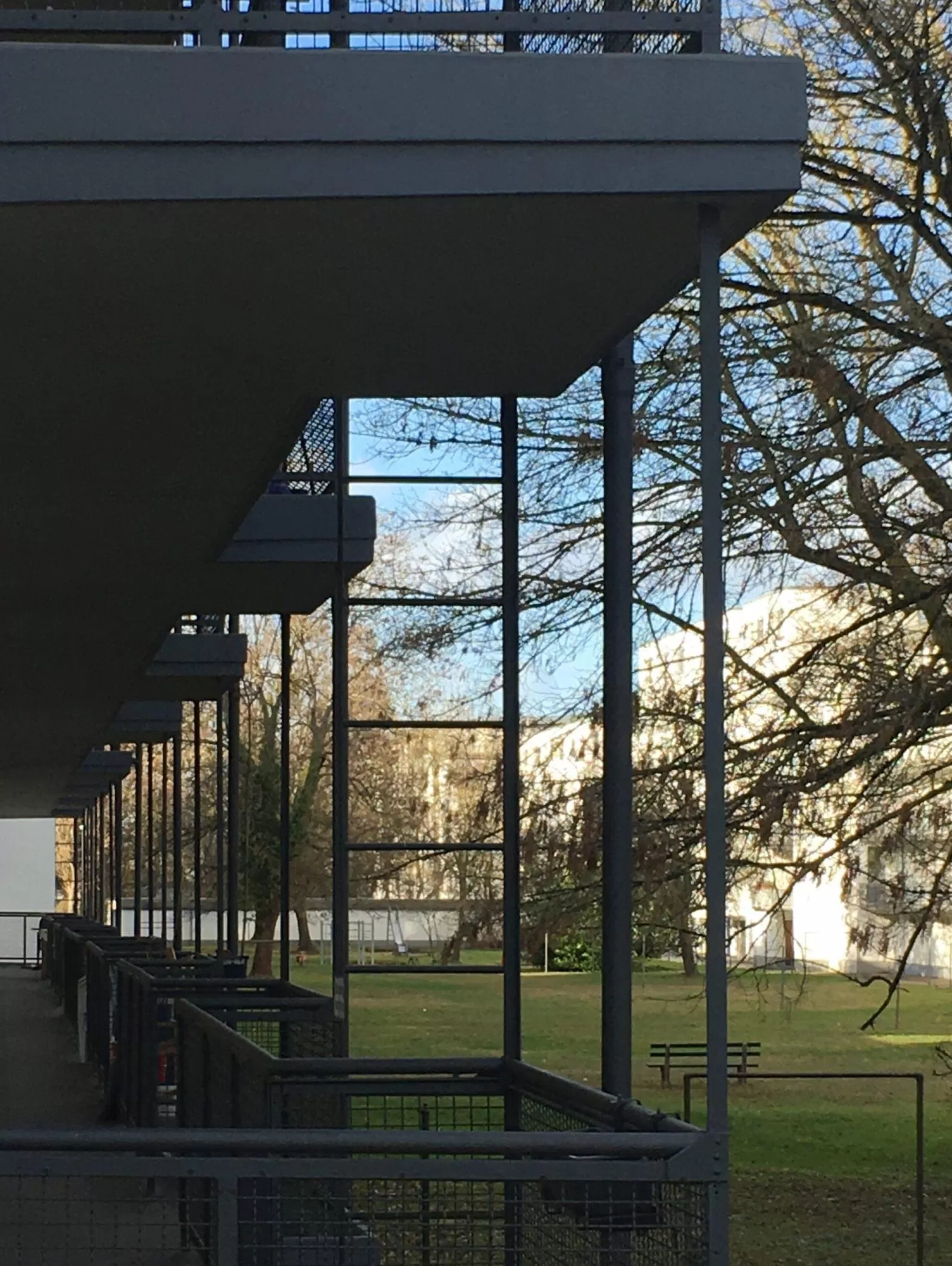
Dammerstock Estate, 1928-1929. Architect: Walter Gropius. Photo: Daniela Christmann
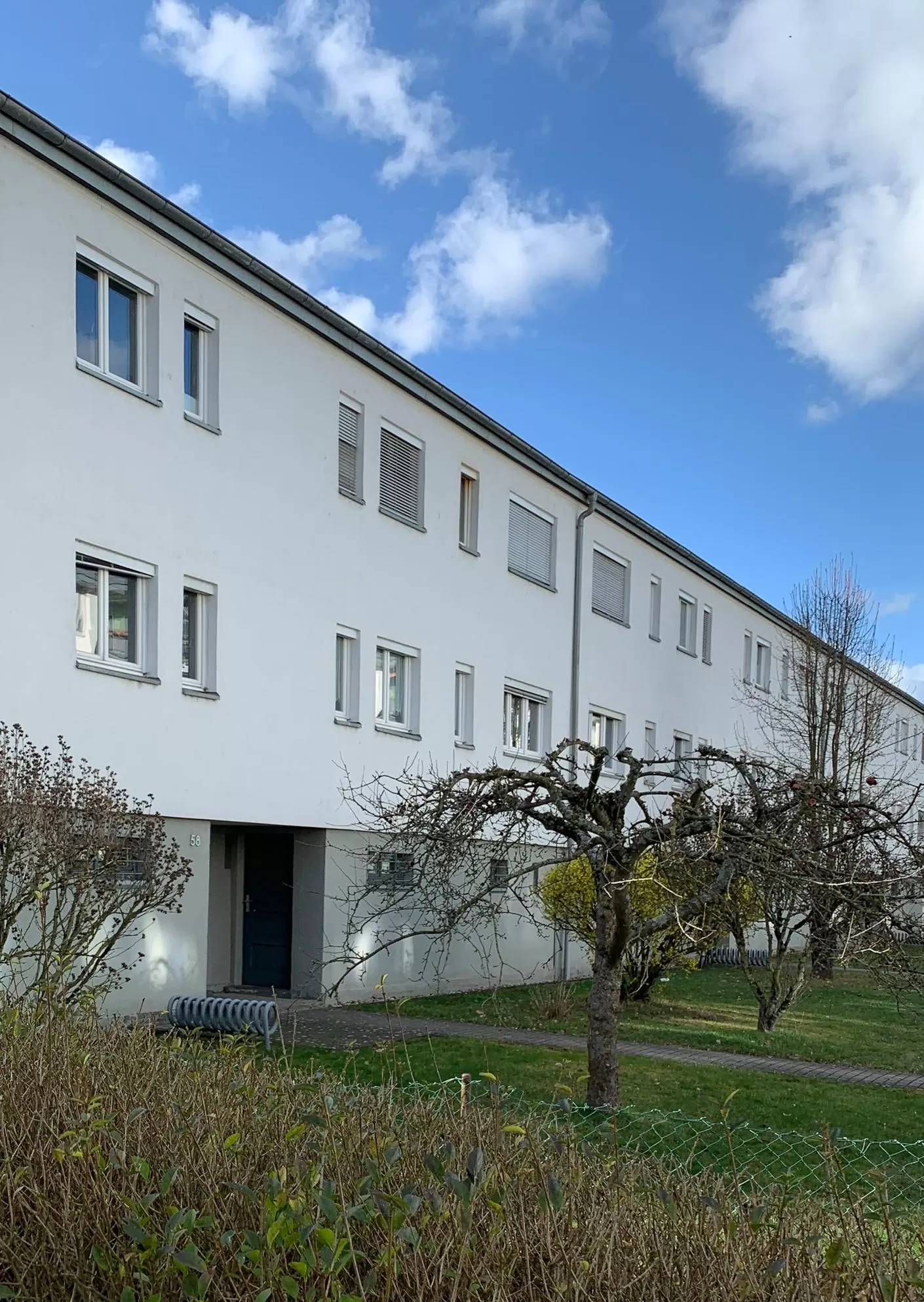
Dammerstock Estate, 1928-1929. Architect: Franz Roeckle. Photo: Daniela Christmann
The textured glass and mullion pattern in the stair towers is most striking. Particularly like the operable windows being vision glass to distinguish them from the fixed textured glazing. A Gropius Building that I was unfamiliar until now.