
1925–1930
Studies and first professional experience in Rotterdam, Amsterdam, and Vienna
Margarete Schütte-Lihotzky was the daughter of Austrian civil servant and judge Erwin Lihotzky (1856–1923) and his wife, Julie (née Bode, 1866–1924). She married architect Wilhelm Schütte in 1927. They separated in 1951.
From 1915 to 1919, she studied architecture under Oskar Strnad and Heinrich Tessenow at the Vienna School of Applied Arts (now the University of Applied Arts Vienna). Her studies included furniture design, which laid the foundation for her later success with the Frankfurt Kitchen.
In 1917, she received the Max Mauthner Prize from the Chamber of Commerce and Industry for her competition entry, “A Kitchen-Diner in the Outer Suburbs.” Two years later, she became the first woman to receive the Lobmeyr Prize from the Society for the Promotion of the School of Applied Arts.
Netherlands
After completing her studies in 1919, Schütte-Lihotzky became one of the first female architects in Austria. In December of that year, she accompanied her sister, Adele, to the Netherlands. A children’s aid committee that enabled Viennese children to vacation in the Netherlands gave her the opportunity to travel with them as a caregiver.
She gave the children art lessons in the mornings and worked in the architectural office of Rotterdam-based architect Melchior Vermeer in the afternoons. She independently developed designs for single-family terraced houses there. She also attended evening urban planning classes with Hendrik Petrus Berlage.
In the summer of 1920, she returned to Vienna and became involved in the Viennese settlement movement. First, she worked for the „Ersten gemeinnützigen Siedlungsgenossenschaft der Kriegsinvaliden Österreichs“ (First Non-Profit Settlement Cooperative for War Invalids in Austria) from 1921 to 1922. Then, she worked in the construction office of the „Österreichischen Vereins für Siedlungs- und Kleingartenwesen“ (Austrian Association for Settlement and Allotment Gardening) from 1922 to 1924.
Adolf Loos
Before working for the Association for Housing and Allotment Gardens’ construction office as chief architect, Grete Lihotzky worked for various housing cooperatives, including with the architects Adolf Loos and Ernst Egli.
Her first collaboration with Loos dates back to 1921 when the 23-year-old worked with him on the ‘Erste gemeinnützige Siedlungsgenossenschaft der Kriegsinvaliden Österreichs’ (First Non-Profit Housing Cooperative for War Invalids in Austria) and the planning of the “Friedensstadt” housing estate in the Lainzer Tiergarten. It was during this time that her long-standing friendship with Loos began.
She also intermittently worked for Ernst Egli on the design of the Eden reform housing estate in Hütteldorf, near Vienna, from 1921 to 1922, as well as on the children’s home of the Theosophical Brotherhood for Education located there.
Meeting Ernst May and Appointment to Frankfurt
By that time, she was already working intensely on designing housing estates for the building office of the Association for Housing and Allotment Gardens. She developed floor plans, designed matching standard furniture, and planned efficient kitchens. Her concept for the housing estates involved separating the functions into a living kitchen and a scullery.
When Ernst May, an architect from Frankfurt am Main who was then head of the Schlesische Heimstätte in Breslau, wanted to learn more about the housing estates in Vienna, Grete Lihotzky gave him a tour of the city. Impressed by her rational kitchen design, May gave her the opportunity to publish her ideas on housing construction and modern housekeeping in Schlesisches Heim, a magazine he had initiated.
Her article, entitled “Einiges über die Einrichtung österreichischer Häuser unter besonderer Berücksichtigung der Siedlerbauten” (Some thoughts on the furnishing of Austrian houses with special consideration of housing estates), was published in August 1921.
By then, May had become the city councilor for construction in Frankfurt am Main and invited Lihotzky to the city in November 1925.
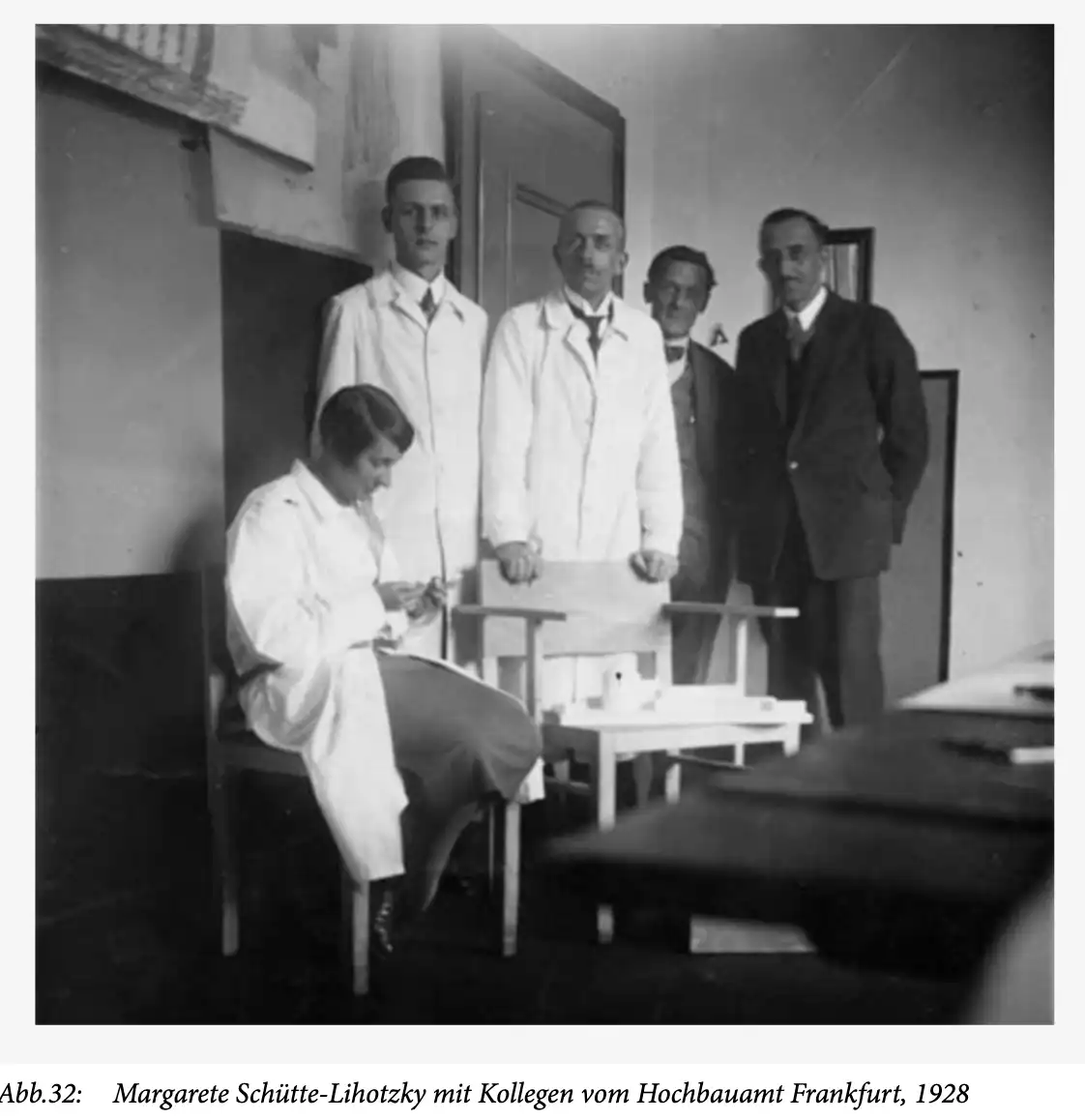
Margarete Schütte-Lihotzky with colleagues from the Frankfurt Building Authority, 1928
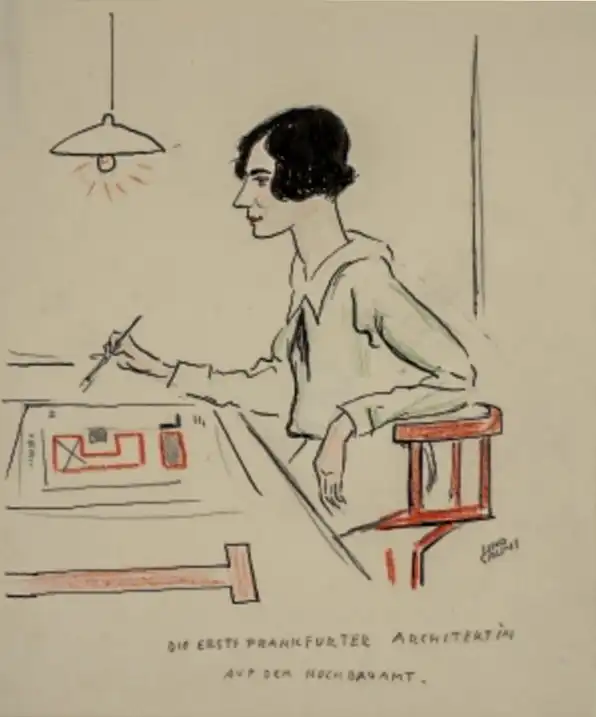
Margarete Schütte-Lihotzky. Drawing: Lino Salini, 1927. Historisches Museum Frankfurt
Department T, Frankfurt am Main
On February 1, 1926, she became the first female architect to work at the Frankfurt Building Authority. In the Typification Department, headed by Eugen Kaufmann, she was initially responsible for designing standard floor plans for the Praunheim housing estate.
Ernst May, who had brought Margarete from Vienna to Frankfurt, believed she was the ideal candidate for the department because it was responsible for planning the mass production of residential buildings, kindergartens, garden sheds, school kitchens, and all standardized components, such as doors, windows, and fittings, for municipal buildings.
Department T was headed by Eugen Kaufmann, whom May had recruited from South Tyrol. Other architects who worked in Department T included Ferdinand Kramer from Frankfurt, Adolf Meyer from the Bauhaus, and the painter and graphic artist Hans Leistikow from Breslau.
Frankfurt Kitchen
Frankfurt Kitchen
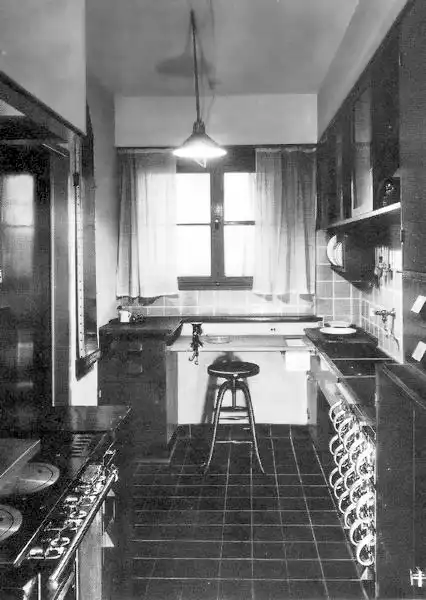
However, her main task was to design kitchens for all the residential units in the New Frankfurt housing estates.
For the first time, she proposed separating the kitchen from the living and dining areas. This became possible because stoves could now be powered by gas or, later, electricity instead of wood or coal.
Based on her empirical research on the movements and actions involved in kitchen work, Lihotzky developed a standard kitchen with built-in furniture that measured around 6.5 square meters. The kitchen in the Mitropa dining car served as a model.
The goal was to simplify housework for working women and create the technical conditions for progressive emancipation. Since the built-in furniture was included in the construction costs and billed via the rent, all residents had access to this modern, fully equipped kitchen for an additional monthly rent of two to three Reichsmarks.
To promote this new type of kitchen, Paul Wolff produced the documentary film Die Frankfurter Küche (The Frankfurt Kitchen) on behalf of the city of Frankfurt am Main in 1928. Around 10,000 of these kitchens, produced in various models, were installed in May settlements and are considered the prototype for modern fitted kitchens.
Garden sheds and Arbors
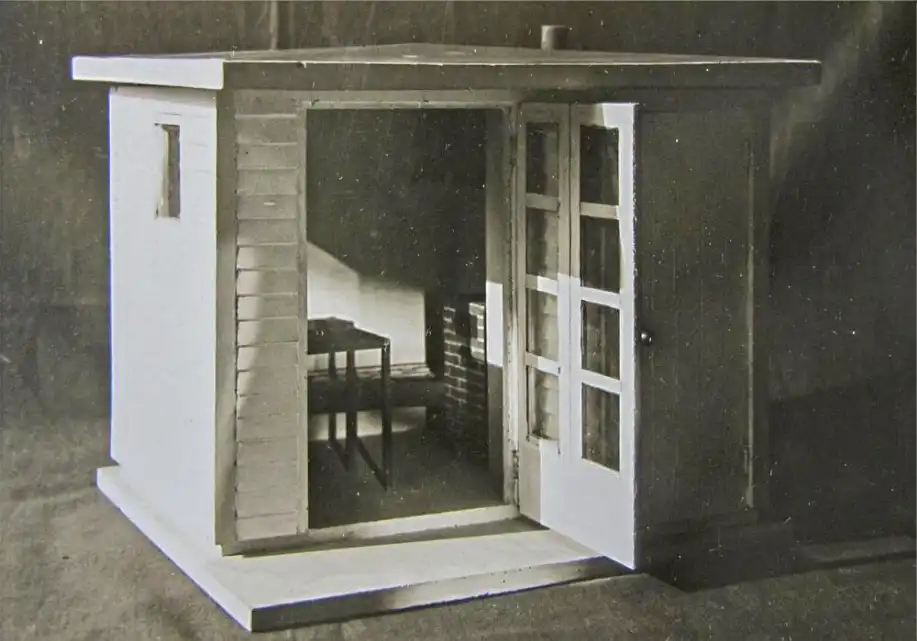
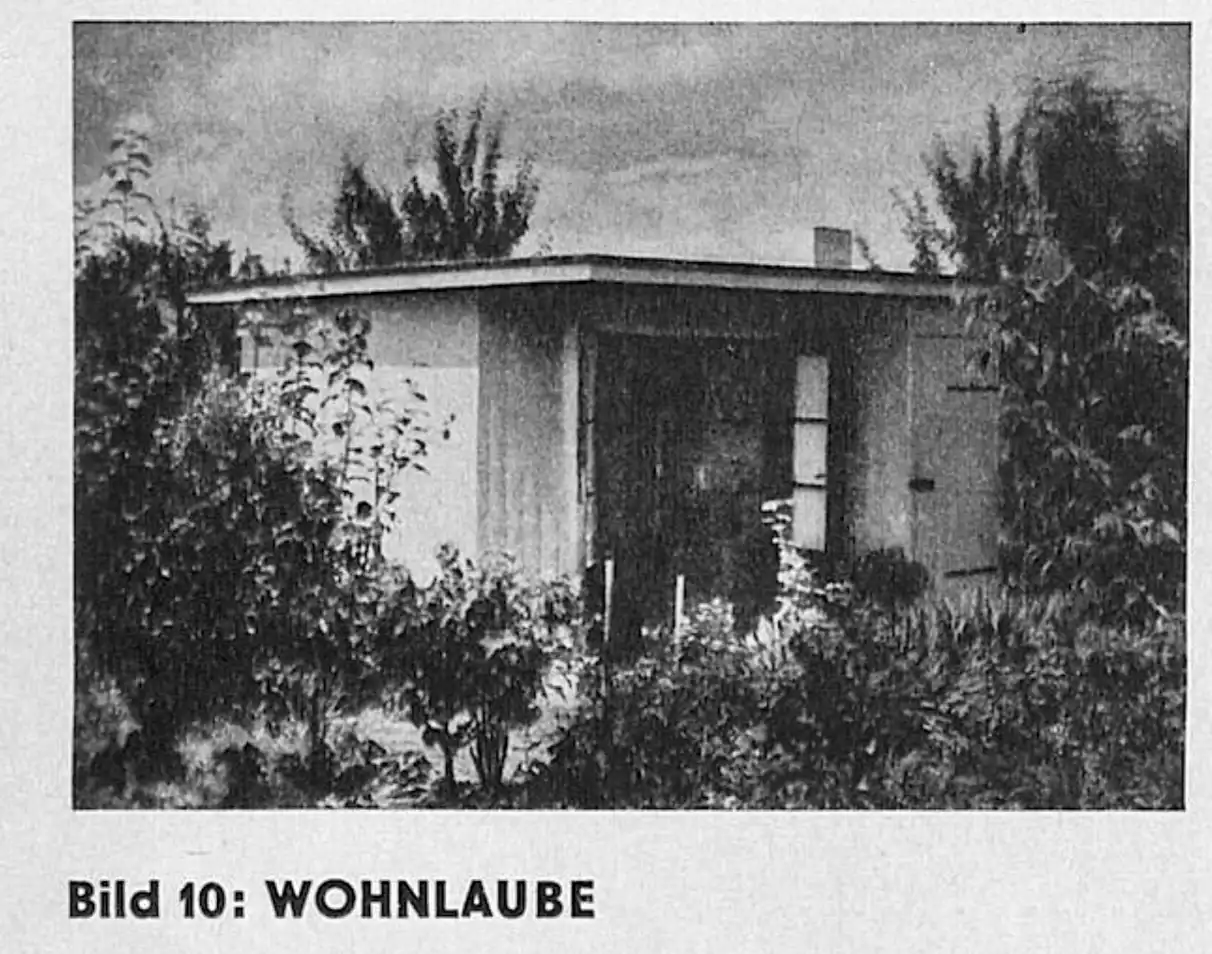
The new residential complexes often included allotment gardens. These kitchen gardens were intended to ease household budgets and promote healthy living. Some of these gardens were equipped with standardized sheds and arbors.
Schütte-Lihotzky developed standard designs that were displayed at the 1927 Frankfurt exhibition, “Die neue Wohnung und ihr Innenausbau” (The New Apartment and Its Interior Design). There, the architect presented a weekend house designed in collaboration with Wilhelm Schütte that attracted a great deal of attention.
Frankfurt Years: Apartment on Kranichsteiner Straße
In 1927, Margarete Schütte-Lihotzky moved into an apartment with a roof garden in a newly constructed building belonging to the Building Authority at Kranichsteiner Straße 26 in Sachsenhausen. Previously, she had lived as a subtenant in two rooms at Bettinastraße 44. That same spring, she married Wilhelm Schütte, an architect and colleague from the school buildings department.
Around 1930, photographer Hermann Traugott Collischonn took pictures of Schütte-Lihotzky alone and with her husband on the roof terrace of the house on Kranichsteiner Straße.
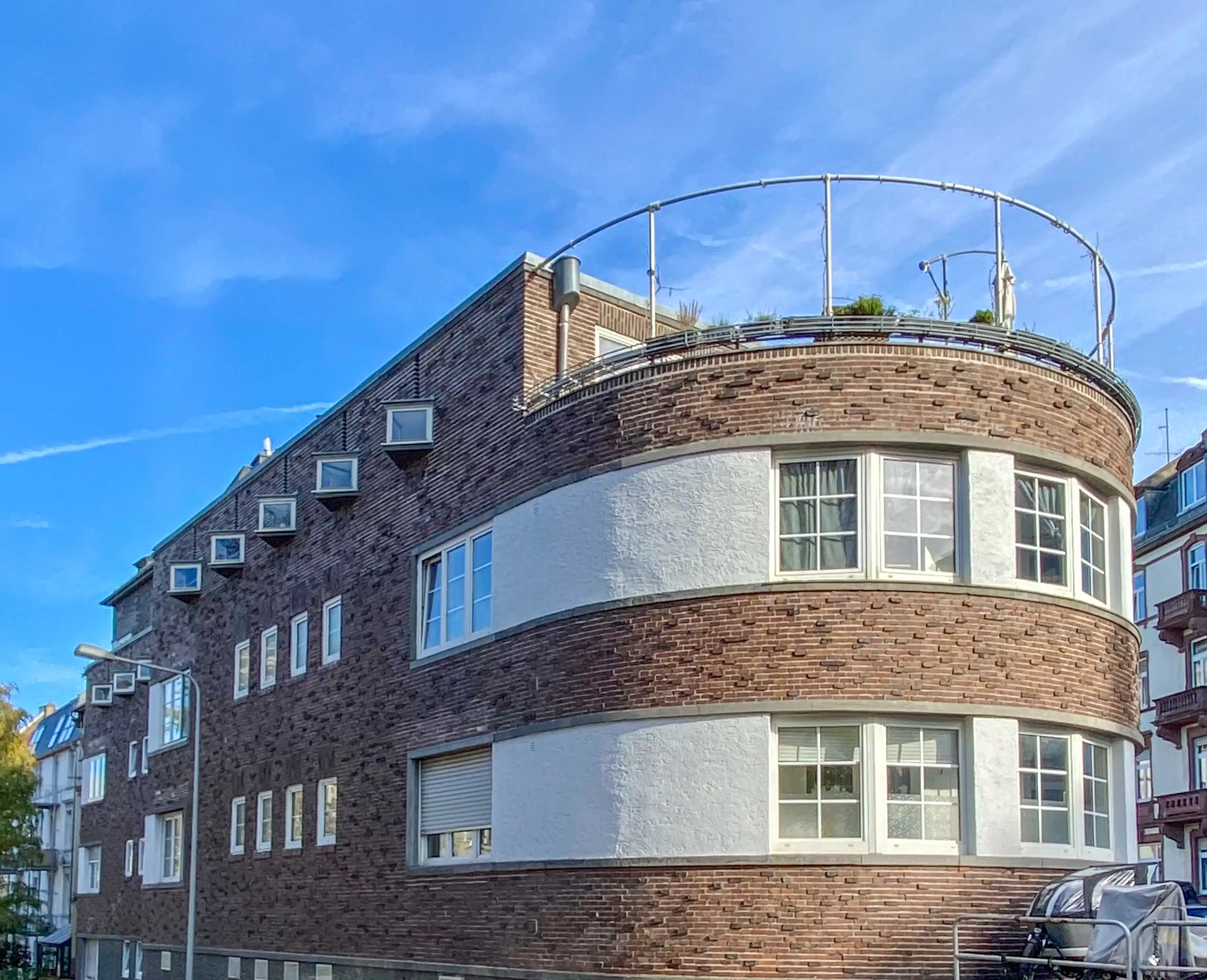
Apartment building, 1926. Architect: Ernst Balser. Photo: Daniela Christmann
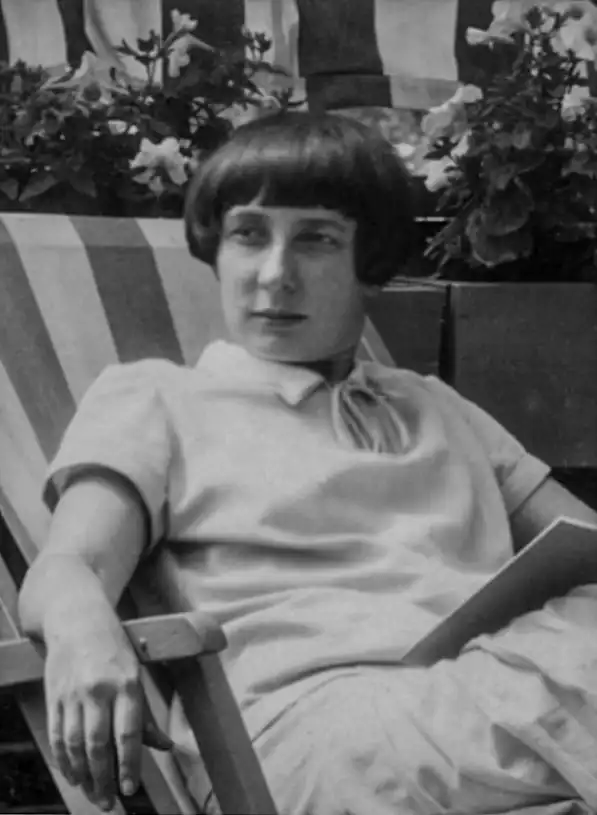
Margarete Schütte-Lihotzky poses on the terrace of her apartment on Kranichsteiner Straße around 1930. Photo by Hermann Collischonn.
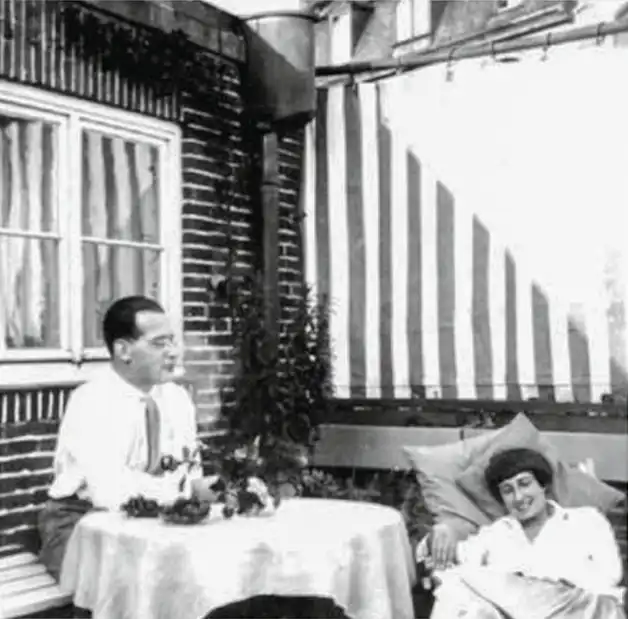
Margarete Schütte-Lihotzky and Wilhelm Schütte pose on the terrace of their apartment on Kranichsteiner Straße in 1929. Photo by Hermann Collischonn.
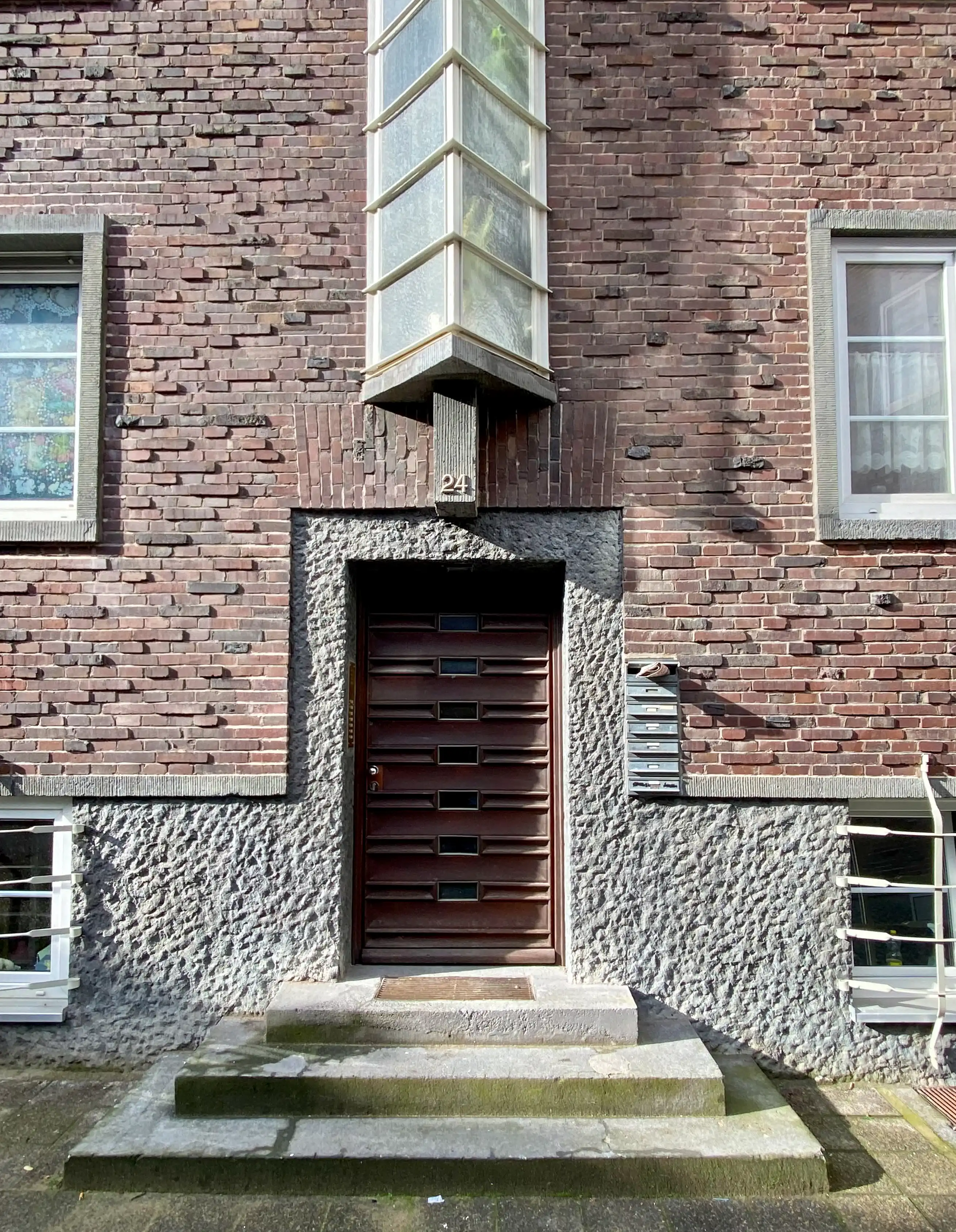
Apartment building, 1926. Architect: Ernst Balser. Photo: Daniela Christmann
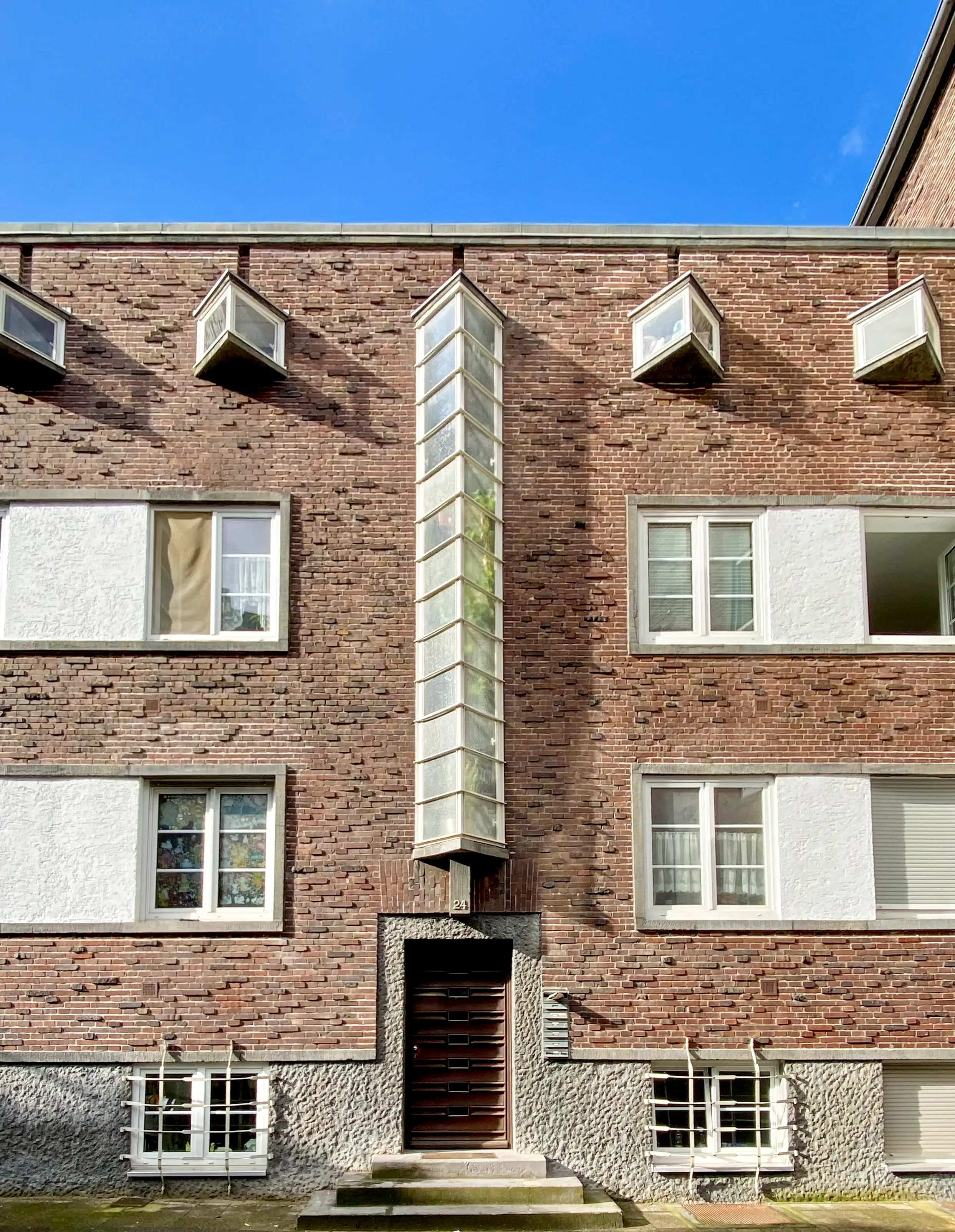
Apartment building, 1926. Architect: Ernst Balser. Photo: Daniela Christmann
Apartment Block on Kranichsteiner Straße
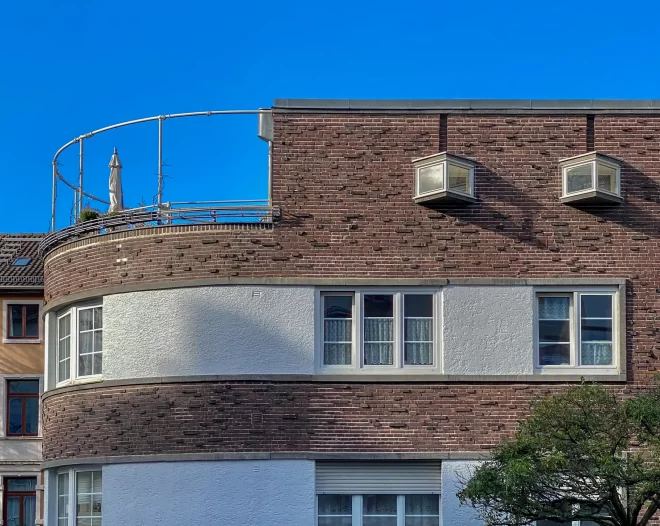
Designed by architect Ernst Balser in 1926, this apartment complex is located on an acute-angled plot on the slope of Sachsenhäuser Berg, Frankfurt am Main.
The building has a total of twenty apartments and was constructed with solid brickwork and curtain wall cladding.
All apartments were equipped with a Frankfurt kitchen.
The pointed attic windows serve as both a decorative element and a windbreak to optimize ventilation in the drying room.
The stairwell walls are covered in chiseled granite, the concrete steps are covered in stone wood, and the railing is made of iron with a nickel-plated handrail.
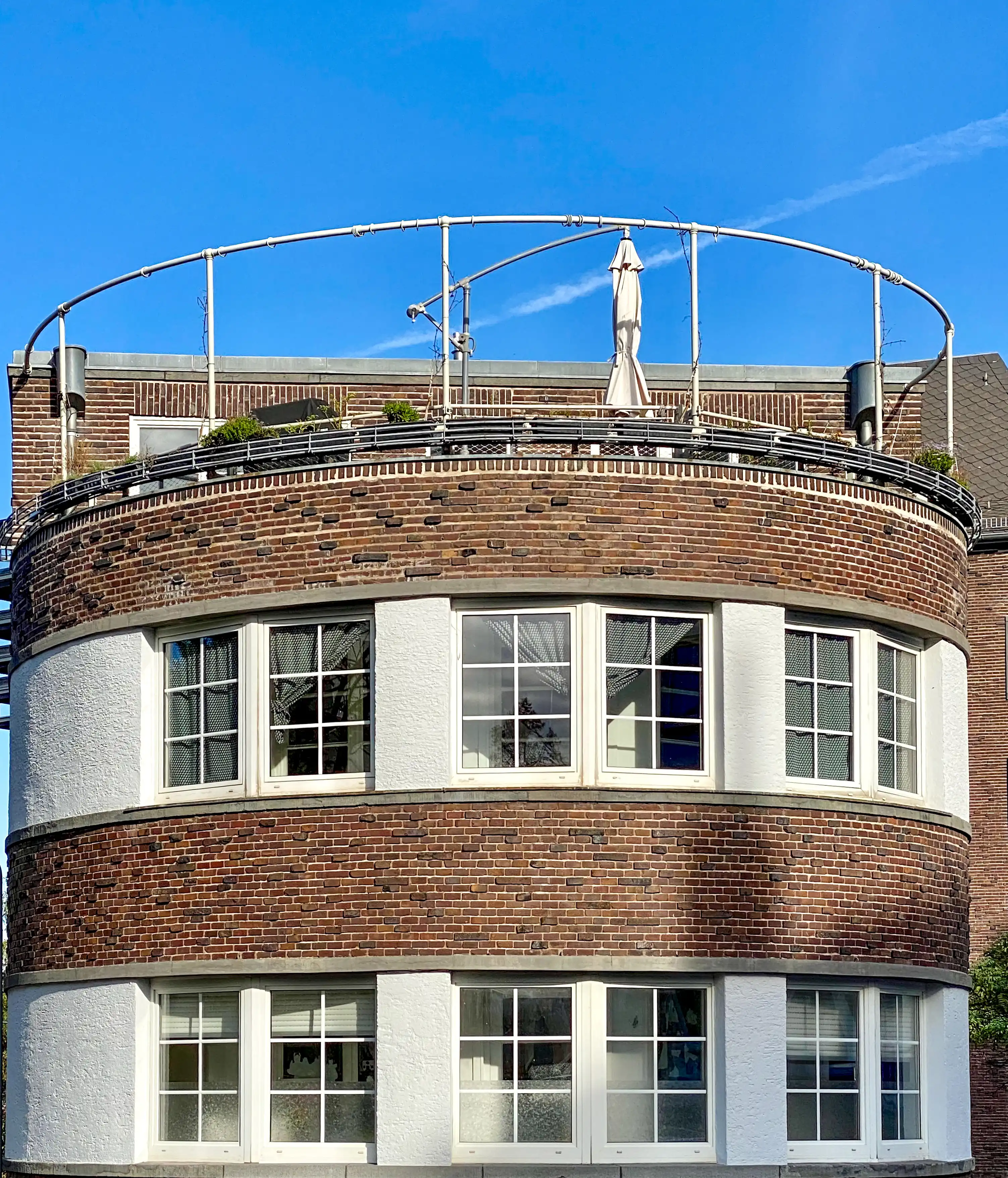
Apartment building, 1926. Architect: Ernst Balser. Photo: Daniela Christmann
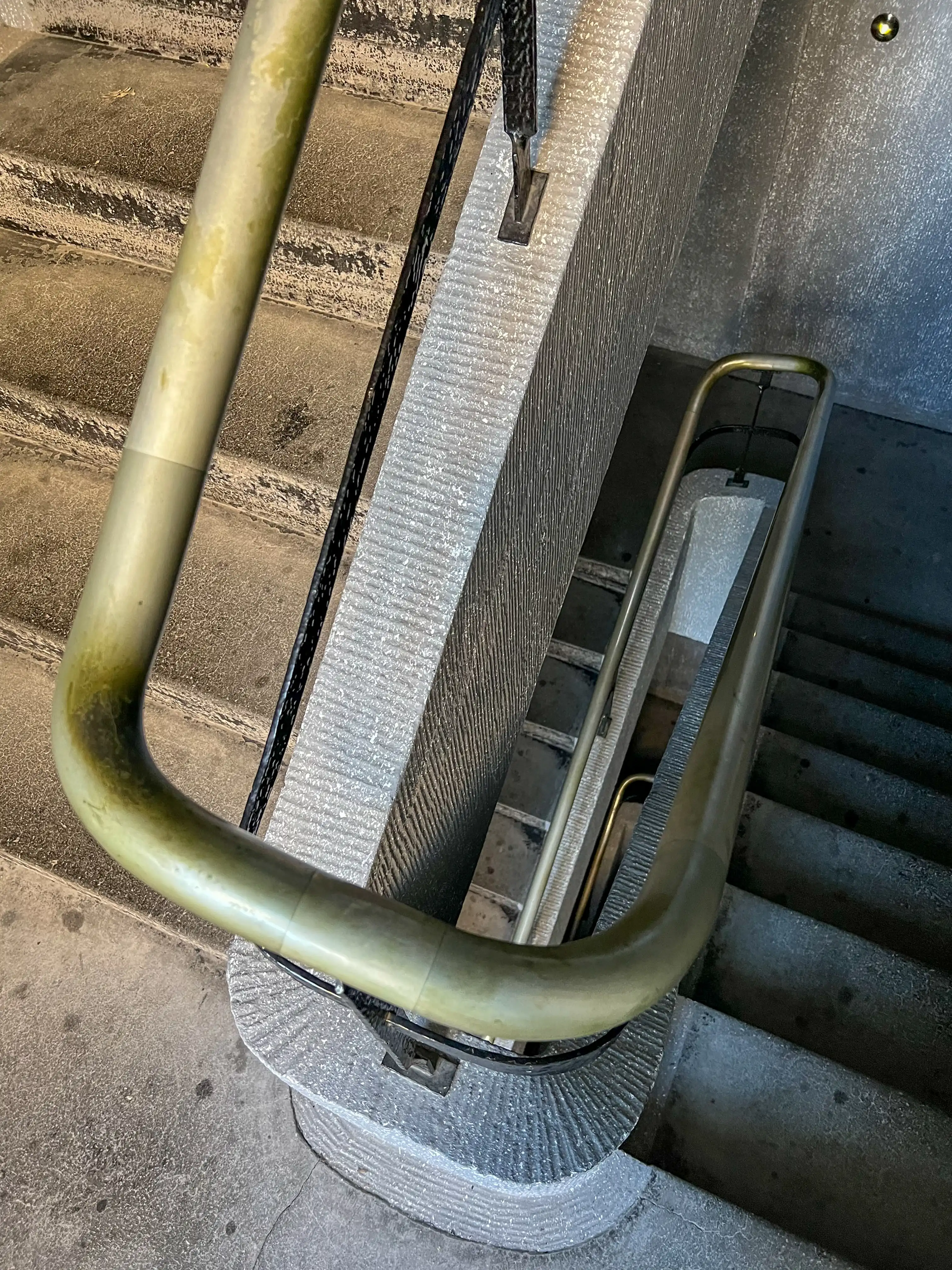
Apartment building, 1926. Architect: Ernst Balser. Photo: Daniela Christmann
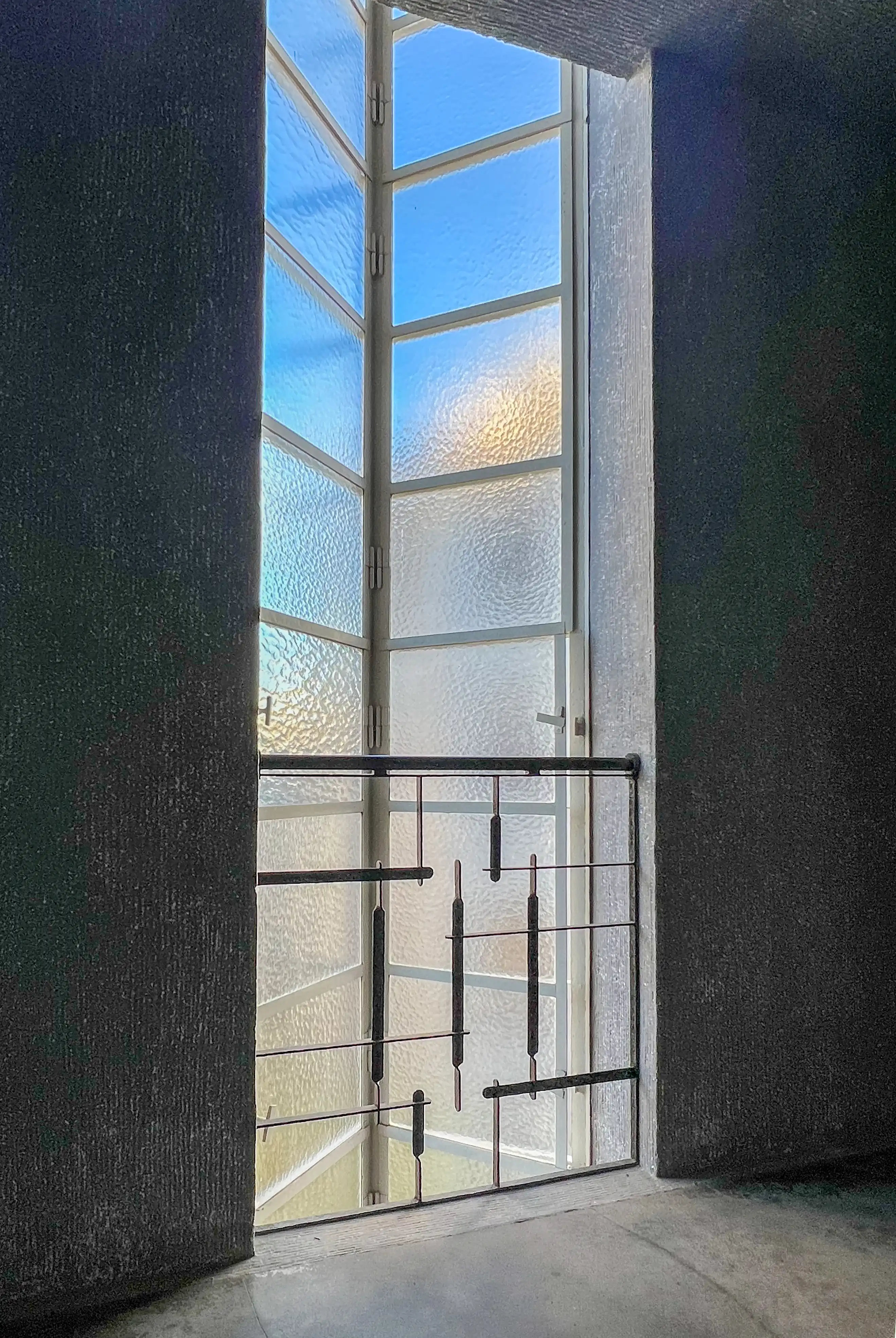
Apartment building, 1926. Architect: Ernst Balser. Photo: Daniela Christmann
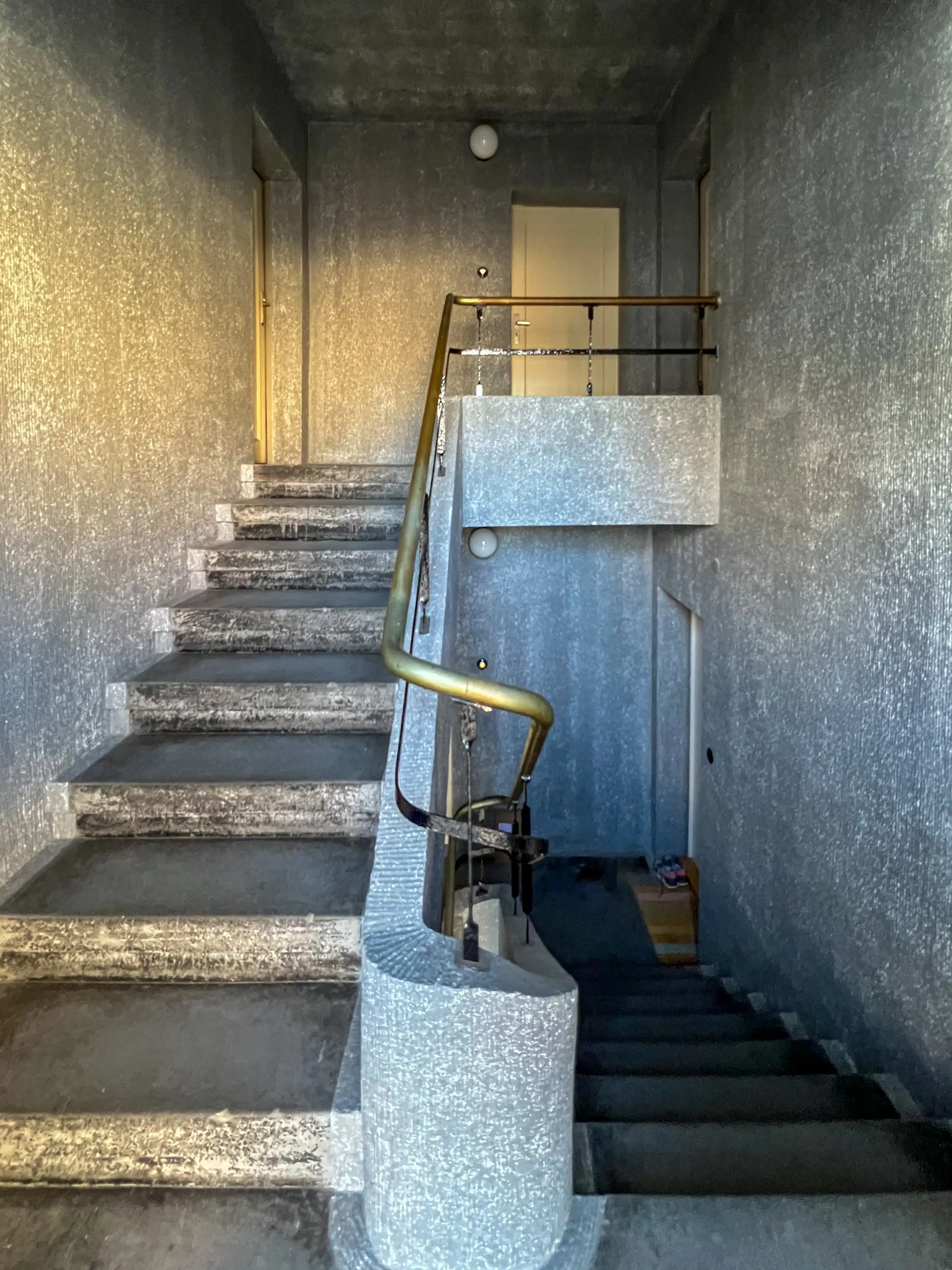
Apartment building, 1926. Architect: Ernst Balser. Photo: Daniela Christmann
Teaching and Commercial Kitchens
Toward the end of her time in Frankfurt, she specialized in designing educational facilities, a task also handled by the Typification Department. To introduce students to rational home economics in school, the city of Frankfurt equipped existing and new schools with teaching kitchens designed by Schütte-Lihotzky.
She rejected the previous concept of school kitchens as commercial kitchens and advocated for a semicircular structure with kitchenettes for household-sized working groups around the edge. In the center was to be a teaching desk and a semicircular table with gas connections for theoretical and experimental lessons.
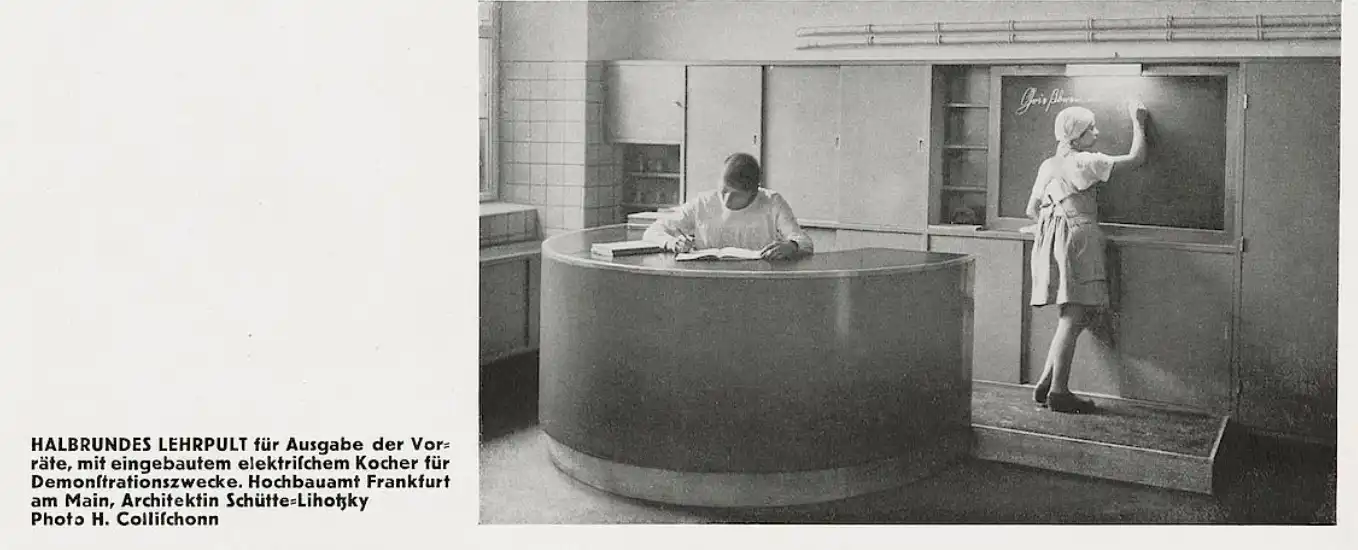
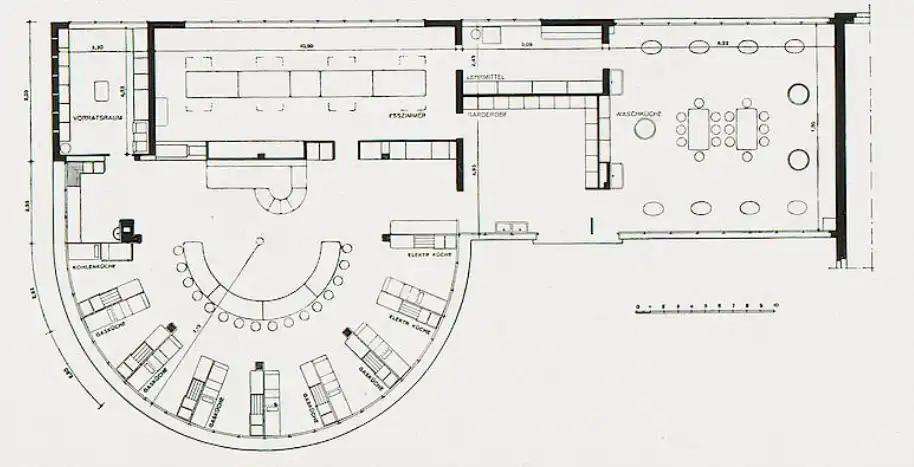
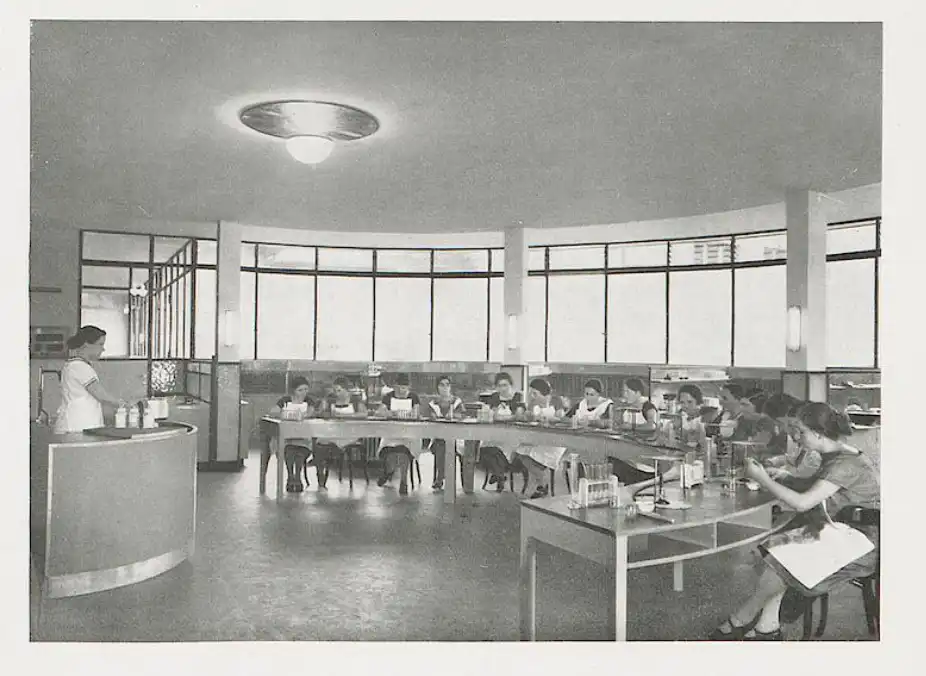
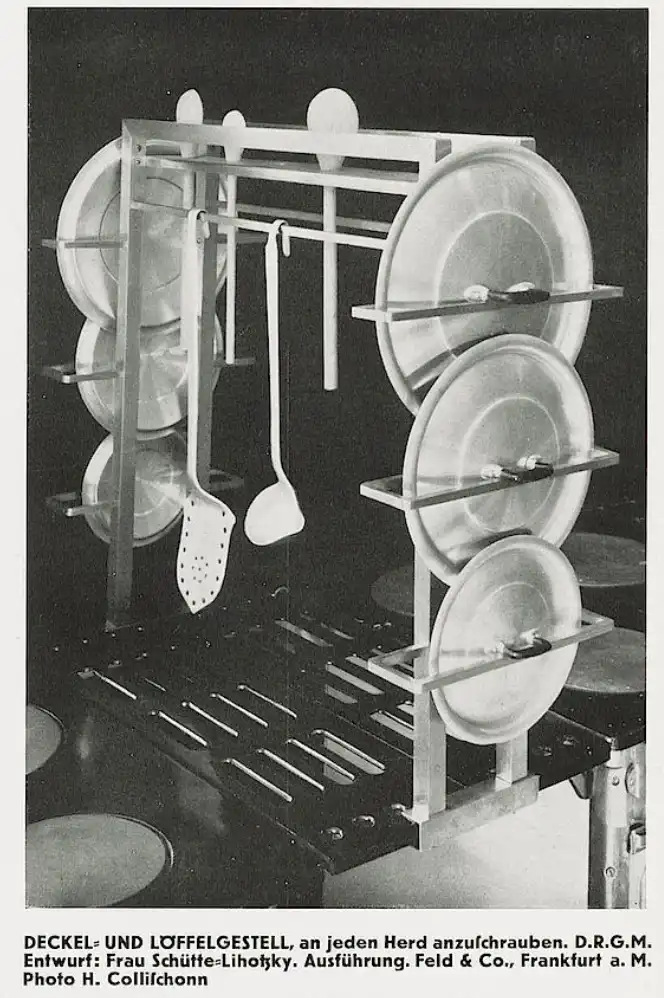
Kindergartens
Starting in 1928, the Typification Department began planning new kindergarten buildings, having previously only carried out conversions. For the never-realized design of a kindergarten in the Praunheim housing estate, Schütte-Lihotzky drew inspiration from Maria Montessori‘s progressive educational philosophy. She envisioned an open, pavilion-style building oriented toward nature with adjoining pergolas, lounging areas, and play terraces. She designed the building so that three kindergarten groups would each have their own wing with outdoor space. This meant that the entire facility would not have to close in the event of an infectious disease outbreak.
Termination of Employment as an Employee of the City of Frankfurt
Although, as May wrote in 1927, Schütte-Lihotzky was considered the leading specialist in her field of expertise in Germany and neighboring countries, both artistically and technically, the municipal authorities only extended the newlywed’s contract on a temporary basis from 1927 onwards with special permission. Spouses were not allowed to hold two jobs in municipal services.
She left her position as a municipal employee at the end of 1928. From then on, she only received fixed-term fee contracts as a private architect in order to work for the municipality at a reduced fee of 400 marks per month initially, and 200 marks per month from 1930. Her last contract ended on June 30, 1930.