
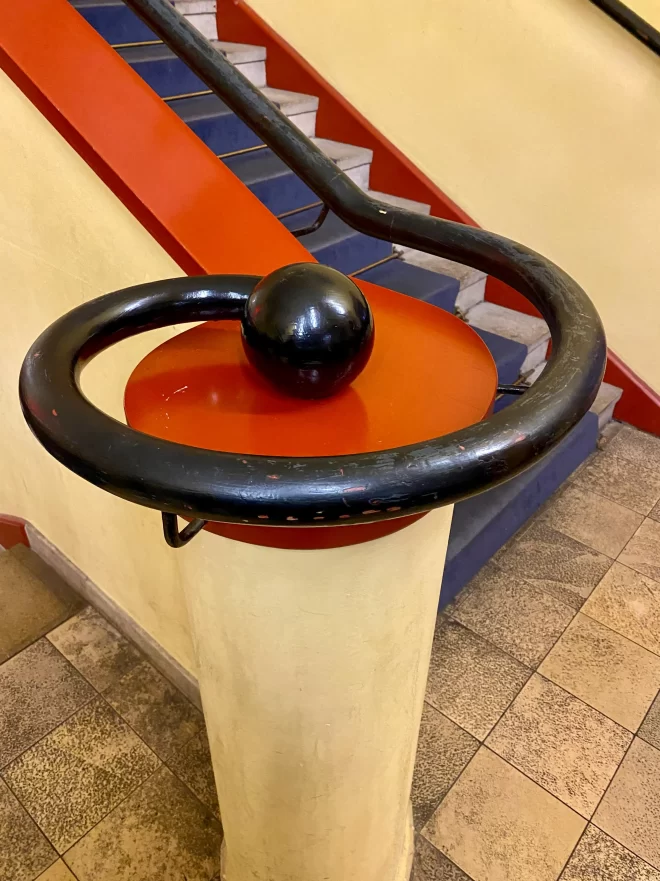
1928 – 1929
Architect: Hans Poelzig
Rosa-Luxemburg-Straße 30, Hirtenstraße 6, Weydingerstraße 2, 6, 10, Berlin, Germany
Scheunenviertel
At the beginning of the 20th century, the Scheunenviertel neighborhood in Berlin’s Mitte district was redeveloped. Old neighborhoods, which were mainly inhabited by socially disadvantaged groups, were demolished to make way for a new triangular square.
Between 1913 and 1915, architect Oskar Kaufmann constructed the first building for the Freie Volksbühne Berlin on Bülowplatz.
Over the course of its hundred-year history, Rosa-Luxemburg-Platz‘s appearance has been significantly shaped by upheavals in German history. Originally named Babelsberger Platz, it was called Bülowplatz from 1910 to 1933. Between 1933 and 1945, it was named Horst-Wessel-Platz, and then Liebknechtplatz. From 1947 on, it was called Luxemburgplatz, and it has been known as Rosa-Luxemburg-Platz since 1969.
Bülowplatz
During World War I and the period of inflation, all new construction activity came to a standstill. In 1925, an urban planning competition was launched to provide new impetus. Several residential and commercial buildings were constructed between 1927 and 1929 on behalf of developer Alfred Schrobsdorff based on designs by architect Hans Poelzig. The Babylon cinema, one of these buildings, opened on April 11, 1929.
By 1929, eight blocks of buildings had been constructed around the edge of the square, containing 170 apartments and around 80 shops.
The competition also led to the city administration’s project to build two winged structures next to the Volksbühne theater based on plans by Richard Ermisch. These buildings were intended to house an adult education center, a city archive, and a city library, among additional facilities. Construction was scheduled to begin in the summer of 1929 but was delayed due to the global economic crisis.
Building Complex
The only surviving ensemble of buildings by Hans Poelzig in Berlin today consists of a contiguous quarter between Hirtenstraße, Kleine Alexanderstraße, and Weydingerstraße. The ensemble includes the Babylon cinema at Rosa-Luxemburg-Straße 30, the adjoining residential complex at Kleine Alexanderstraße 1–4, and the two corner buildings at Weydingerstraße 18 and 20–22.
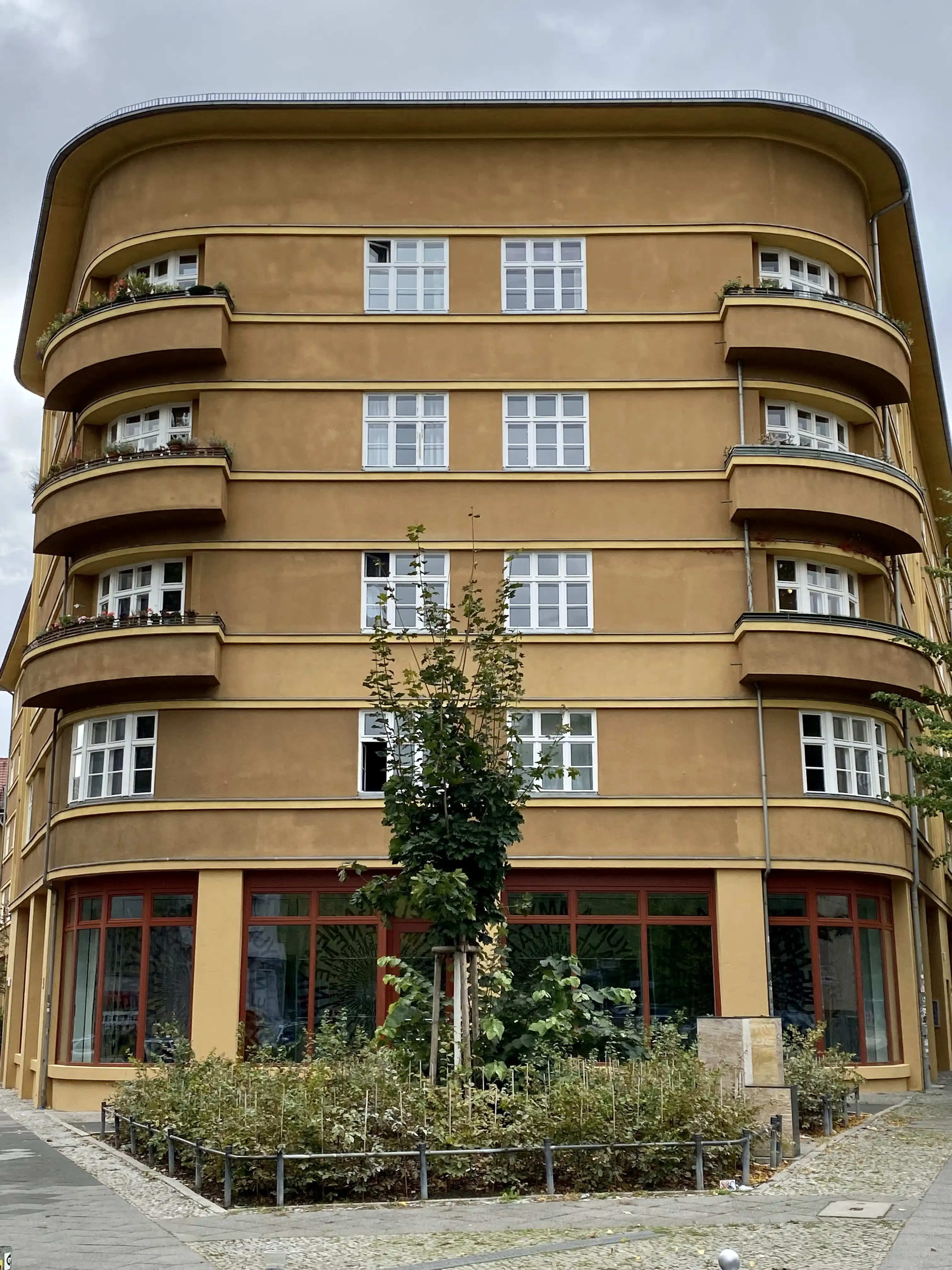
Residential development with Babylon cinema, 1928-1929. Architect: Hans Poelzig. Photo: Daniela Christmann
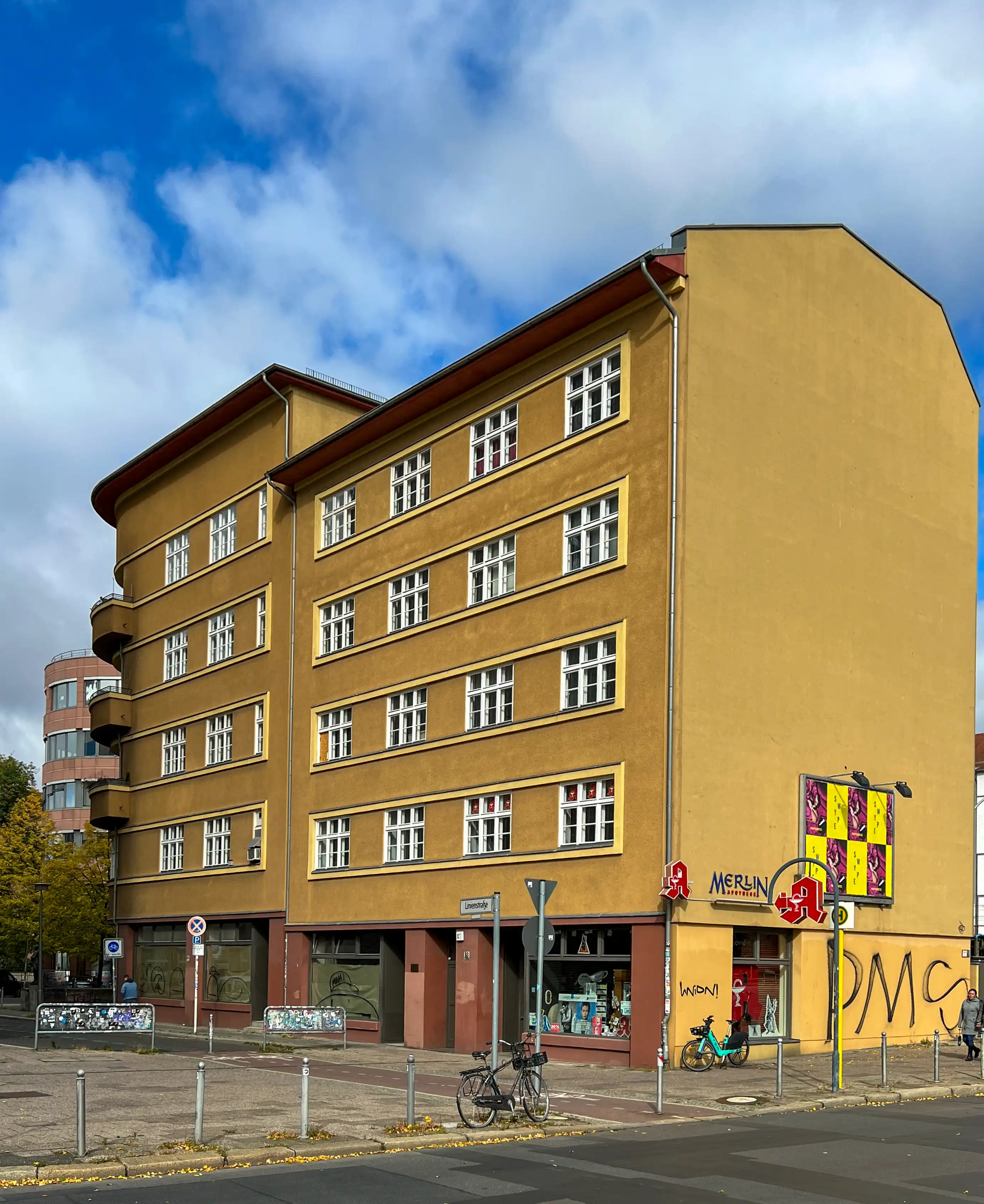
Residential development with Babylon cinema, 1928-1929. Architect: Hans Poelzig. Photo: Daniela Christmann
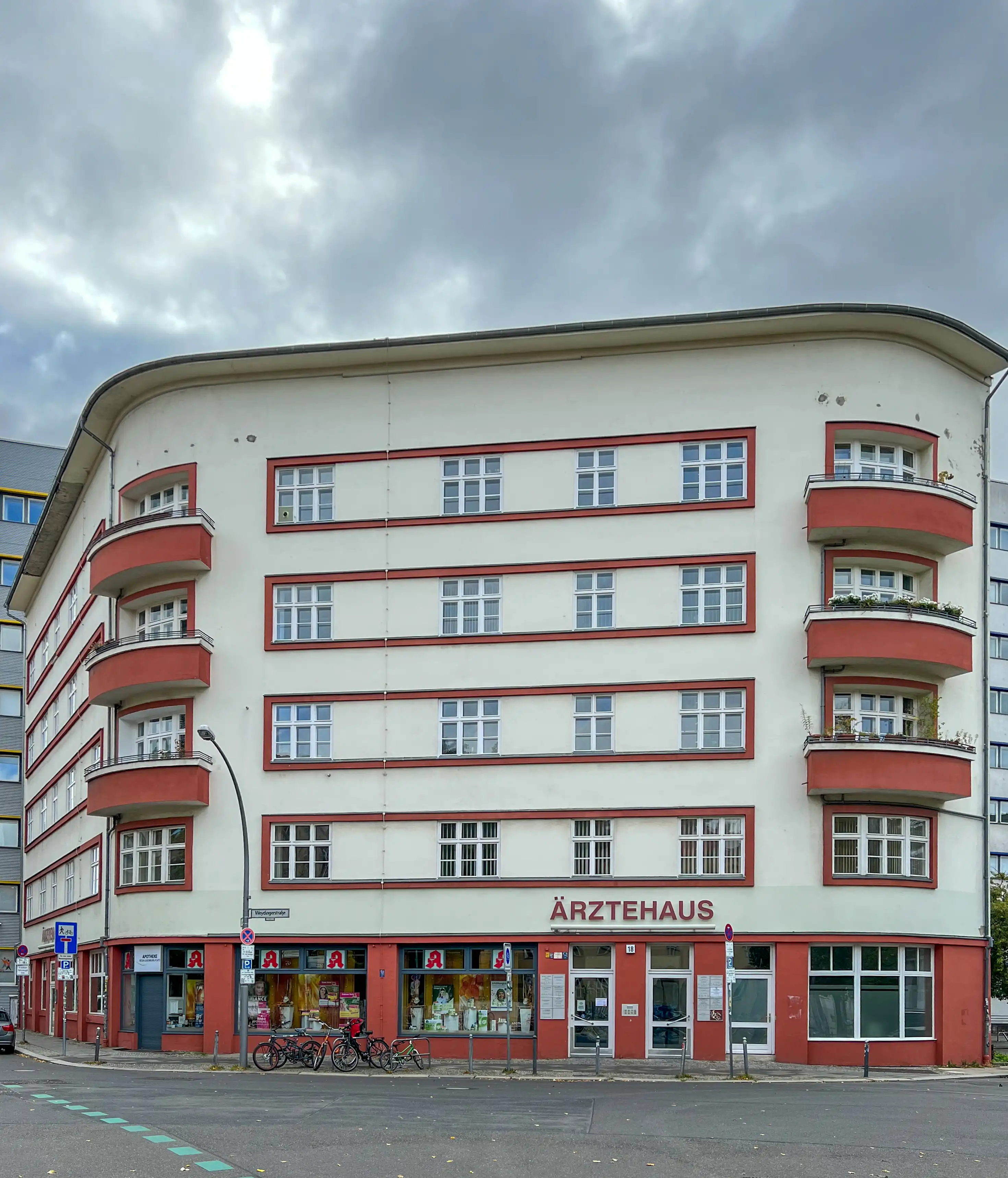
Residential development with Babylon cinema, 1928-1929. Architect: Hans Poelzig. Photo: Daniela Christmann
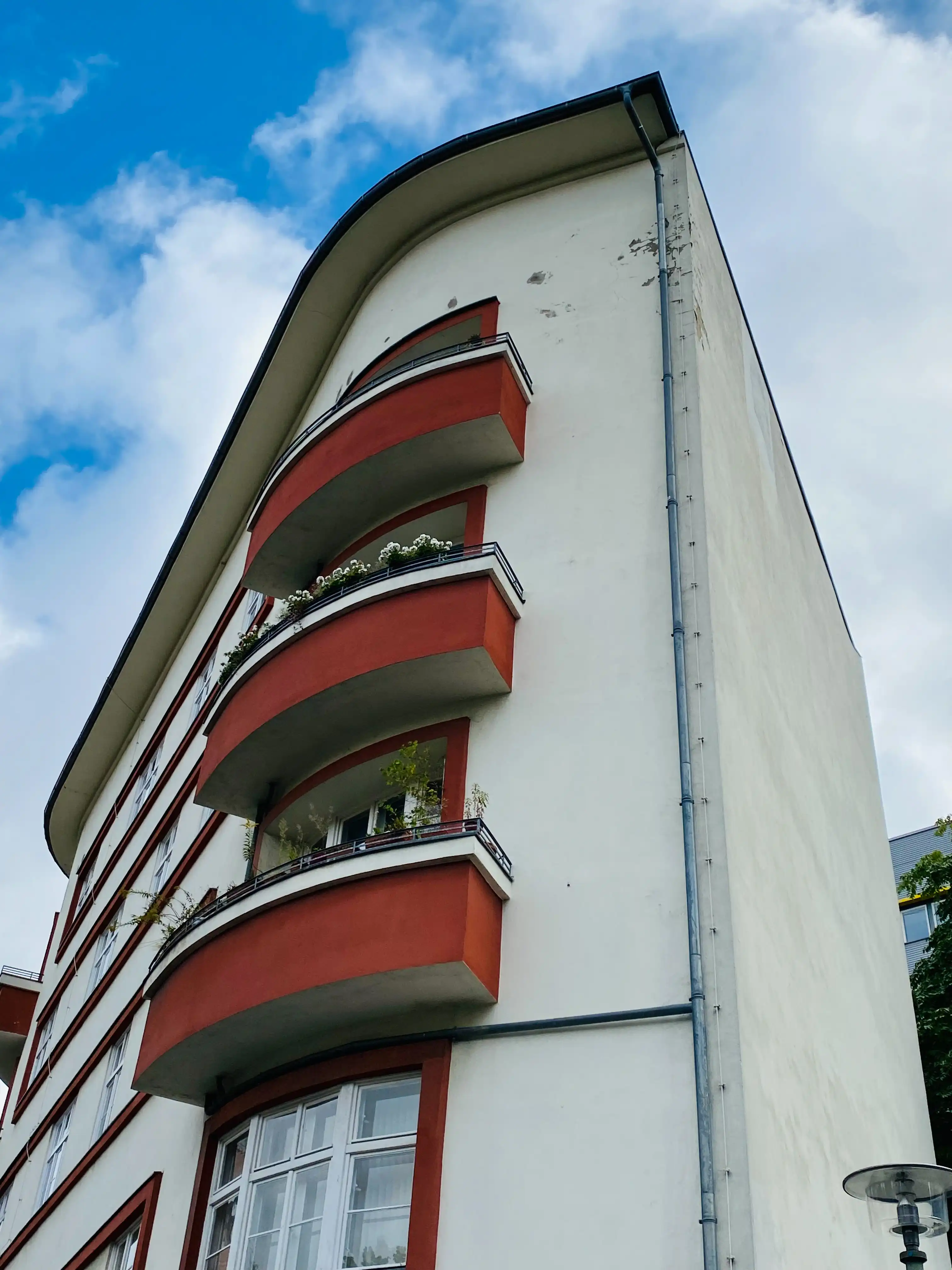
Residential development with Babylon cinema, 1928-1929. Architect: Hans Poelzig. Photo: Daniela Christmann
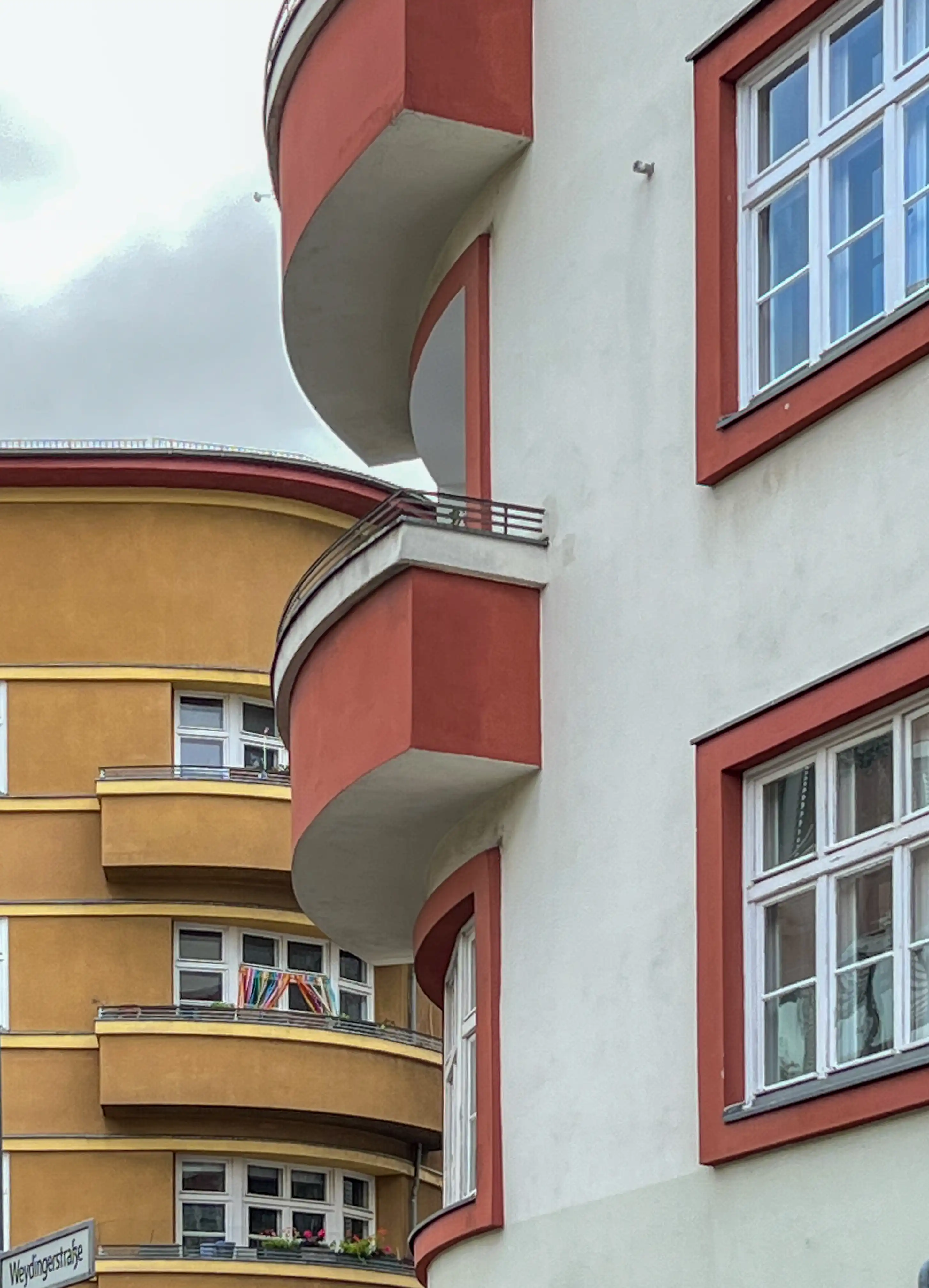
Residential development with Babylon cinema, 1928-1929. Architect: Hans Poelzig. Photo: Daniela Christmann
The wide, horizontally structured buildings are connected by straight lines on the façade, which is topped by a wide cornice. Additionally, nearly all of the buildings’ corners are rounded and feature rounded balconies.
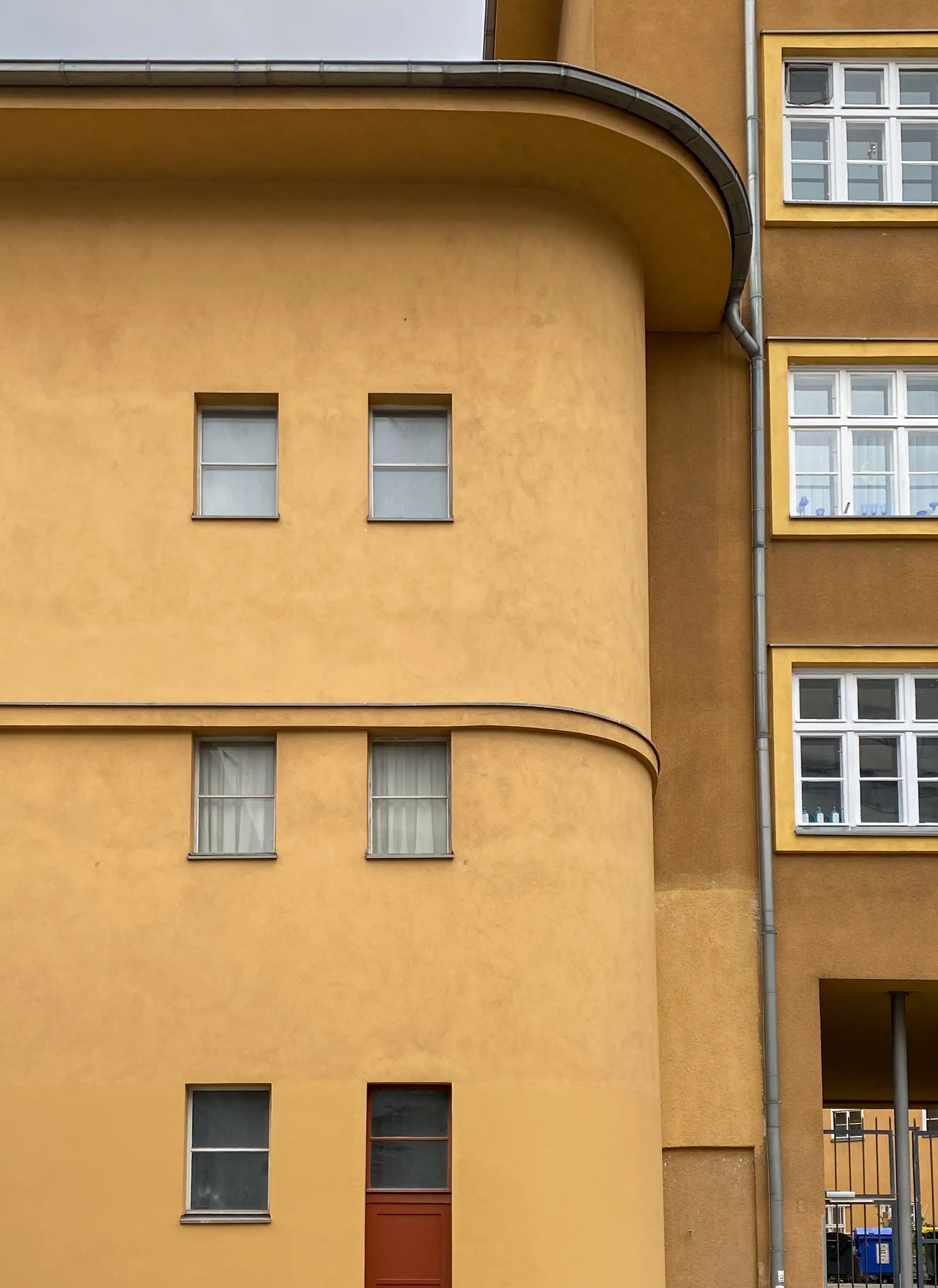
Residential development with Babylon cinema, 1928-1929. Architect: Hans Poelzig. Photo: Daniela Christmann
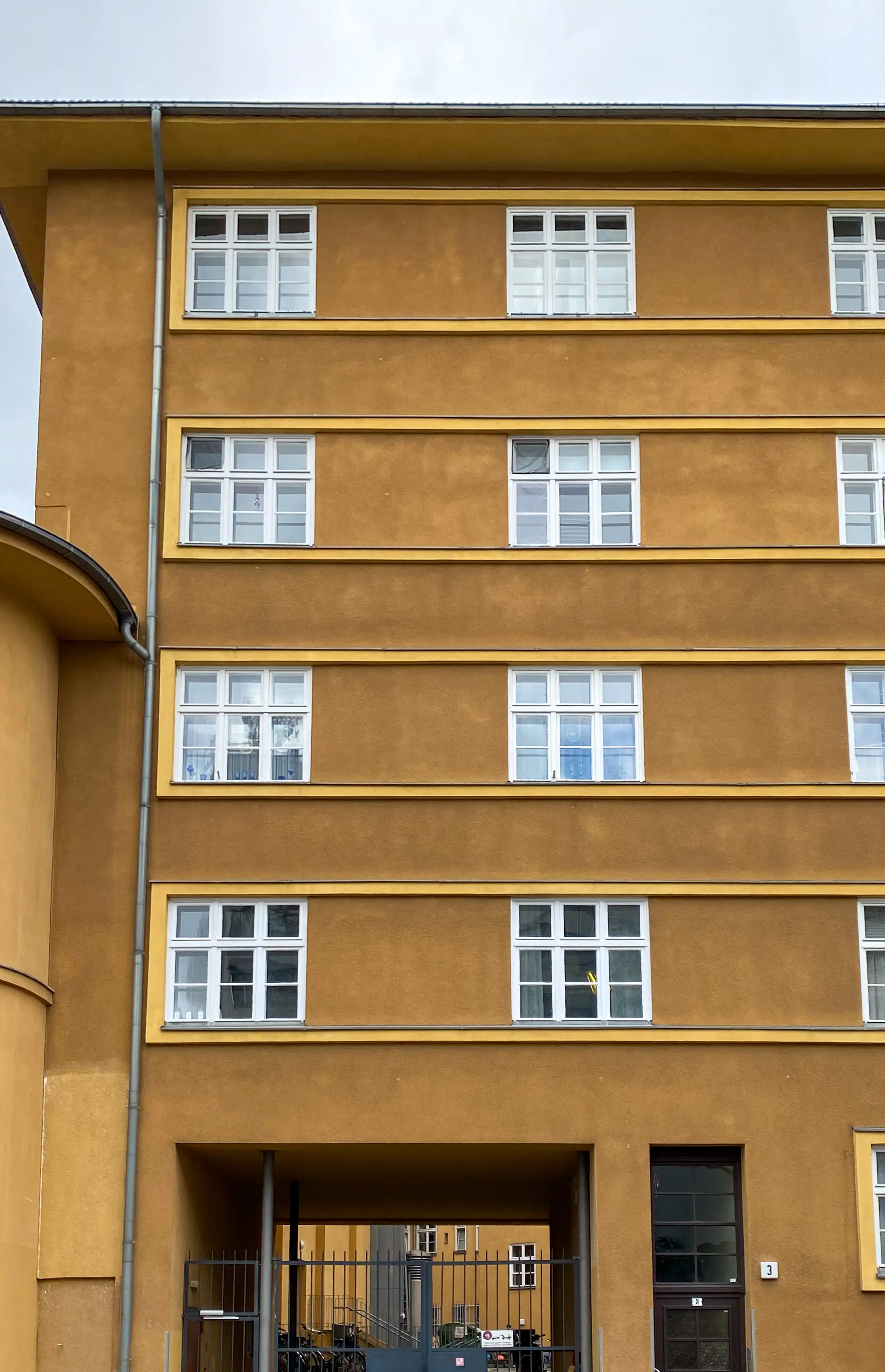
Residential development with Babylon cinema, 1928-1929. Architect: Hans Poelzig. Photo: Daniela Christmann
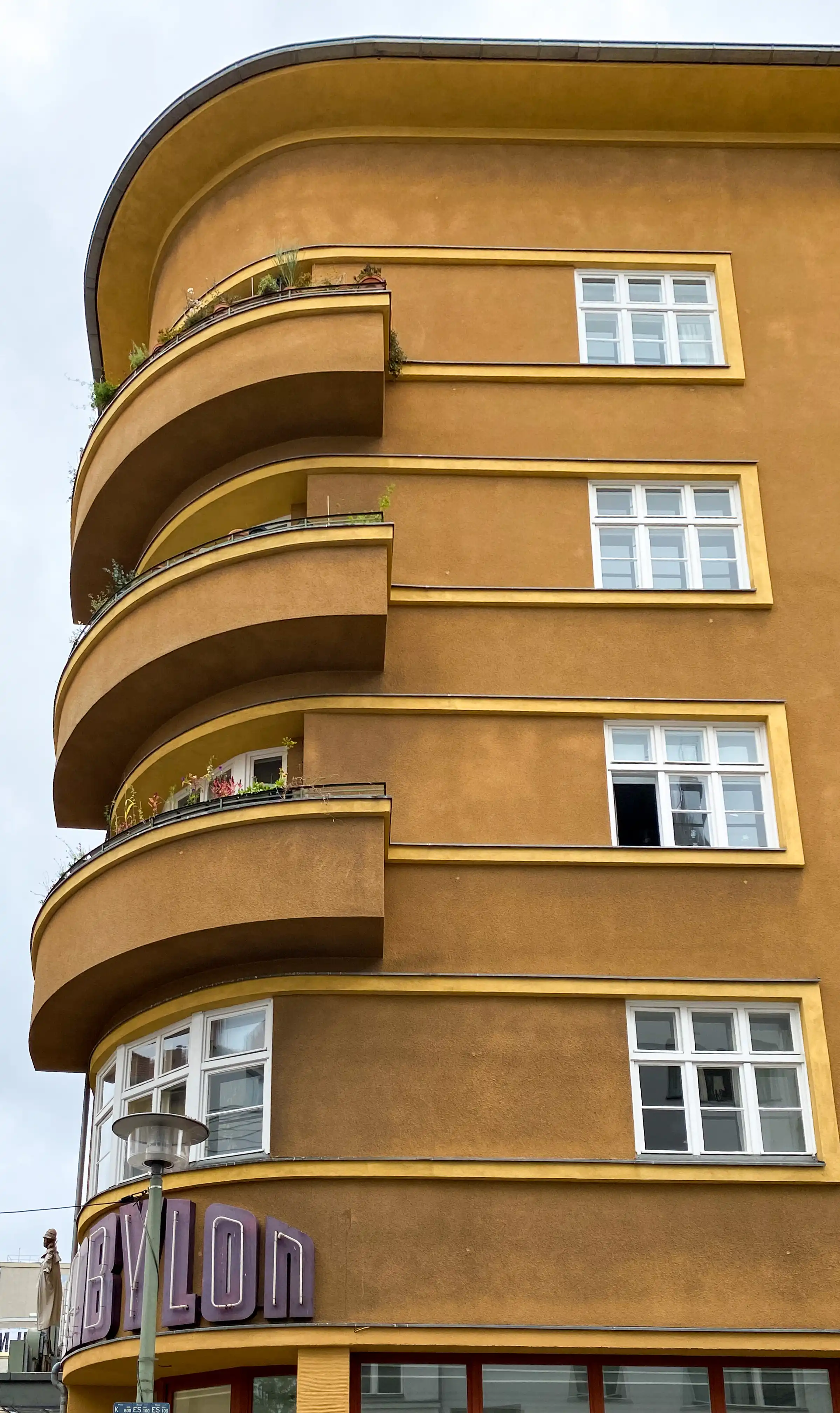
Residential development with Babylon cinema, 1928-1929. Architect: Hans Poelzig. Photo: Daniela Christmann
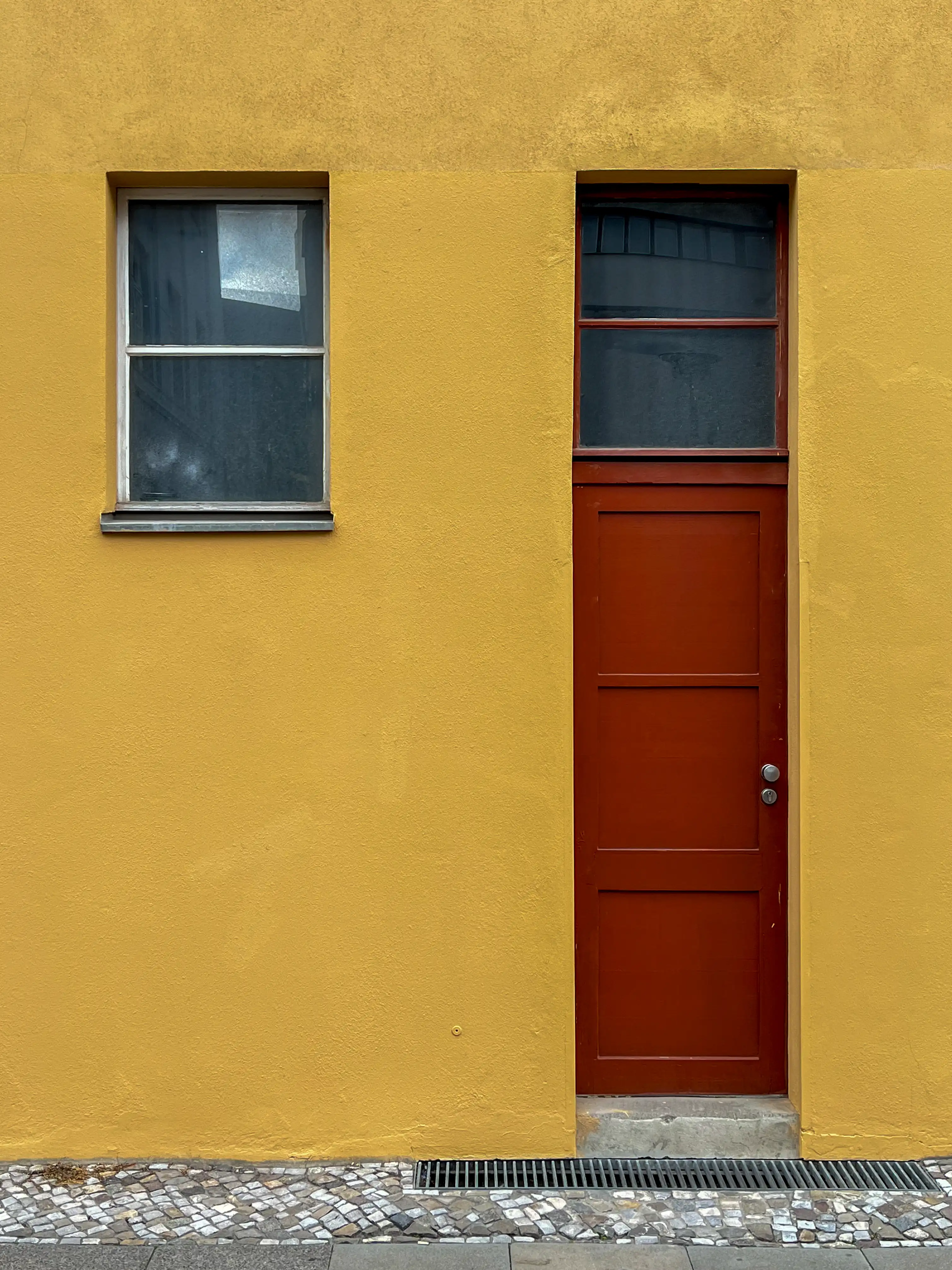
Residential development with Babylon cinema, 1928-1929. Architect: Hans Poelzig. Photo: Daniela Christmann
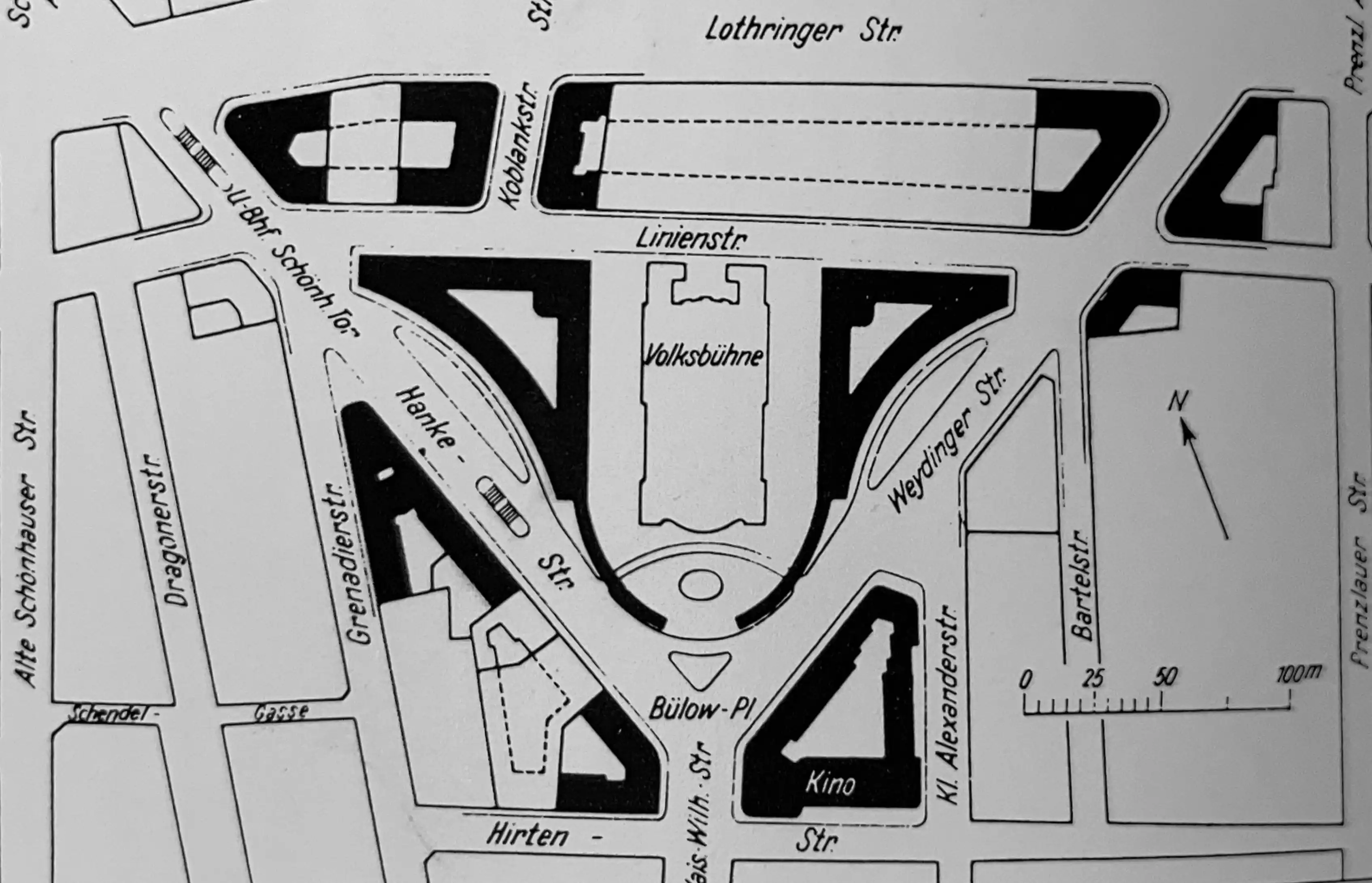
Site Plan
Movie Theater
Originally, the movie theater, which was integrated into the block development, had seating for 1,200 people. Poelzig continued his interior design concept throughout the building.
Contemporary sources describe how the color scheme enhances the impression of the space:
“From a spacious vestibule decorated in gray, red, and yellow, with two wide staircases leading up to the gallery, one enters the stately auditorium. The auditorium has a warm and cozy atmosphere, achieved simply through the use of color, without any decorative elements. The walls and ceiling are painted a shaded yellow; the gallery niche and stalls boxes are red with a copper-colored border; the seating balustrade is blue; and the seats are velvet upholstered in the same shade. The woodwork of the doors and the grilles of the heating and ventilation systems are painted red.” The theater is equipped with a small stage. The stage opening is framed on both sides by organ facades formed from a simple latticework of red wooden bars.” (Behrendt, Walter Curt, “Die Bebauung des Scheunenviertels,” in: Zentralblatt der Bauverwaltung 49 (1929): 285–287).
Originally built as a silent movie theater, the cinema still has its restored theatre organ and small screen, which were designed for silent films. It also has the original stage portal from 1929. The organ is now fully functional.
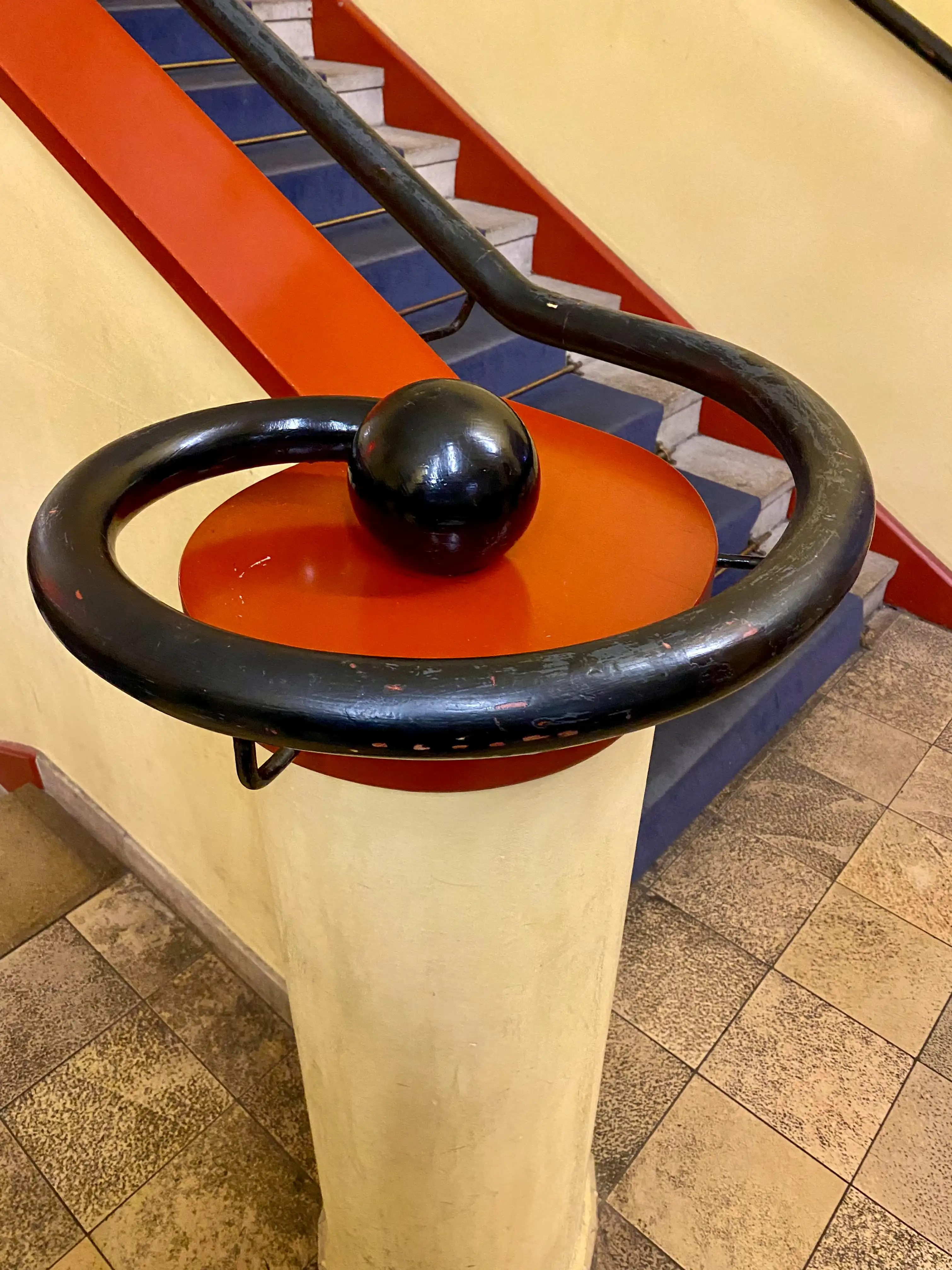
Residential development with Babylon cinema, 1928-1929. Architect: Hans Poelzig. Photo: Daniela Christmann
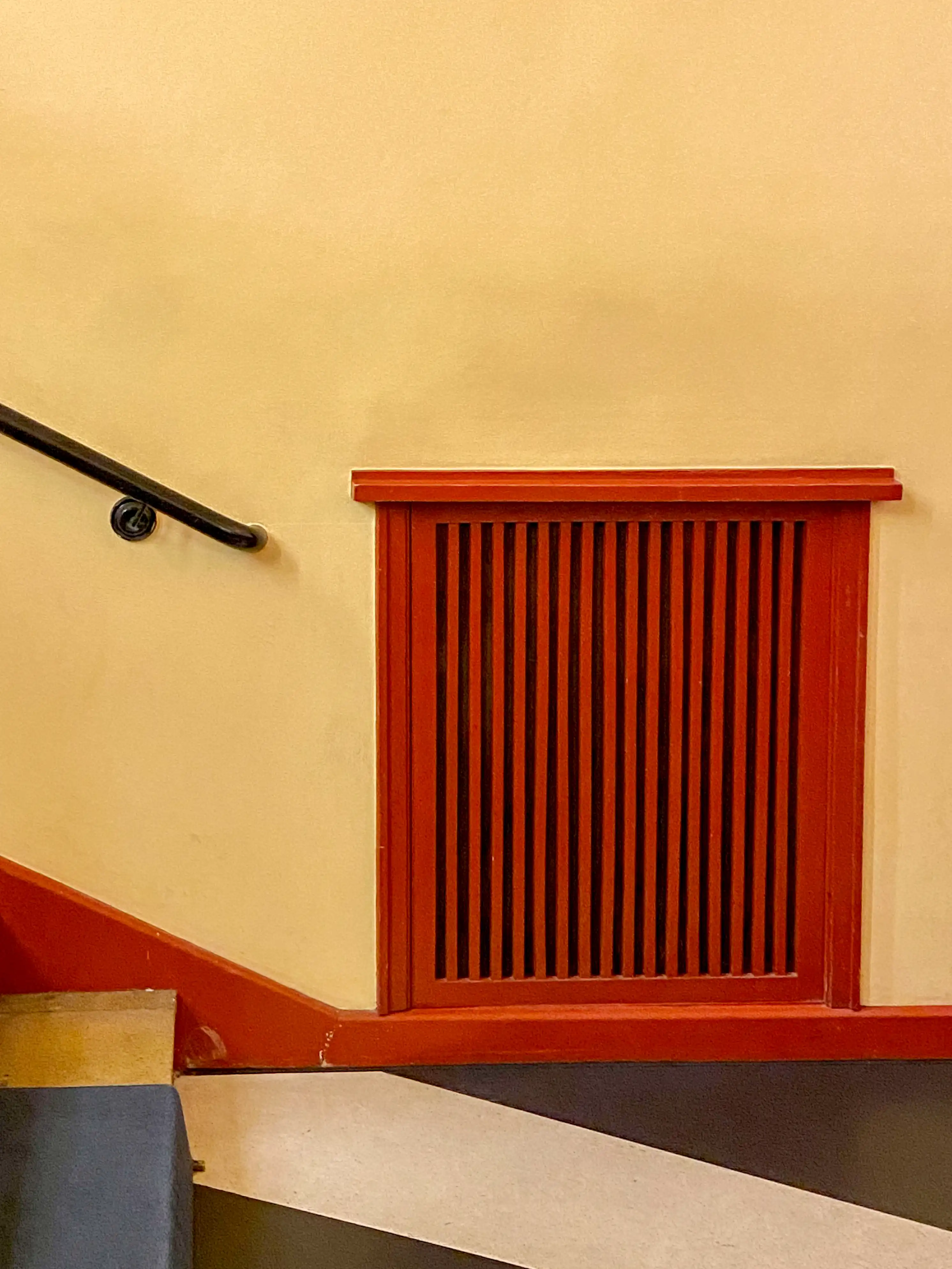
Residential development with Babylon cinema, 1928-1929. Architect: Hans Poelzig. Photo: Daniela Christmann
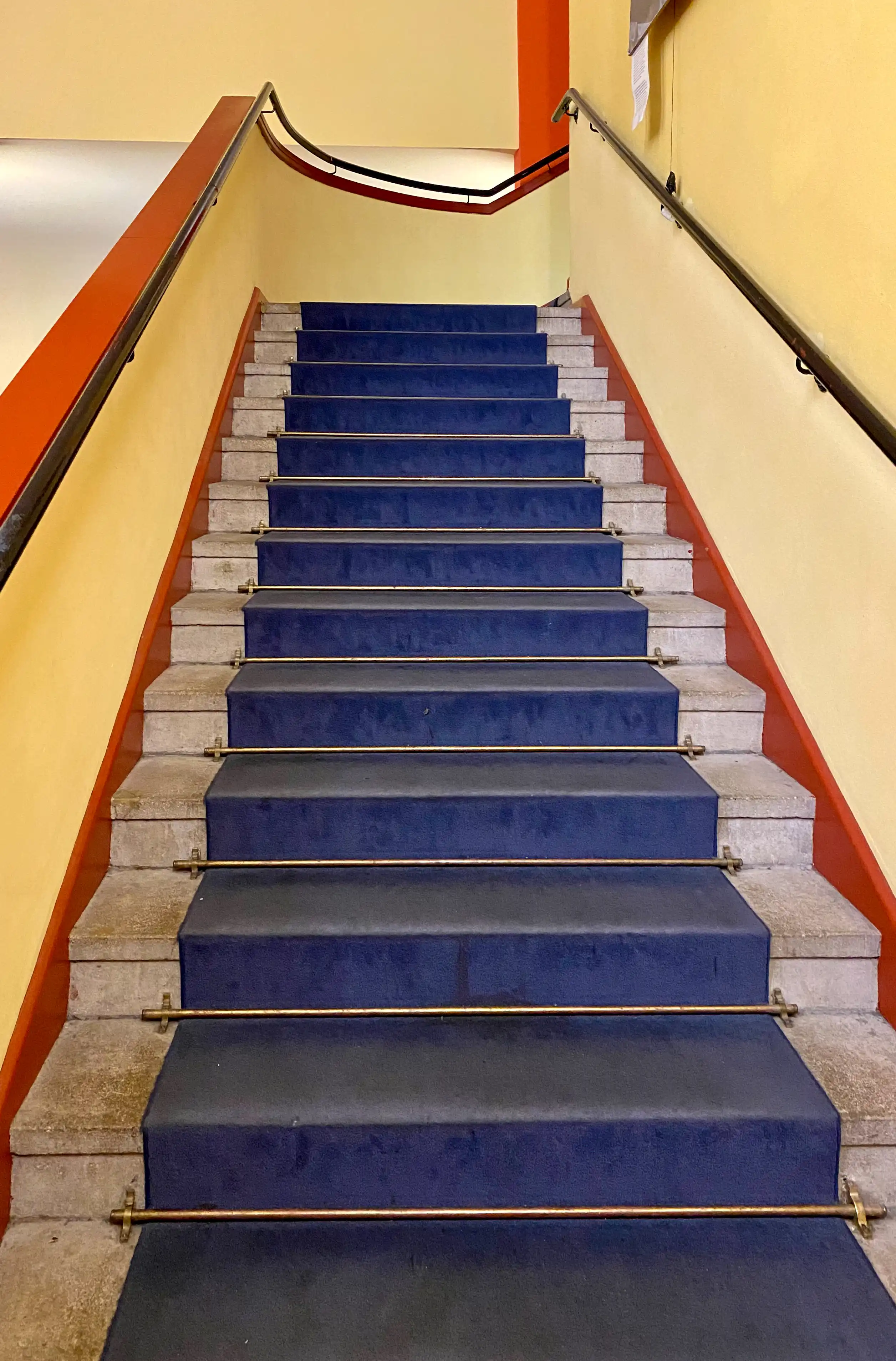
Residential development with Babylon cinema, 1928-1929. Architect: Hans Poelzig. Photo: Daniela Christmann
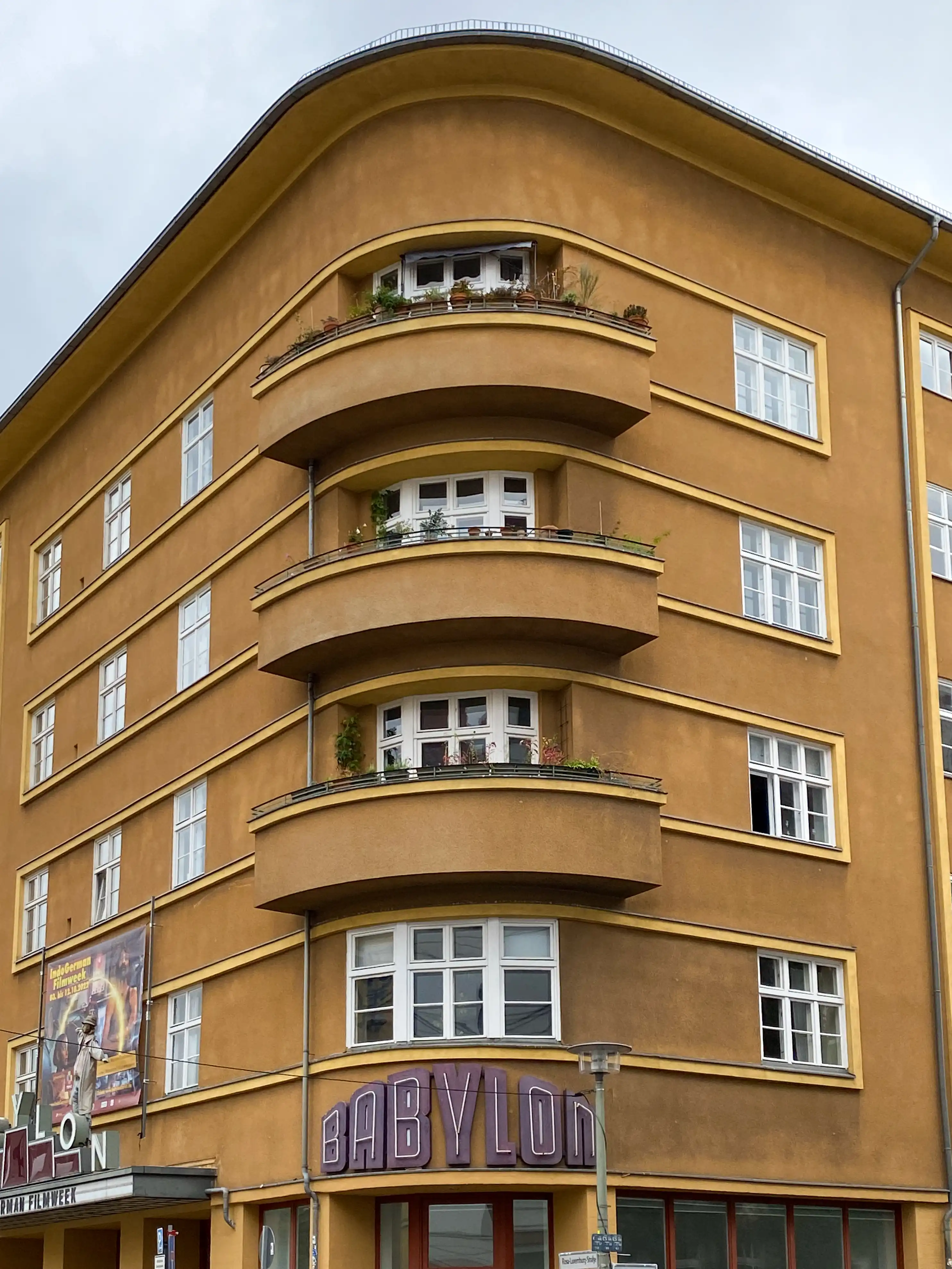
Residential development with Babylon cinema, 1928-1929. Architect: Hans Poelzig. Photo: Daniela Christmann
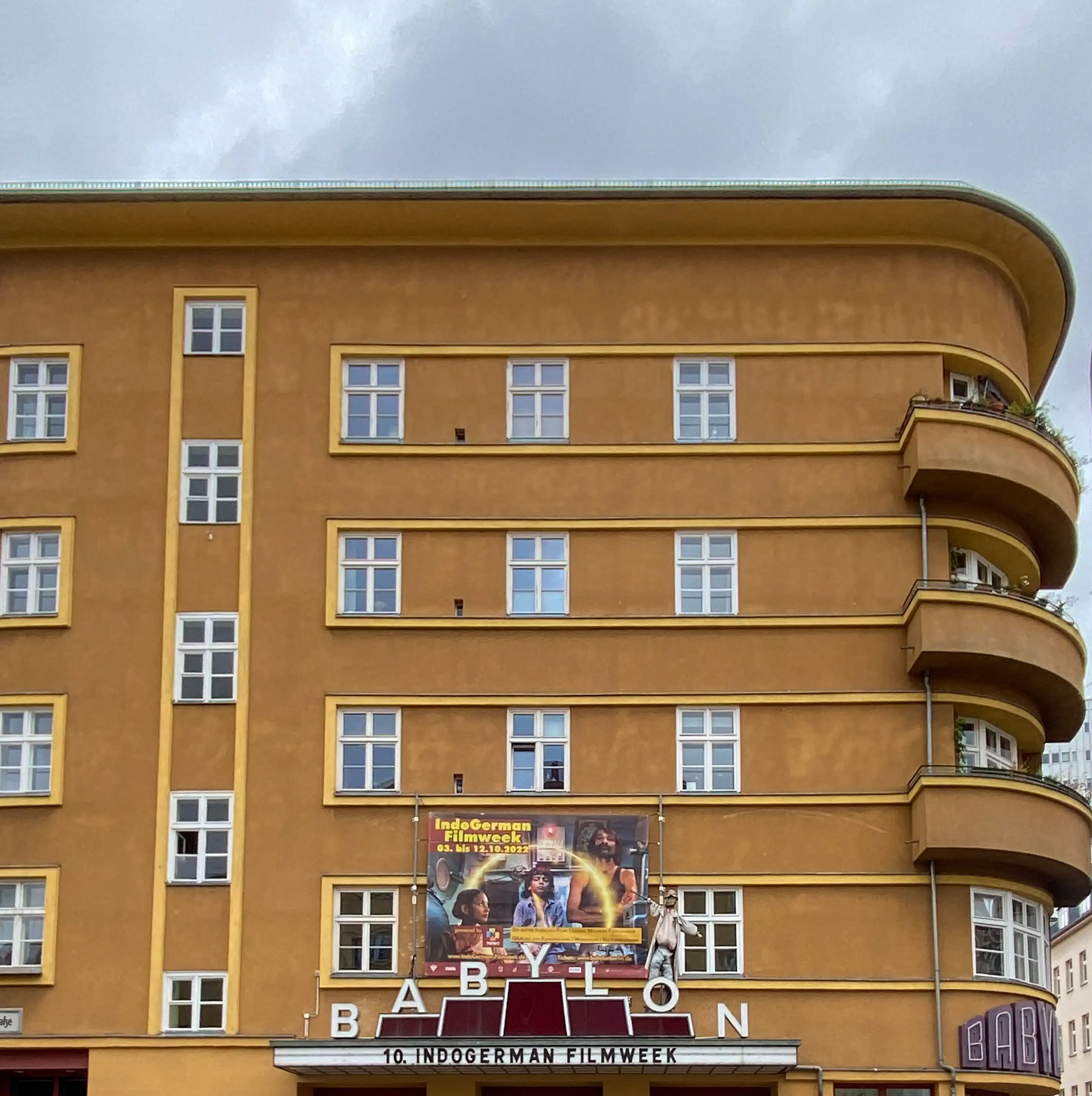
Residential development with Babylon cinema, 1928-1929. Architect: Hans Poelzig. Photo: Daniela Christmann
Renovation of the Cinema Auditorium and Foyer
The Babylon block and the two corner buildings on Weydinger Street were largely spared from destruction during World War II.
Although Poelzig’s foyer and auditorium were altered during the 1948 renovation, retaining their basic design, the oval shape, rounded transitions to the ceiling, and narrow screen stage were preserved.
The large cinema auditorium was preserved and restored during the redesign in 1951/52. Covering the fluted walls with a fabric-covered shell was necessary to improve the room’s acoustics and echoes Poelzig’s original color scheme with its bold yellow.
The changes and alterations necessary for contemporary cinema operations are clearly visible. For example, the auditorium was fitted with a new, large, retractable screen. An additional cinema auditorium was set up in the stage area, and the rear balcony was divided to serve as a discussion forum.
Reopening in 2001
Since then, the foyer has been restored to its original Poelzig design. Following an assessment, its functional design and bold color scheme were reinstated.